Table of Contents
Imagine this: it’s 6:30 AM. You’re bleary-eyed, desperately craving that rich, dark coffee hit to jumpstart your day, while your partner simultaneously wants a delicate, perfectly steeped green tea to ease into the morning. Instead of juggling two separate, bulky appliances cluttering your counter, picture one sleek device humming quietly, ready to deliver both beverages flawlessly with just a few taps. That’s the magic promise of modern 2-in-1 coffee and tea makers. They’re not just another kitchen gadget; they represent a thoughtful evolution in home brewing, designed for households where caffeine preferences diverge but counter space is precious. No more choosing sides in the great coffee vs. tea debate – the solution lives harmoniously on your countertop.
The frustration of single-purpose brewers is real. Owning separate machines means double the cost, double the storage headaches, and the constant chore of switching between them. It’s inefficient, often wasteful, and frankly, a bit absurd when technology can do so much more. Today’s advanced 2-in-1 systems go far beyond simple dual functionality. They leverage precision engineering, intuitive interfaces, and smart features to cater to the nuanced demands of both coffee connoisseurs and tea enthusiasts. Whether you’re a pour-over purist, an espresso devotee, a loose-leaf tea lover, or someone who just wants a reliable cup of black tea, these versatile brewers aim to be your ultimate morning ally, transforming the daily ritual from a chore into a seamless, personalized experience.
Top 10 2 in 1 Coffee Makers
Detailed Product Reviews
1. Keurig K-Duo Hot & Iced Single Serve & Carafe Coffee Maker, MultiStream Technology, 72oz Reservoir (Gen 2)

Overview: The Keurig K-Duo Gen 2 is a versatile all-in-one coffee maker catering to both single-serve K-Cup enthusiasts and traditional carafe drinkers, offering dedicated hot and iced brewing options. What Makes It Stand Out: MultiStream Technology ensures even saturation for richer flavor from grounds, while dedicated Brew Over Ice mode optimizes temperature to prevent dilution. Strong Brew and Extra Hot functions provide customization, and the large 72oz reservoir supports both single cups (6-12oz) and full carafes (6-12 cups) without frequent refills. Value for Money: Priced mid-to-high range, it justifies cost through dual functionality (eliminating need for separate machines) and premium features like ice brewing. While K-Cup pods are pricier long-term than grounds, the convenience and versatility offer solid value for households with mixed preferences. Strengths and Weaknesses: Strengths: Seamless switch between pods/grounds, excellent iced coffee performance, large reservoir, strong brew option. Weaknesses: K-Cup dependency increases ongoing costs/environmental impact, carafe can drip, pod brewing louder than drip. Bottom Line: Ideal for Keurig loyalists needing carafe flexibility or households wanting both pod convenience and traditional brewing; a premium, feature-rich choice despite pod-related drawbacks.
2. Hamilton Beach 2-Way 12 Cup Programmable Drip Hot and Iced Coffee Maker & Single Serve Coffee Machine, Glass Carafe, Auto Pause and Pour, Black (47500J)

Overview: This Hamilton Beach model offers dual brewing (full carafe or single cup) exclusively with ground coffee, featuring programmability and dedicated iced coffee settings without K-Cup compatibility. What Makes It Stand Out: The AquaFlow showerhead ensures even saturation for better flavor extraction. Six customizable settings include bold, regular, hot, and iced options for both carafe and single-serve modes. The intuitive 24-hour programmable touchscreen and Auto Pause & Pour are significant usability perks. Value for Money: Positioned affordably, it delivers exceptional value by avoiding pod costs and waste. The comprehensive feature set (programmability, ice brew, pause & pour) rivals pricier models, making it a budget-friendly powerhouse for ground coffee drinkers. Strengths and Weaknesses: Strengths: Eco-friendly (no pods), versatile brew settings, easy programmability, Auto Pause & Pour, consistent flavor. Weaknesses: Single-serve side requires manual scoop, no K-Cup option limits flexibility, glass carafe prone to breakage. Bottom Line: A top recommendation for eco-conscious buyers seeking customizable, programmable ground coffee brewing in both single-serve and carafe formats at an outstanding price.
3. Hamilton Beach 2-Way Programmable Coffee Maker, 12 Cup Glass Carafe And Single Serve Coffee Maker, Black with Stainless Steel Accents, 49980RG

Overview: This Hamilton Beach dual-brew machine focuses on ground coffee versatility for single cups or full pots, emphasizing ease of use and eco-friendliness without pod compatibility. What Makes It Stand Out: The included mesh scoop simplifies single-serve brewing (“scoop, place, brew”), and its emphasis on eliminating pod waste is a strong eco-sell. Key features include 24-hour programmability, bold/regular strength options, and Auto Pause & Pour for mid-brew cups. Value for Money: Excellent value for the price, as it removes ongoing pod expenses and reduces environmental impact. The durable build, programmability, and dual functionality offer comparable features to pod-based systems at a lower total cost of ownership. Strengths and Weaknesses: Strengths: Truly eco-friendly operation, very simple single-serve process, reliable Auto Pause & Pour, programmable, cost-effective long-term. Weaknesses: No K-Cup option, single-serve size capped at 14oz, lacks dedicated iced coffee mode, basic water reservoir size. Bottom Line: Highly recommended for households committed to ground coffee who prioritize simplicity, sustainability, and value; ideal if pod convenience isn’t a requirement.
4. Hamilton Beach FlexBrew Trio 2-Way Coffee Maker, Compatible with K-Cup Pods or Grounds, Combo, Single Serve & Full 12c Pot, Black - Fast Brewing (49902)

Overview: The FlexBrew Trio uniquely bridges the gap, supporting K-Cup pods, ground coffee for single cups, and full 12-cup carafes, with a focus on speed and large-capacity reservoirs. What Makes It Stand Out: Its triple brewing capability (pods, single-serve grounds, carafe) is rare. Fast 90-second single-cup brewing and a 56oz reservoir enabling seven consecutive pod brews without refilling are major time-savers. Five single-serve sizes (6-14oz) add precision. Value for Money: Mid-priced with strong justification: pod compatibility offers convenience, while ground coffee options provide flexibility and potential savings. The speed and large reservoir enhance daily utility, making it competitive against dedicated single-serve or drip machines alone. Strengths and Weaknesses: Strengths: Unmatched brewing versatility (pods/grounds/carafe), very fast single-serve, large reservoir, precise size selection, programmable. Weaknesses: Pod usage negates eco-benefits of grounds, reservoir design can be cumbersome to clean, carafe brewing slower than dedicated drip. Bottom Line: The best Hamilton Beach choice for ultimate flexibility between pods and grounds; perfect if you need speed for single cups and occasional full pots without sacrificing pod convenience.
5. Hamilton Beach 2-Way Programmable Coffee Maker, 12 Cup Glass Carafe And Single Serve Coffee Maker, White with Stainless Steel Accents, 49933

Overview: This white-accented Hamilton Beach model delivers core dual-brew functionality (single cup or carafe) using only ground coffee, prioritizing safety features and user convenience alongside eco-friendliness. What Makes It Stand Out: The standout feature is the 2-hour automatic shut-off with keep-warm function, alleviating safety concerns. It retains essential perks: simple “scoop, place, brew” single-serve, Auto Pause & Pour, 24-hour programmability, and bold/regular settings, all emphasizing pod-free operation. Value for Money: Offers excellent value by combining safety (auto shutoff), convenience (pause & pour, programming), and eco-savings (no pods) at a very accessible price point. Long-term savings from avoiding pods enhance its affordability. Strengths and Weaknesses: Strengths: Crucial auto shut-off for peace of mind, eco-friendly ground coffee only, easy single-serve process, Auto Pause & Pour, attractive design. Weaknesses: No K-Cup compatibility, no dedicated iced coffee setting, single-serve max 14oz, reservoir smaller than FlexBrew Trio. Bottom Line: Highly recommended for safety-conscious users and eco-advocates wanting reliable, programmable dual-brew ground coffee; the auto shut-off makes it a practical, worry-free daily machine.
6. Ninja | Drip Coffee Maker | DualBrew Pro Hot & Iced Coffee Machine | Use with K-Cup Coffee Pods | 3 Brew Styles (Classic, Rich, & Iced) | 60oz Removable Reservoir & Dishwasher Safe | Black | CFP101

Overview: The Ninja DualBrew Pro CFP101 is a versatile single-serve coffee maker designed for both grounds and K-Cup pods, emphasizing speed and customization for hot or iced coffee. Its 60oz reservoir and dishwasher-safe components target convenience seekers.
What Makes It Stand Out: It uniquely combines faster pod brewing than Keurig K-Elite (per claims), nine grounds brew sizes (from small cup to full carafe), and three tailored brew styles (Classic, Rich, Over Ice) that prevent watered-down iced coffee. The 4-hour keep-warm function adds practicality.
Value for Money: Priced mid-range, it justifies cost through exceptional flexibility—replacing both single-serve and basic drip machines. Competitors often lack its breadth of grounds sizing or reliable iced coffee performance, making it cost-effective for households with varied preferences.
Strengths and Weaknesses:
Strengths: Rapid startup brewing; precise iced coffee without dilution; extensive size customization; intuitive controls; durable build.
Weaknesses: Reservoir lacks side-fill convenience; no programmable timer; carafe not thermal (requires warming plate).
Bottom Line: Ideal for busy households wanting hot/iced coffee versatility from grounds or pods without compromise. Its speed, customization, and flavor consistency make it a top-tier single-serve investment despite minor omissions like programmability.
7. Hamilton Beach FlexBrew Advanced 5-in-1 Programmable 12 Cup Drip and Single Serve Hot & Iced Coffee Maker with Movable 60 oz. Water Reservoir, Use Pod Packs and Grounds, Fast Brewing, Black (49924)

Overview: The Hamilton Beach FlexBrew 49924 merges single-serve and 12-cup drip brewing into one compact unit, featuring programmability and a hidden glass carafe. Its slim design targets space-constrained kitchens without sacrificing capacity.
What Makes It Stand Out: The space-saving “hidden” 12-cup carafe (mounted sideways) is revolutionary for small countertops. Combined with five brewing modes (single pod/grounds, full pot), side-or-back reservoir placement, and sub-2-minute single-cup brewing, it maximizes utility in minimal space.
Value for Money: Offering true dual functionality at a budget-friendly price, it outperforms similarly priced single-serve-only models. The lack of thermal carafe or advanced brew styles is offset by its unique footprint and solid performance, providing exceptional space efficiency.
Strengths and Weaknesses:
Strengths: Ingenious slim design; fast single-cup brewing; flexible reservoir positioning; programmable auto-brew; clear touchscreen interface.
Weaknesses: Glass carafe cools quickly; no dedicated iced coffee setting; pod compatibility limited to K-Cup style.
Bottom Line: A stellar choice for small kitchens needing both single-serve convenience and full-pot capacity. Its space-saving innovation and reliable brewing deliver outstanding value, though iced coffee enthusiasts may desire more customization.
8. Ninja Drip Coffee Maker With K Cup Combo, DualBrew Pro Specialty Coffee System, Coffee Machine Compatible with K-Cup Pods, 12 Cup Single Serve Coffee Makers with Paper Filter, CFP301
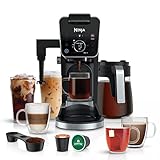
Overview: The Ninja DualBrew Pro CFP301 expands versatility with 13 brew sizes, specialty coffee functions, and independent hot water dispensing. It targets users seeking barista-style drinks alongside daily coffee routines.
What Makes It Stand Out: Four brew styles (including Specialty for espresso-like concentrate) and a dedicated hot water system (for tea/soups) set it apart. The Specialty mode creates rich coffee bases for lattes, while dual temperature settings prevent flavor cross-contamination—features rare in its class.
Value for Money: Positioned as a premium option, it justifies cost by replacing multiple appliances (espresso maker, hot water kettle). Competing models rarely offer true specialty brewing or independent hot water, making it economical for coffee enthusiasts investing in one multi-functional unit.
Strengths and Weaknesses:
Strengths: Specialty brew for coffeehouse drinks; separate hot water system; fast pod brewing; comprehensive size options; dishwasher-safe parts.
Weaknesses: Complex interface has a learning curve; reservoir capacity (60oz) lags behind some competitors; no thermal carafe.
Bottom Line: Highly recommended for coffee connoisseurs wanting lattes or tea without extra gadgets. Its specialty functions and flexibility are unmatched, though beginners may find settings overwhelming initially.
9. AIRMSEN 12-Cup Programmable Dual Coffee Maker – Single Serve Machine for K-Cup Pods & Ground, 1000W Fast Brew, Delay Start, 2H Keep Warm, Touchscreen, 60oz Tank, Glass Carafe – Home & Office

Overview: The AIRMSEN dual coffee maker prioritizes speed and programmability with a 1000W dual-boiler system, targeting offices or families needing rapid, scheduled brewing for both single cups and full pots.
What Makes It Stand Out: Blazing-fast brewing (12 cups in 10 minutes; single serve in <90 seconds) and dual reservoirs (60oz main + 15oz single-serve) enable simultaneous multi-user prep. The 24-hour delay start and intuitive touchscreen cater to precise morning routines.
Value for Money: Its aggressive pricing undercuts rivals with similar power/output specs. The dual-tank system eliminates refills during shared use, while fast brewing saves time—ideal for offices where efficiency trumps premium aesthetics.
Strengths and Weaknesses:
Strengths: Unmatched brewing speed; dual water tanks for flexibility; precise programmability; drip-free carafe; budget-friendly.
Weaknesses: Plastic build feels less premium; 2-hour keep-warm is shorter than competitors; no iced coffee optimization.
Bottom Line: A powerhouse for time-pressed households or offices valuing speed and scheduling. While not luxurious, its performance and dual-tank design offer exceptional utility for the price, especially where iced coffee isn’t a priority.
10. Cuisinart 12-Cup Coffee Maker, Single-Serve Brewer Glass Carafe, Automatic Hot & Iced Coffee Machine, Brew Strength Control and Pause, SS-16, Stainless Steel

Overview: The Cuisinart SS-16 blends elegant stainless steel design with dual brewing (single-serve and 12-cup), emphasizing flavor purity via a charcoal water filter and precise strength control for discerning home baristas.
What Makes It Stand Out: Its premium stainless steel glass carafe (with matching handle), charcoal water filtration for cleaner taste, and Brew Pause feature (for mid-cycle pouring) elevate daily use. The reusable filter and 42oz reservoir enhance sustainability and convenience.
Value for Money: Positioned as a premium model, it excels in build quality and thoughtful details often missing in budget combos. While pricier, the durable construction, filtration, and pause function justify cost for those prioritizing taste and longevity over speed.
Strengths and Weaknesses:
Strengths: Stylish, durable build; superior water filtration; Brew Pause feature; reusable filter included; intuitive controls.
Weaknesses: Slower brewing than competitors; no thermal carafe; limited single-serve customization (e.g., no dedicated ice setting).
Bottom Line: Best for style-conscious users seeking reliable, great-tasting coffee with premium touches. Its filtration and pause function shine, though speed-focused buyers may prefer alternatives. A refined, long-term kitchen staple.
Understanding the True Value of a Dual-Function Brewer
Beyond Simple Convenience: The Core Appeal
The primary draw isn’t just having two functions in one box; it’s the intelligent integration that solves real pain points. Think streamlined countertops, reduced purchase and maintenance costs, and the sheer elegance of a single workflow for the household’s diverse beverage needs. It eliminates the “whose turn is it to clean the other machine” dilemma, fostering a more harmonious kitchen dynamic. For smaller homes or offices, this consolidation is often essential, turning a potential appliance graveyard into a space of functional beauty.
Addressing the Quality Compromise Myth
A major hesitation for serious drinkers is the fear of a “jack of all trades, master of none” scenario. Modern dual-function brewers directly tackle this. Advanced models utilize distinct, optimized pathways and heating elements specifically calibrated for coffee extraction (requiring near-boiling water under pressure) versus tea steeping (needing precise, lower temperatures to avoid bitterness). This isn’t a cheap hack; it’s engineered precision ensuring neither beverage suffers for the sake of versatility.
The Versatility Spectrum: What “2-in-1” Really Means
Don’t assume all dual brewers are equal. Understand the specific capabilities. Does it handle both ground coffee and whole beans? Can it brew standard drip coffee and true espresso? For tea, does it accommodate tea bags, loose leaf (with proper baskets), and even specialty preparations like cold brew or matcha? Clarifying the exact scope of “coffee” and “tea” functions for a given machine is critical to matching it with your actual habits and expectations.
Essential Features That Define a Premium Dual Brewer
Precision Temperature Control: Non-Negotiable for Tea
This is arguably the most critical feature separating adequate from exceptional dual brewers, especially for tea. Coffee generally needs water just off the boil (195°F-205°F), but delicate white teas might require 160°F-175°F, while black teas need 190°F-200°F. Look for machines offering multiple, adjustable temperature settings with accuracy (within 5°F). A basic “tea” button set to one high temperature will scald most true teas, destroying their nuanced flavors.
Dedicated Brewing Programs for Each Beverage Type
Generic “brew” buttons won’t cut it. Seek out distinct, pre-programmed settings: “Drip Coffee,” “Espresso,” “Strong Coffee,” “Green Tea,” “Black Tea,” “Herbal Infusion,” etc. Each program should automatically adjust critical parameters like water temperature, flow rate, brew time, and even pre-infusion (blooming) specifically for that beverage type. This automation removes guesswork and guarantees consistent results, whether you’re making a French press-style coffee or a fragile oolong.
Flexible Water Reservoir and Capacity Options
Consider your typical household consumption. Does the reservoir lift out easily for filling, or is it awkwardly positioned? Is the capacity sufficient for multiple cups of coffee and tea without constant refills? Some high-end models offer dual reservoirs (one for coffee, one dedicated for tea) to prevent flavor transfer, though this is less common. Ensure the reservoir size aligns with your morning rush needs, not just the minimum cup requirement.
Thoughtful Design for Tea Enthusiasts
Tea brewing demands specific hardware. Look for integrated, removable tea baskets or infusers designed for loose leaf, not just flimsy tea bag holders. The infuser should allow leaves ample room to expand. Bonus points for features like adjustable steeping timers (so you can walk away), automatic basket lifting to stop over-steeping, and dedicated warming plates or settings for teapots. The tea experience should feel as considered as the coffee one.
Design and Usability: Making the Machine Work for You
Intuitive Interface: Simplicity Meets Sophistication
A cluttered, confusing control panel defeats the purpose of convenience. Prioritize machines with clear, logical interfaces. High-resolution touchscreens offer ease, but well-labeled physical buttons with backlit displays are often more reliable and user-friendly, especially early in the morning. The ability to easily select your beverage type, adjust strength/temperature, and set timers without consulting a manual is paramount for daily adoption.
Space-Saving and Aesthetic Integration
Since this machine earns its counter space, its footprint and height matter immensely. Measure your available space including overhead cabinets. Look for compact footprints, removable components (like water reservoirs that tuck away), and designs that prioritize vertical space efficiently. Consider aesthetics too – does the finish (stainless steel, matte black, etc.) complement your kitchen? A machine you want to leave out is far more likely to be used consistently.
Ease of Cleaning and Maintenance
Dual functionality shouldn’t mean double the cleaning hassle. Removable parts (brew baskets, water reservoirs, drip trays, tea infusers) are essential and should be dishwasher-safe where possible. Look for accessible descaling ports and clear, automated descaling cycles. Machines with self-cleaning functions for specific pathways (like the tea infusion system) are a significant plus. Avoid designs with hidden crevices or complex assemblies that become breeding grounds for mold and mineral buildup.
Evaluating Performance and Long-Term Value
Consistent Coffee Extraction Quality
For coffee, scrutinize reviews focusing on extraction. Does it produce full-bodied, well-balanced coffee without bitterness or sourness across different roast levels? Pay attention to pressure consistency for espresso functions (if applicable) and whether it handles both fine and coarse grinds well. The machine should extract maximum flavor from your chosen beans without requiring constant manual tweaking for decent results.
Authentic Tea Steeping Capabilities
Don’t just take “tea function” at face value. Research how well it handles temperature-sensitive teas. Can it reliably hit and maintain lower temperatures (e.g., 175°F for sencha)? Does the steeping time control prevent over-extraction? Does the infuser design allow proper leaf expansion? The difference between a vibrant, complex cup of loose-leaf green tea and a bitter, flat one often hinges entirely on these precise capabilities.
Build Quality and Durability Expectations
This is a significant investment expected to last years. Assess the materials: solid plastic vs. reinforced polymers, brushed stainless steel accents vs. cheap coatings. Check motor quality (for grinders, if included), pump reliability (for espresso), and the overall sturdiness of moving parts. Read reviews specifically mentioning longevity and common failure points after 1-2 years of use. A slightly higher initial cost is justified by robust construction that avoids frequent replacements.
The Smart Home Integration Factor
App Connectivity: Useful Tool or Gimmick?
Many premium dual brewers offer companion apps. Evaluate real utility: Can you remotely start brewing coffee while still in bed? Schedule both coffee and tea for different times? Receive maintenance reminders (descaling, filter changes)? Adjust settings more granularly? Avoid apps that are buggy, require constant updates, or offer features you’ll never use (like social sharing your brew). True value lies in genuine time-saving and customization, not novelty.
Voice Control Compatibility
For hands-free mornings, compatibility with Alexa or Google Assistant can be a game-changer. Imagine saying, “Hey Google, start the French press coffee and heat the teapot for green tea.” Ensure seamless setup and reliable execution. However, prioritize core brewing performance first; voice control is a bonus, not a replacement for a machine that brews poorly.
Future-Proofing Your Purchase
Consider how the machine handles updates. Does the manufacturer provide firmware updates to improve functionality or fix bugs over time? Is the app ecosystem likely to be maintained? While not critical, a commitment to ongoing software support adds long-term value, especially for connected features that might evolve.
Making the Investment Decision
Defining Your Actual Usage Patterns
Be brutally honest. How many cups of coffee and tea do you realistically make daily? Will both functions get equal use, or is one primary? If you rarely drink tea, a simpler coffee maker with a basic tea setting might suffice. Conversely, if tea is a daily ritual for someone, skimping on its capabilities leads to frustration. Match the machine’s strengths to your actual consumption, not just the ideal.
Total Cost of Ownership Beyond the Price Tag
Factor in more than the sticker price. Consider: Cost of proprietary filters/pods (if applicable), frequency and cost of descaling solutions, potential grinder burr replacements, energy consumption over time, and the expected lifespan. A $100 machine needing replacement yearly costs more than a $300 machine lasting seven years with minimal maintenance. Calculate long-term value, not just upfront cost.
Warranty and Customer Support Realities
A robust warranty (at least 1-2 years, preferably covering parts and labor) is non-negotiable for complex appliances. Research the brand’s reputation for customer service before buying. How easy is it to get support? Are replacement parts readily available? A fantastic machine becomes a nightmare if the company vanishes or offers terrible support when (not if) something eventually needs fixing.
Frequently Asked Questions
Frequently Asked Questions
Can a single machine truly brew both coffee and tea well without flavor transfer? Yes, high-quality dual brewers achieve this through separate water pathways, dedicated heating elements for each function, and thorough cleaning protocols. Look for models with explicit design features to prevent cross-contamination, like removable components and automatic cleaning cycles for the tea infusion system.
Is precise temperature control really that important for tea? Absolutely critical. Different teas require specific, often lower, temperatures than coffee. Boiling water scalds delicate green and white teas, releasing excessive tannins and bitterness. A good dual brewer offers multiple, accurate temperature settings (e.g., 160°F for white tea, 190°F for black tea) to unlock the true flavor profile of each tea type.
Do I need a built-in grinder for a good coffee experience? While not strictly mandatory, a high-quality integrated conical burr grinder significantly enhances coffee freshness and flavor compared to using pre-ground. It ensures optimal grind size consistency for the chosen brew method (drip, espresso) and eliminates the staleness that occurs rapidly after grinding. For true coffee lovers, it’s a highly recommended feature.
How much maintenance do these dual-function machines require? Maintenance is comparable to single-function brewers but requires attention to both systems. Regular tasks include emptying drip trays, rinsing removable parts, cleaning the tea infuser, and wiping down surfaces. Descaling (to remove mineral buildup) is essential every 1-3 months depending on water hardness and usage. Machines with clear maintenance indicators and easy descaling processes simplify this.
Will a dual brewer take up less counter space than two separate machines? Generally, yes. While a dedicated dual brewer might be slightly larger than a basic single-function machine, it occupies significantly less space than owning two separate appliances (e.g., a drip coffee maker and a dedicated electric tea kettle or teapot warmer). Always measure your available counter space and overhead clearance before purchasing.
Can these machines handle specialty coffee preparations like cold brew or pour-over? Some advanced models offer specific programs beyond standard drip and espresso, such as cold brew cycles or manual pour-over modes with adjustable flow rates. However, this isn’t universal. Carefully check the manufacturer’s specifications for the exact range of coffee brewing methods supported if you have specific specialty requirements.
How do I prevent my tea from becoming bitter in a dual brewer? Bitterness primarily comes from water that’s too hot or over-steeping. Ensure your machine allows you to select the correct, lower temperature for your tea type (e.g., 175°F for green tea). Utilize programmable steep times and, if available, automatic basket lifting features that end the steep precisely. Using the right amount of tea leaves is also crucial.
Are there significant differences between dual brewers that make espresso versus those that don’t? Yes, significantly. Espresso-capable dual brewers require a much more powerful pump (typically 15 bars of pressure), a dedicated portafilter, and often a built-in grinder optimized for fine espresso grind. They are generally larger, more complex, and more expensive than dual brewers focused solely on drip coffee and tea. Choose based on whether true espresso is a genuine need.
Can I use loose-leaf tea effectively in these machines? Absolutely, and it’s often the best way. Look for models with high-quality, removable, and spacious tea infusers or baskets specifically designed for loose leaf. These should allow the leaves ample room to expand and circulate freely in the water, which is essential for proper flavor extraction. Avoid machines that only accommodate tea bags.
Is it worth paying more for smart features like app control? It depends on your lifestyle. If remote start, scheduling different beverages, or receiving maintenance alerts genuinely fit your routine and add convenience you’ll use daily, then yes, it can be worth the premium. However, if you prefer simplicity and direct interaction, prioritize core brewing performance and reliability over connectivity features, which can sometimes become obsolete or frustrating.
See Also
- 10 Best Carafe Coffee Makers for Consistent Brewing in 2026
- We Tested 50 Portable Coffee Makers - Here are the 10 Best for Camping
- ‘Best Coffee Makers for Large Families: 10 Expert Picks for 2026’
- 10 Affordable Coffee Maker Water Filters That Don’t Sacrifice Quality in 2026
- Stop Wasting Coffee Pods with the 10 Best Automatic Pod Coffee Makers This