Table of Contents
There’s something almost ritualistic about that first pour of dawn-brewed coffee, the rich aroma filling the kitchen as steam curls from a well-loved carafe. For the dedicated coffee enthusiast, this moment isn’t just about caffeine—it’s a sensory experience hinged on precision, patience, and the right tool. The humble coffee press, or French press, remains a cornerstone of artisanal brewing for its simplicity and ability to extract deep, nuanced flavors that automated machines often miss. But as any seasoned brewer knows, the vessel itself—the carafe—isn’t just a container; it’s an active participant in the alchemy of your morning cup. Choosing the wrong one can mean lukewarm brews, fragile breakage, or flavors muted by poor design, turning a sacred ritual into a daily frustration.
The landscape of coffee press carafes is evolving rapidly, moving far beyond the basic glass models gathering dust in forgotten cabinets. By 2026, sustainability, thermal intelligence, and user-centric engineering are reshaping what we expect from this essential piece of brewing equipment. It’s no longer just about plunging grounds; it’s about how the carafe preserves heat without scalding, withstands the rigors of daily use (and the dishwasher), and integrates seamlessly into a modern, eco-conscious kitchen. Whether you’re a meticulous pour-over convert exploring immersion brewing or a lifelong press devotee ready to upgrade, understanding the next generation of carafe features is crucial. Let’s dive into the essential characteristics that define a truly exceptional coffee press carafe for the years ahead, ensuring every plunge delivers perfection.
Top 10 Coffee Press Carafes
Detailed Product Reviews
1. Bodum 34oz Spare Carafe for French Press, High-Heat Borosilicate Glass
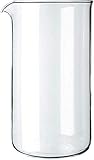
Overview: This replacement carafe is designed exclusively for specific 34oz (8-cup) Bodum French press models. Made from durable, temperature-resistant borosilicate glass, it addresses a common pain point: replacing a broken carafe without purchasing an entirely new press. Compatibility is strictly limited to non-locking lid Bodum models identified by specific item prefixes.
What Makes It Stand Out: Its precise engineering for Bodum’s 34oz ecosystem is key, ensuring seamless integration with plungers and lids of compatible units (e.g., models starting with 1928, 1548). The borosilicate glass withstands thermal shock effectively, crucial for consistent brewing. However, it notably excludes all Chambord models with locking lids (e.g., 11172), avoiding user frustration from incompatible purchases.
Value for Money: Priced as a spare part, it offers significant savings over replacing the entire French press. While niche due to strict model requirements, it’s indispensable for owners of qualifying Bodum presses, extending the life of their existing investment cost-effectively.
Strengths and Weaknesses:
Strengths: Exact Bodum fit; thermal-shock resistant glass; affordable solution for breakage.
Weaknesses: Extremely limited compatibility (excludes popular Chambord); requires verifying model prefix; no added features beyond replacement.
Bottom Line: A necessary, high-value spare part only for owners of compatible non-Chambord Bodum 34oz presses; verify your model prefix before purchasing to avoid disappointment.
2. Bodum 17oz Chambord French Press Coffee Maker, High-Heat Borosilicate Glass, Polished Stainless Steel – Made in Portugal

Overview: The Bodum Chambord is a premium 17-ounce French press coffee maker celebrated for its elegant design and robust construction. Featuring a heat-resistant borosilicate glass beaker housed within a polished stainless-steel frame, it represents Bodum’s classic, high-end offering, crafted in Portugal for quality assurance.
What Makes It Stand Out: Its standout feature is the combination of durable stainless-steel frame and borosilicate glass, offering superior heat retention and a sophisticated aesthetic compared to plastic-framed models. Dishwasher-safe components enhance convenience, and its reputation as a top-tier brewing method for full-bodied coffee is well-established.
Value for Money: Positioned at a higher price point, it justifies cost through longevity, timeless design, and superior materials. While cheaper alternatives exist, the Chambord’s build quality and heritage make it a worthwhile investment for coffee enthusiasts seeking a reliable, stylish centerpiece.
Strengths and Weaknesses:
Strengths: Premium stainless-steel construction; excellent heat retention; dishwasher-safe; iconic design; proven brewing quality.
Weaknesses: Higher initial cost; glass beaker remains vulnerable to breakage despite frame; smaller 17oz capacity may suit only 1-2 people.
Bottom Line: A top-tier, durable French press ideal for those prioritizing craftsmanship and classic design; its premium price is justified by longevity and superior brewing performance for small batches.
3. Fino 3-Cup Replacement Carafe 12-Ounce Stainless Steel French Press Coffee Maker (Item 72002, Sold Separately)

Overview: This 12-ounce replacement carafe is engineered solely for the Fino 3-Cup Stainless Steel French Press (Model 72002). Constructed from European-grade borosilicate glass, it restores functionality to a broken Fino press without necessitating a full unit replacement, emphasizing practicality and cost savings.
What Makes It Stand Out: Its precise fit for the Fino 72002 model ensures perfect alignment with the existing stainless-steel frame and plunger. The glass boasts an impressive temperature range (-40°F to 284°F), handling both iced coffee and boiling water safely. The easy-swap design allows users to replace the glass in minutes.
Value for Money: Offering exceptional value as a targeted spare part, it costs a fraction of a new Fino press. Dishwasher safety adds long-term convenience, making this a highly economical solution specifically for owners of the discontinued or broken Fino 72002 model.
Strengths and Weaknesses:
Strengths: Exact Fino 72002 compatibility; wide temperature tolerance; easy installation; dishwasher-safe; very cost-effective for replacement.
Weaknesses: Zero cross-brand compatibility; niche appeal limited strictly to Fino 72002 owners; glass fragility inherent to the design.
Bottom Line: An essential and affordable lifeline for Fino 72002 French press owners facing carafe breakage; invaluable within its narrow scope but irrelevant for other brands.
4. YMMIND Standard Universal Design 34 oz French Press Replacement Glass Beaker, Fits Most Brands French Press Coffee Makers (1Quart / 1000ml / 5-6 Cup) Coffee Press Borosilicate Glass Water Bottle

Overview: YMMIND positions this 34oz (1000ml) borosilicate glass beaker as a universal replacement for standard French presses. It targets users needing a cost-effective spare part, claiming compatibility with numerous major brands like Bodum, OXO, and Chemex, featuring included cleaning tools and customer support.
What Makes It Stand Out: The bold claim of universal compatibility across diverse brands is its primary hook. Made from thickened borosilicate glass rated to 300°F, it promises durability. Inclusion of a cleaning brush and 24/7 customer support (with breakage replacement) adds perceived value and reduces purchase risk.
Value for Money: Its low price point makes it highly attractive as a potential spare. However, “universal” fit claims can be unreliable; minor dimensional differences between brands may cause leaks or plunger issues. It offers decent value if it fits your specific press, but carries inherent uncertainty.
Strengths and Weaknesses:
Strengths: Very affordable; broad claimed compatibility; includes cleaning brush; good temperature tolerance; strong customer service promise.
Weaknesses: “Universal” fit isn’t guaranteed (varies by brand/model); potential for improper seal/plunger function; glass fragility requires careful handling upon arrival.
Bottom Line: A budget-friendly option worth considering if you verify dimensions match your press; manage expectations on true universality, but the price and support minimize the risk for standard 34oz units.
5. Bruntmor Spare Carafe for French Press, 34 oz French Press replacement Glass, Fire hardened Borosilicate Beaker, 34 ounce

Overview: Bruntmor’s 34oz replacement beaker targets owners of standard-sized French presses needing a spare or secondary glass carafe. Constructed from fire-hardened borosilicate glass, it emphasizes durability through a high-temperature hardening process (1200°F / 700°C), claiming resilience for everyday use.
What Makes It Stand Out: The “fire-hardened” manufacturing process is its key differentiator, theoretically enhancing strength and thermal shock resistance beyond standard borosilicate. It positions itself as a robust universal fit for 34oz/1000ml presses with a 3 7/8" diameter, suitable for major brands like Bodum or OXO.
Value for Money: Competitively priced as a spare part, the fire-hardening process suggests potentially longer lifespan. While universal claims require verification, it offers solid value for the price if compatible, avoiding the need for a full press replacement and providing a reliable backup.
Strengths and Weaknesses:
Strengths: Fire-hardened for potential durability; universal size claims for 34oz presses; dishwasher-safe; affordable; straightforward replacement.
Weaknesses: “Universal” fit not guaranteed (measure your press); fire-hardening benefits may be marginal in practice; glass remains inherently fragile during handling/installation.
Bottom Line: A sensible, durable, and economical spare carafe for standard 34oz French presses; verify your press dimensions match, but the fire-hardened glass and price make it a reliable backup choice.
6. Bodum 51oz Spare Carafe for French Press, High-Heat Borosilicate Glass

Overview: This 51oz (12-cup) replacement carafe is designed exclusively for compatible Bodum Chambord and Brazil French presses. Made from durable, high-heat borosilicate glass, it serves as a practical spare or replacement part to extend the life of your existing coffee maker, avoiding the need for a full unit purchase. It’s dishwasher safe for easy maintenance. What Makes It Stand Out: Precise compatibility with specific Bodum models (starting with 1932, 1552, or 11030) ensures a perfect fit, while its borosilicate construction withstands thermal shock. Crucially, it excludes models with locking lids (e.g., 11173), preventing buyer confusion. The note on grind size and tamping, though oddly referencing espresso, hints at optimal French press technique. Value for Money: At a fraction of the cost of a new French press, this carafe offers exceptional value for owners of compatible Bodum units. It’s an economical solution for glass breakage, significantly cheaper than replacing the entire maker, especially for well-maintained older models. Strengths and Weaknesses: Strengths: Exact model compatibility, thermal shock resistance, dishwasher safe, cost-effective replacement. Weaknesses: Very limited model compatibility (excludes locking-lid Chambords), the espresso-related note is confusing and irrelevant to French press operation. Bottom Line: An essential, budget-friendly spare for owners of compatible Bodum French presses, ensuring longevity. Verify your model number strictly against the fit guide before purchasing to avoid frustration.
7. Fino 8-Cup Replacement Carafe 34-Ounce Stainless Steel French Press Coffee Maker (Item 72003, Sold Separately)
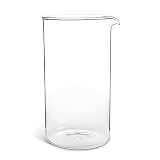
Overview: This 34-ounce (8-cup) borosilicate glass carafe is a direct replacement for the Fino Stainless Steel French Press (model 72003). Engineered to slot back into the metal frame, it revives a broken press without replacing the entire unit, leveraging LFGB-approved, heat-safe glass rated from -40°F to 284°F. What Makes It Stand Out: Its exact model specificity (72003) guarantees seamless integration. The focus on economical replacement—slipping the glass out/in—highlights user-friendly maintenance. The wide temperature tolerance and LFGB safety certification underscore reliability for both hot and cold brewing. Value for Money: Highly cost-effective, as replacing just the glass is vastly cheaper than buying a new stainless steel French press. The ease of DIY installation adds further value, making it a smart long-term investment for Fino 72003 owners facing glass failure. Strengths and Weaknesses: Strengths: Perfect fit for Fino 72003, robust borosilicate glass, dishwasher safe, simple installation, excellent value. Weaknesses: Zero compatibility beyond the specific Fino model, not microwave-safe, limited brand utility. Bottom Line: The definitive, economical solution for Fino 72003 owners needing a glass replacement. Prioritize this over a full unit replacement if your press frame is intact.
8. Bodum 12oz Chambord French Press Coffee Maker, High-Heat Borosilicate Glass, Polished Stainless Steel – Made in Portugal

Overview: This complete 12oz (3-cup) Chambord French press features Bodum’s iconic design: a borosilicate glass carafe with a BPA-free handle/base, housed in polished stainless steel. It brews rich coffee in minutes using a 3-part stainless steel plunger with a fine mesh filter, made in Portugal for quality assurance. What Makes It Stand Out: The Chambord’s elegant stainless steel frame and premium build distinguish it from basic models. The mesh filter maximizes flavor extraction by preserving oils lost with paper filters, delivering a fuller-bodied cup preferred by enthusiasts. The note on grind/tamping, while mistakenly mentioning espresso, emphasizes technique. Value for Money: Positioned as a premium entry, its price reflects the durable stainless steel construction and reliable borosilicate glass. While pricier than plastic models, its longevity and superior flavor extraction justify the cost for daily users seeking a quality, long-lasting brewer. Strengths and Weaknesses: Strengths: Elegant & durable stainless steel build, excellent flavor extraction, heat-resistant glass, easy cleaning, compact size ideal for 1-2 people. Weaknesses: Small capacity (12oz), glass vulnerability if mishandled, the espresso-related notes are inaccurate and confusing. Bottom Line: A stylish, high-quality French press delivering exceptional coffee for individuals or couples. Ideal for those valuing craftsmanship and flavor over high volume.
9. French Press Replacement Glass by Cafe Crush Club - Fire Hardened Borosilicate Beaker - 34 Ounce | 1 Liter Size with White Measures
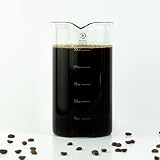
Overview: Cafe Crush Club’s universal 34oz (1L) replacement beaker is a fire-hardened borosilicate glass carafe designed as a standard-fit solution for many French presses. It features measurement markings, a drip-preventing creased spout, and a heavier weight (9.9oz vs Bodum’s 8.9oz), offering a direct alternative to OEM parts. What Makes It Stand Out: Its “fire-hardened” process (1200°F/700°C) and thicker 2.1mm glass (vs 1.8mm standard) promise enhanced durability. The universal design targets Bodum Chambord, Starbucks, Grosche, and Primula models, while the lifetime warranty on defects provides exceptional buyer confidence. Value for Money: Excellent value as a robust, universal replacement. The thicker glass and warranty mitigate breakage risks, potentially outlasting OEM parts. It’s significantly cheaper than replacing an entire press, especially for compatible high-end models. Strengths and Weaknesses: Strengths: Superior thickness & fire-hardening, universal fit for major brands, lifetime warranty, creased spout, dishwasher safe. Weaknesses: Slightly heavier weight may affect plunger fit in some units, universal fit requires careful size verification (7" x 3.75"), not OEM. Bottom Line: A highly recommended, durable universal replacement carafe backed by a strong warranty. Verify dimensions against your press before purchase for seamless integration.
10. GROSCHE Universal French Press Replacement Glass Beaker, Borosilicate 3.3 Glass Carafe for Coffee & Tea, Heat-Resistant, Fits Most Coffee & Tea Press Makers, 34 fl. oz. (1000 mL)

Overview: GROSCHE’s 34oz (1000mL) replacement beaker is a versatile Borosilicate 3.3 glass carafe engineered for universal compatibility with most French press coffee and tea makers. It emphasizes thermal resilience for hot/cold brews and offers size options (small/medium/large) to minimize fit issues. What Makes It Stand Out: The focus on Borosilicate 3.3 grade ensures high thermal shock resistance and purity. Explicit size guidance (small/medium/large) helps prevent mismatches. Its design prioritizes flavor preservation for both coffee and tea, appealing to multi-beverage households. Value for Money: Strong value due to universal applicability across brands and beverage types. The top-rack dishwasher safety and durability reduce long-term costs. Choosing the correct size (medium = 34oz) is key to maximizing this cost-effective solution. Strengths and Weaknesses: Strengths: True universal fit potential, premium Borosilicate 3.3 glass, heat/cold resistant, dishwasher safe, multi-beverage use, size clarity. Weaknesses: Fit isn’t guaranteed (requires precise measurement check), lacks specific model assurances like Bodum/Fino parts. Bottom Line: A reliable, high-quality universal replacement beaker offering great value for most standard 34oz presses. Always double-check your maker’s dimensions before buying.
The Foundation: Why Your Carafe Material Matters More Than You Think
The material of your coffee press carafe isn’t merely aesthetic; it fundamentally impacts heat retention, durability, flavor neutrality, and even safety. Choosing wisely means aligning the material’s properties with your brewing habits and environment. A mismatch here can lead to shattered glass over the sink, coffee that cools too fast, or subtle off-flavors creeping into your carefully sourced beans.
Glass: Timeless Clarity with Thermal Trade-offs
Traditional glass carafes, particularly those made from borosilicate glass, offer the undeniable charm of watching the bloom and plunge happen. They are generally flavor-neutral and easy to clean. However, their Achilles’ heel remains thermal shock vulnerability – a splash of cold water on a hot carafe can spell disaster. While double-walled glass models improve insulation significantly, they often add considerable weight and cost, and the inherent fragility remains a concern for many households, especially those with active kitchens or children.
Stainless Steel: The Unbreakable Insulation Champion
Stainless steel carafes, especially double or triple-walled vacuum-insulated versions, are the undisputed kings of heat retention, often keeping coffee piping hot for hours. They are incredibly durable, resistant to dents and drops, and generally dishwasher-safe. The trade-off lies in the inability to see the brewing process and potential for metallic taste if the steel quality is poor (look for high-grade 18/8 or 18/10). They also tend to be heavier and can feel less “traditional” than glass for some purists.
Hybrid & Emerging Materials: Blending Strengths
Innovative designs are increasingly blending materials to leverage the best of both worlds. Think stainless steel exteriors with heat-resistant glass liners, or high-tech ceramic composites offering better insulation than standard glass with reduced fragility. Some 2026-forward models explore advanced polymers specifically engineered for high-heat beverage use, prioritizing lightweight durability and insulation without the weight of metal. These hybrids aim to solve the core weaknesses of single-material carafes.
Mastering the Heat: Thermal Performance Beyond Basic Insulation
Keeping coffee at the optimal drinking temperature (roughly 140°F to 160°F) for a reasonable window after brewing is non-negotiable for enthusiasts. But true thermal intelligence in 2026 goes deeper than just “stays hot.” It involves understanding how heat is managed throughout the entire brewing and serving process to prevent over-extraction or scalding.
The Science of Vacuum Insulation
Vacuum insulation, borrowed from high-end thermoses, creates a near-perfect barrier against heat transfer by removing air molecules between two walls. This is the gold standard for long-term heat retention in stainless steel carafes. However, the effectiveness depends heavily on the quality of the vacuum seal and the precision of the manufacturing. A poorly executed vacuum layer offers minimal improvement over single-wall designs and can even fail prematurely, leading to condensation between walls.
Mitigating Pre-Infusion Cooling
A critical, often overlooked factor is how quickly the carafe itself cools the hot water before you even add the coffee grounds. A cold glass carafe can drop the initial water temperature significantly, hindering the essential bloom phase where CO2 escapes the grounds. Pre-heating the carafe is a common workaround, but the best 2026 designs incorporate materials or pre-warming features that minimize this initial thermal shock, ensuring water hits the grounds at the ideal 195°F-205°F range consistently.
Avoiding the “Hot Spot” Scalding Effect
While keeping coffee hot is vital, uneven heating or excessive heat retention right at the bottom of the carafe can scald the coffee sitting in contact with the metal or glass, creating bitter, burnt notes even if the top layer tastes fine. Advanced thermal designs now focus on distributing heat more evenly throughout the liquid or incorporating insulating layers specifically at the base to prevent this localized overheating, preserving balanced flavor from the first pour to the last.
Ergonomics & Usability: Designing for the Daily Ritual
A coffee press should feel like a natural extension of your morning routine, not a chore to handle. By 2026, ergonomic advancements focus on making every interaction – from filling and plunging to pouring and cleaning – intuitive, comfortable, and safe, especially during those early, pre-caffeinated moments.
The Plunge: Smoothness, Stability, and Seal Integrity
A gritty, sticky, or wobbly plunger is the bane of French press existence. High-quality carafes feature precision-engineered filters and plungers that move with consistent, buttery smoothness without lateral play. The seal between the plunger and carafe wall must be tight enough to effectively separate grounds but not so tight it requires excessive force. Look for designs where the plunger assembly feels substantial and stable, preventing coffee from bypassing the filter during the crucial final plunge.
Pouring Precision: Drip-Free Spouts and Balanced Weight
A good pour is an art, and a poorly designed spout turns it into a messy science experiment. The ideal spout is sharp-edged, promoting a clean break of the liquid stream to minimize dribbling down the side. The carafe’s overall balance when full is equally important; a top-heavy design is prone to tipping, while one that’s too bottom-heavy can feel awkward to lift and pour. The handle, if present, must provide a secure, comfortable grip that doesn’t transmit excessive heat, even on insulated models.
Lid Design: Functionality Meets Safety
The lid serves multiple critical roles: retaining heat, preventing spills, and often acting as the plunger stop. Effective 2026 lids feature secure locking mechanisms that won’t accidentally release during pouring, integrated strainers to catch fine particles escaping the main filter, and heat-resistant materials for the top surface. Safety is paramount – lids should be designed to vent steam safely to prevent pressure build-up but minimize heat loss, and have no sharp edges that could cause injury during handling or cleaning.
Cleaning & Longevity: Building for Daily Resilience
The best coffee press carafe is the one you actually use, and that means it needs to withstand daily cleaning without degrading. Durability isn’t just about surviving a drop; it’s about resisting stains, scratches, and the wear-and-tear of repeated washing, ensuring consistent performance and flavor neutrality for years.
Dishwasher Safety: Separating Fact from Marketing
“Dishwasher safe” is a common claim, but its meaning varies wildly. True dishwasher resilience in 2026 means the carafe (and all its components – lid, plunger, filter screen) can endure repeated cycles on standard settings without clouding (glass), pitting (stainless), warping (plastics), or degrading seals. Pay close attention to manufacturer instructions – some components (like fine mesh filters) might require hand washing even if the main carafe is dishwasher safe. Beware of models where “dishwasher safe” applies only to the outer shell, leaving fragile inner components vulnerable.
Stain & Odor Resistance: Preserving Pure Flavor
Low-quality materials, particularly certain plastics or uncoated stainless steel, can absorb coffee oils over time, leading to stubborn stains and rancid off-flavors that taint future brews. High-end carafes utilize materials inherently resistant to staining and odor absorption. Borosilicate glass is excellent, as is high-grade, properly passivated stainless steel. Some newer ceramic-composite liners also offer superior resistance. A carafe that cleans up looking and smelling pristine after years of use is a hallmark of quality.
Modular Design for Repairability and Replacement
The throwaway culture is fading, especially among enthusiasts. Forward-thinking 2026 carafes embrace modular design, allowing easy replacement of wear parts like filter screens, rubber gaskets, or even the entire plunger assembly without needing to discard the whole carafe. This not only extends the product’s lifespan significantly but also reduces waste. Look for models where spare parts are readily available and the design facilitates simple disassembly for cleaning or replacement.
Future-Proof Features: What Sets 2026 Carafes Apart
Beyond the core functions, the most innovative coffee press carafes of 2026 integrate subtle yet impactful features that enhance the experience, cater to evolving lifestyles, and demonstrate thoughtful attention to the brewer’s real-world needs. These aren’t gimmicks; they’re solutions to persistent minor frustrations.
Integrated Temperature Guidance
While not full “smart” tech, subtle, non-electronic temperature indicators are becoming more common. Think heat-sensitive bands on the exterior that change color to signal when the brew is within the ideal drinking range, or when it’s safe to handle after pre-heating. This takes the guesswork out of timing your first pour without requiring batteries or apps, appealing to purists who want precision without complexity.
Sustainable Material Sourcing and End-of-Life Planning
Environmental consciousness is no longer optional. Leading carafes in 2026 prioritize materials with verified low environmental impact – recycled stainless steel, responsibly sourced glass, or bio-based polymers. Crucially, they also consider end-of-life: clear labeling of materials for proper recycling streams and designs that facilitate disassembly make responsible disposal or recycling a realistic option, not just an afterthought.
Universal Compatibility and Space-Saving Design
Kitchens are shrinking, and enthusiasts often own multiple brewing methods. The best modern carafes consider footprint and compatibility. This might mean a tapered shape that fits under standard cabinet heights, a compact profile that doesn’t dominate the counter, or lids/plungers designed to be compatible across different sizes within a brand’s ecosystem (e.g., a single plunger fitting 8oz and 12oz carafes). Reducing clutter while maintaining functionality is a key 2026 trend.
Making Your Choice: A Practical Buying Framework
Armed with knowledge of materials, thermal dynamics, ergonomics, and longevity, how do you translate this into the perfect carafe for you? It boils down to honestly assessing your primary brewing context and non-negotiables. There’s no single “best” carafe, only the best fit for your specific ritual.
Matching Capacity to Your Reality
Oversized carafes lead to stale coffee and wasted beans; undersized ones mean constant re-brewing. Be realistic about your typical serving size. Do you brew solo most days, needing just 8-12oz? Or is it primarily for sharing, requiring 32oz or more? Remember that “maximum capacity” often includes space needed for plunging – the actual brew volume is usually 10-20% less. Choose a size that aligns with your usual consumption to ensure optimal freshness.
Prioritizing Your Top Three Non-Negotiables
What three features are absolutely essential for your satisfaction? Is it unbreakability (prioritize stainless), seeing the brew (glass or hybrid), maximum heat retention (vacuum insulated stainless), effortless cleaning (dishwasher-safe modular design), or sustainability credentials? Rank these. Sacrificing your top priority for a secondary feature will lead to dissatisfaction. A carafe excelling in areas you don’t care about is still the wrong choice.
Considering Your Kitchen Ecosystem
How does the carafe integrate into your existing setup? Will its height fit under your cabinets? Does its weight (especially when full) feel manageable for you to pour? Is the spout design compatible with your favorite mug? Does its aesthetic mesh with your kitchen style, making it something you want to leave on the counter? These practical considerations significantly impact daily usability and enjoyment, turning a functional tool into a welcome part of your space.
Frequently Asked Questions
Frequently Asked Questions
How long should a good coffee press carafe keep coffee hot? A high-quality double or triple-walled vacuum-insulated stainless steel carafe should maintain coffee above 140°F for 1.5 to 2.5 hours. Single-wall glass typically keeps it hot for 30-45 minutes, while double-walled glass might extend this to 60-90 minutes. Actual time depends on ambient temperature and initial brew temperature.
Can I use regular dish soap on all carafe materials? Generally yes, but avoid harsh abrasives or steel wool on any material, as they can scratch surfaces and trap oils. For stainless steel, ensure it’s high-grade (18/8 or 18/10) to prevent potential metallic tastes from lower grades reacting with acidic soaps over time. Always rinse thoroughly.
Why does my stainless steel carafe sometimes taste metallic? This usually indicates lower-grade steel or inadequate passivation (a protective layer). High-quality 18/8 or 18/10 stainless steel, properly passivated, should be flavor-neutral. Pre-rinsing with hot water before brewing and avoiding prolonged storage of coffee in the carafe can help mitigate this if it occurs.
Is borosilicate glass really less likely to shatter than regular glass? Yes. Borosilicate glass contains boron trioxide, making it significantly more resistant to thermal shock (sudden temperature changes) than standard soda-lime glass. It’s the reason laboratory glassware and quality cookware uses this material, though it’s not immune to breakage from severe impacts.
How often do I need to replace the filter screen? With proper care (gentle hand washing, avoiding harsh abrasives), a high-quality metal mesh screen should last for years. Signs it’s time to replace include visible warping, holes developing in the mesh, persistent clogging that cleaning doesn’t fix, or a noticeable decline in the clarity of your brewed coffee.
Does the carafe material affect the coffee flavor itself? High-quality, inert materials like borosilicate glass and properly passivated high-grade stainless steel are flavor-neutral. Lower-quality plastics or unpassivated steel can impart subtle off-flavors or absorb coffee oils over time, leading to stale tastes. Consistent cleaning is crucial regardless of material.
What’s the best way to clean coffee oils from a glass carafe? For stubborn oils, create a paste with coarse salt and a little water or baking soda, then gently scrub with a soft bottle brush. Alternatively, soak overnight in a solution of warm water and a denture cleaning tablet. Avoid harsh chemical cleaners that can leave residues.
Can I make cold brew in any coffee press carafe? Technically yes, but carafes designed specifically for cold brew often have finer filters and sturdier plungers to handle the longer steep times and wet grounds. Standard press carafes work, but you might get slightly more sediment in your cold brew concentrate compared to a dedicated cold brew system.
Why does my plunger stick or feel gritty after a few months? This is usually due to coffee fines (microscopic particles) and oils building up in the plunger mechanism and filter housing. Regular disassembly and deep cleaning (soaking parts in hot water/vinegar solution) is essential. Gritty feeling can also indicate a lower-quality filter screen wearing down.
Is pre-heating the carafe still necessary with insulated models? It’s highly recommended for all materials, even insulated ones. Pre-heating (rinsing with hot water) minimizes the initial temperature drop when you add brewing water, ensuring optimal extraction from the very first second. Insulated carafes just retain that pre-heated state better once brewing starts.
See Also
- 10 Best Value Glass Coffee Carafes for Everyday Use in 2026
- 10 Best Coffee Carafe with Lid Designs to Prevent Spills in 2026
- 10 Best Value Thermal Carafes for Large Families in 2026
- 10 Game-Changing Insulated Coffee Carafes for Campers in 2026
- Stop Wasting Coffee with the 10 Best Drip Coffee Carafes This Year