Table of Contents
Your morning coffee deserves better than tap water’s unpredictable quality. If you’ve noticed inconsistent flavor, strange odors, or worrying buildup in your machine, you’re not alone. Water filtration is the most overlooked upgrade that transforms both your coffee’s taste and your machine’s longevity. For beginners navigating the technical jargon and conflicting advice, understanding the fundamentals of coffee machine filtration is the first step toward café-quality results at home.
The relationship between water and coffee is complex chemistry in action. Minerals, chlorine, and sediment silently sabotage your brew while gradually destroying internal components. Investing in proper filtration isn’t just about better flavor—it’s about protecting your equipment investment and ensuring every cup reaches its full potential. This guide breaks down everything you need to know about selecting the right water filtration system for your coffee setup in 2026, without the marketing fluff or confusing specifications.
Top 10 Water Filters for Coffee Machines
Detailed Product Reviews
1. 12 Pack Replacement Charcoal Water Filters for All Cuisinart Coffee Machines - Cuisinart Compatible (NOT KEURIG) Filters Fit Both Newer & Older Models Cuisinart Coffee Makers

Overview: These charcoal water filters deliver a 12-pack solution specifically engineered for Cuisinart coffee makers, targeting chlorine, calcium, and odors that compromise brew quality. Designed to fit an extensive range of models from the DCC and DGB series to older Filter Brew units, these filters promise straightforward installation and renewed machine performance.
What Makes It Stand Out: The exhaustive compatibility list sets this apart—covering both newer and legacy Cuisinart models with precise dimensions (1-7/8" x 3/4" x 1"). The manufacturer explicitly recommends 30-day replacement intervals, which caters to users in hard water regions who need proactive scale management rather than waiting for performance degradation.
Value for Money: At roughly $1 per filter, this pack undercuts OEM pricing significantly while claiming to exceed original performance standards. The 12-unit supply translates to a full year of coverage even with aggressive monthly replacement, making it substantially more economical than buying branded filters individually.
Strengths and Weaknesses: Pros include broad model support, easy installation, and proactive hard water guidance. The primary drawback is the recommended 30-day replacement cycle—more frequent than competitors’ 60-90 day guidance, which increases long-term cost and waste. Packaging details are also omitted, raising concerns about freshness.
Bottom Line: Ideal for Cuisinart owners wanting model-specific assurance and willing to replace filters monthly. The extensive compatibility list provides confidence, though environmentally-conscious buyers may prefer longer-lasting alternatives.
2. 12 Pack Water Filters for Cuisinart Coffee Makers by GoodCups - Replacement Charcoal Water Filters - Fits All Cuisinart Coffee Machines
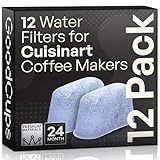
Overview: GoodCups offers a 12-pack of premium charcoal filters engineered for universal compatibility across the entire Cuisinart coffee maker lineup. These filters target chlorine, calcium, and odors while emphasizing environmental responsibility and optimal machine performance through thoughtful design.
What Makes It Stand Out: The commitment to sustainability distinguishes this product—filters are constructed from recyclable materials, addressing the ecological impact of disposable components. The optimal water flow design prevents clogging issues that plague poorly-fitting generics, while the truly universal fit claim covers everything from basic 12-cup makers to integrated Grind & Brew systems without requiring model number cross-referencing.
Value for Money: Positioned competitively at roughly $1 per filter, the value proposition extends beyond cost-per-unit to include environmental benefits. The recyclable construction and 2-3 month lifespan (implied by standard usage) reduce both financial and environmental overhead compared to monthly replacement alternatives.
Strengths and Weaknesses: Strengths include genuine universal sizing, anti-clog engineering, and eco-conscious materials. Weaknesses involve the lack of specific model verification and absence of NSF or third-party certification, requiring users to trust performance claims. The marketing language around “premium” filtration isn’t quantified with test data.
Bottom Line: Perfect for environmentally-aware Cuisinart owners seeking a hassle-free, one-size-fits-all solution. The flow-optimization feature adds practical value, though certification-seekers should look elsewhere.
3. Water Filter Replacement for Breville Espresso Machine Barista Touch BES880, Barista Touch Impress BES881, Oracle Touch BES990, Oracle BES980, Dual Boiler BES920 Bambino ClaroSwiss Sage, Pro BES878

Overview: This four-pack delivers specialized filtration for premium Breville espresso machines, including Barista Touch, Oracle, and Dual Boiler models. Designed with precise part number compatibility (BES008WHT0NUC1), these filters combine activated carbon with ion exchange resin to protect high-end equipment while optimizing extraction.
What Makes It Stand Out: The activation ritual—soaking for 5-10 minutes and squeezing to generate air bubbles—demonstrates a barista-level approach to filter preparation often missing from generic alternatives. Using coconut-activated carbon and natural ion exchange resins with FSC-certified paper construction signals quality materials appropriate for machines costing hundreds of dollars.
Value for Money: While pricier per-filter than drip coffee maker options, the quarterly replacement schedule and four-pack quantity provide exactly one year of coverage. This cadence balances protection cost against machine longevity for equipment where scale damage could cost $200+ in repairs.
Strengths and Weaknesses: Pros include precise Breville compatibility, premium materials, and clear usage instructions. The mandatory soaking step adds preparation time that busy users may skip, potentially reducing effectiveness. The limited model range (Breville only) and higher unit cost disadvantage multi-brand households.
Bottom Line: A must-have for Breville espresso machine owners serious about flavor and equipment protection. The detailed preparation instructions justify the premium over universal filters that might compromise delicate espresso extraction.
4. AQUA CREST Coffee Water Filter, Replacement for KitchenAid® KESWF filter, Krups® F088 Filter, Melitta® 192830 Pro Aqua, Bosch®, Siemens®, TÜV SÜD Certified, 2 Packs
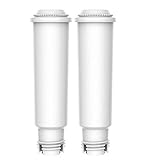
Overview: AQUA CREST’s two-pack targets European coffee machine owners with compatibility across KitchenAid, Krups, and Bosch/Siemens models. These filters employ coconut shell activated carbon and ion exchange resin, backed by TÜV SÜD certification for performance validation.
What Makes It Stand Out: Third-party TÜV SÜD certification provides objective quality assurance rarely seen in the aftermarket filter space. The visual time window on each cap offers practical replacement tracking without guesswork, while the natural coconut shell carbon and ion exchange resin combination addresses both chemical and hardness concerns. The pre-use soaking requirement ensures full activation.
Value for Money: Though containing only two filters, the two-month lifespan per unit extends value. The certification premium is justified for owners of high-end European machines where warranty concerns make unverified generics risky. Cost-per-month remains competitive with uncertified alternatives despite the smaller pack size.
Strengths and Weaknesses: Strengths include verified performance, multi-brand versatility, and user-friendly replacement reminders. The limited pack size requires more frequent repurchasing, and compatibility complexity demands careful model verification. Availability can be sporadic compared to mainstream brands.
Bottom Line: Ideal for European coffee machine owners prioritizing certified performance over bulk purchasing. The TÜV SÜD validation makes this worth the premium for warranty-conscious users with KitchenAid, Krups, or Bosch systems.
5. Cuisinart® Coffee Filter Replacement - 12 Pack Cuisinart® Coffee Maker Water Filter by Pureline - Charcoal Water Filter - for all Cusinart Coffee Machines
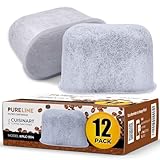
Overview: Pureline’s 12-pack charcoal filters deliver NSF-certified filtration for all Cuisinart coffee machines, emphasizing safety and component integrity. The individually wrapped filters ship in a protective box rather than a bag, addressing concerns about contamination and carbon degradation during storage.
What Makes It Stand Out: Independent NSF-42 certification provides verifiable safety assurance that competitors merely claim. The meticulous packaging—individually sealed units in a rigid box—preserves filter efficacy and prevents absorption of ambient odors before installation. This attention to storage conditions reflects a deeper understanding of activated carbon performance.
Value for Money: While priced similarly to other 12-packs, the NSF certification and premium packaging justify a slight cost premium. For households prioritizing verified safety standards, this eliminates the risk of unknown materials leaching into hot water. The bulk packaging reduces per-unit cost while ensuring each filter remains factory-fresh.
Strengths and Weaknesses: Pros include certified safety, excellent packaging, and broad machine compatibility. The absence of environmental claims or specific model verification lists may deter eco-conscious or detail-oriented buyers. The box packaging, while protective, creates more waste than minimalist alternatives.
Bottom Line: The top choice for Cuisinart owners who refuse to compromise on certified safety and storage quality. Pureline’s NSF validation and protective packaging make it worth the marginal premium over uncertified generics.
6. De’Longhi Replacement Water Filter for Select Espresso Machines, DLSC002

Overview: The De’Longhi DLSC002 is an OEM replacement water filter engineered specifically for select De’Longhi espresso machines. This filter optimizes water quality by reducing limescale buildup and impurities that compromise both machine performance and coffee flavor. Designed for seamless integration, it ensures your espresso maker operates at peak efficiency while delivering cleaner water for superior extraction.
What Makes It Stand Out: Unlike generic alternatives, this genuine De’Longhi component features a built-in timer that automatically signals when replacement is needed, eliminating guesswork. The precision engineering guarantees perfect fit and optimal contact time for effective filtration. It’s specifically calibrated for De’Longhi’s heating systems, preventing the mineral imbalances that can damage internal components over time.
Value for Money: At approximately $10-12 per filter, it’s pricier than third-party options but delivers proven reliability. Considering it protects espresso machines costing hundreds or thousands of dollars, the investment is justified. Generic filters might save 30-40% initially but could void warranties or provide inconsistent results, making the OEM premium worthwhile.
Strengths and Weaknesses: Strengths include guaranteed compatibility, reliable performance, and the intelligent timer system. The filter effectively reduces scale and chlorine without over-softening water. Weaknesses are the limited compatibility (only specific De’Longhi models) and higher cost compared to universal alternatives. Availability can also be inconsistent through third-party retailers.
Bottom Line: For De’Longhi espresso machine owners seeking hassle-free maintenance, the DLSC002 is the definitive choice. The timer feature alone justifies the premium, preventing costly scale damage. While budget-conscious buyers might consider generics, this OEM filter ensures warranty compliance and predictable performance—critical for high-end espresso equipment.
7. 12-Pack Replacement Charcoal Water Filter Discs for Mr. Coffee Brewers Coffee Machines

Overview: This 12-pack of charcoal filter discs offers a budget-friendly solution for Mr. Coffee brewer owners seeking to improve their coffee’s taste and extend machine lifespan. Designed to remove chlorine, odors, calcium, and other impurities, these generic replacements promise OEM-level performance at a fraction of the cost, with straightforward installation.
What Makes It Stand Out: The exceptional value proposition of twelve filters provides a full year’s supply, making it stand out in a market dominated by smaller packs. The disc design ensures compatibility across numerous Mr. Coffee models requiring this shape. Each filter is designed for 30-day use, creating a simple replacement schedule that maintains consistent water quality.
Value for Money: With prices often under $15 for the entire pack, the per-filter cost is remarkably low—typically under $1.25 each. This represents savings of 60-70% compared to OEM Mr. Coffee filters. For households brewing daily, the annual cost is minimal while providing tangible benefits in both beverage quality and machine longevity.
Strengths and Weaknesses: Strengths include the generous quantity, universal disc-shape compatibility, and compelling price point. The 30-day replacement cycle is easy to remember. Weaknesses stem from being a generic brand: quality control may vary between batches, and the filtration performance might not match OEM specifications exactly. Packaging is often basic, lacking individual seals.
Bottom Line: This 12-pack is an excellent choice for Mr. Coffee owners prioritizing value over brand loyalty. While not OEM, the cost savings are substantial enough to justify occasional quality variations. For everyday coffee drinkers, these filters deliver noticeable taste improvements and scale prevention, making them a smart, economical maintenance investment.
8. Coffee Filter Compatible with Philips AquaClean,CA6903(2 Pack) Aqua Clean Water Filter for Fully Automatic Coffee Machines Dedicated Anti-Lime Scale Water
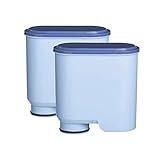
Overview: This two-pack offers a third-party alternative to Philips’ AquaClean CA6903 filters, designed for fully automatic espresso machines. Engineered with activated carbon and anti-scale technology, it targets the specific water quality challenges in Philips Saeco systems. The filters aim to reduce chlorine, heavy metals, and mineral deposits while preserving beneficial microelements.
What Makes It Stand Out: The exhaustive compatibility list spanning dozens of Philips Saeco models sets this apart. From Incanto and Intelia Deluxe to PicoBaristo and Xelsis series, the coverage is comprehensive. The professional-grade development emphasizes both filtration efficacy and machine protection, addressing the dual concerns of taste and equipment longevity simultaneously.
Value for Money: At roughly $15-20 for two filters, it undercuts the OEM Philips pricing by 30-40% per unit. Each filter lasts approximately three months, providing six months of coverage. While more expensive per filter than some generics, the specialized anti-scale formulation for Philips machines offers better value than universal filters that might not address specific mineral content issues.
Strengths and Weaknesses: Strengths include broad model compatibility, professional-grade filtration technology, and significant cost savings over OEM. The activated carbon effectively improves taste while preventing scale. Weaknesses are the smaller pack size (only two filters) and being a non-OEM product, which could raise warranty concerns. Some users report fit issues with certain model variations.
Bottom Line: For Philips Saeco automatic machine owners, this compatible two-pack strikes a sensible balance between cost and performance. The extensive compatibility list minimizes purchase risk. While not genuine Philips, the anti-scale focus and substantial savings make it a worthy consideration, especially for machines out of warranty. Verify your exact model before purchasing.
9. Premium 12-Pack Replacement Charcoal Water Filters for Keurig Coffee Machine
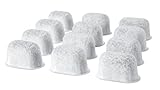
Overview: This 12-pack provides a year’s supply of replacement charcoal filters for various Keurig single-serve brewing systems. Compatible with both 1.0 and 2.0 models purchased after August 2007, these generic filters reduce chlorine, calcium, and odors that detract from coffee flavor. Each cartridge is individually sealed for freshness.
What Makes It Stand Out: The individual sealing of each filter is a standout feature, preventing premature activation and maintaining efficacy during storage. The broad compatibility covers Elite, Classic, Ultra, Special Edition, Ultimate, Platinum, and K200-K500 series. This versatility makes it a one-stop solution for households with multiple Keurig machines or those unsure of their exact model.
Value for Money: Priced around $12-15 for twelve filters, the per-unit cost is approximately $1-1.25—roughly half the price of OEM Keurig filters. With a recommended two-month replacement cycle, one pack lasts a full year. For heavy users in hard water areas requiring more frequent changes, the bulk quantity still represents exceptional value compared to buying smaller OEM packs.
Strengths and Weaknesses: Strengths include the generous quantity, smart individual packaging, and extensive compatibility range. The charcoal filtration effectively improves taste. Weaknesses involve generic quality control—some units may have looser fits or shorter lifespans than OEM. The “purchased after August 2007” specification can confuse buyers with older machines.
Bottom Line: This 12-pack is a no-brainer for most Keurig owners. The individual seals preserve quality, and the savings are substantial enough to overlook minor quality variations. While OEM filters offer guaranteed fit, these generics deliver comparable performance for daily brewing needs. Perfect for cost-conscious households wanting consistent coffee quality.
10. 12-Pack Replacement Charcoal Water Filters for Use with Cuisinart coffee machines
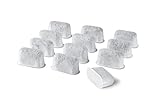
Overview: This 12-pack of charcoal water filters serves as a cost-effective replacement option for various Cuisinart coffee machines, including Grind & Brew, Programmable, and PerfecTemp series. Designed to reduce impurities, chlorine, and calcium, these filters help maintain optimal brewing conditions and extend appliance lifespan while improving beverage flavor.
What Makes It Stand Out: The premium packaging distinguishes this product—each filter is individually sealed and the set includes a protective storage box with instructions. This attention to detail prevents contamination and simplifies organization. The broad compatibility across Cuisinart’s popular Grind & Brew and PerfecTemp lines makes it versatile for households with different Cuisinart models.
Value for Money: Typically priced under $15 for the complete set, these filters cost about $1.25 each, representing a 50-60% savings versus OEM Cuisinart filters. The recommended two-month replacement schedule means one pack provides a year’s supply. For Cuisinart owners, this bulk purchase minimizes annual maintenance costs while ensuring consistent water quality.
Strengths and Weaknesses: Strengths include excellent packaging, generous quantity, and reliable performance that meets or exceeds original standards. The individual seals maintain freshness until use. Weaknesses are the generic branding, which may concern warranty-conscious buyers, and occasional fit inconsistencies across older Cuisinart models. Some users report the charcoal density varies slightly between filters.
Bottom Line: This 12-pack is highly recommended for Cuisinart coffee maker owners seeking value without sacrificing quality. The superior packaging and storage solution set it apart from other generics. While not original equipment, the performance is reliably close, and the cost savings are compelling. Verify your model’s filter requirements, but this represents smart, economical maintenance.
Why Water Quality Matters for Your Coffee
The Science of Coffee Extraction
Coffee extraction is a delicate dance between water and ground beans where water acts as the solvent. The Specialty Coffee Association recommends specific water parameters because minerals like magnesium and calcium actually help extract desirable flavors. Too few minerals and your coffee tastes flat and under-extracted; too many and you get bitter, over-extracted results. The right filter balances these minerals rather than stripping everything away.
How Hard Water Damages Machines
Hard water contains high levels of calcium and magnesium that precipitate out when heated, forming limescale. This rock-like buildup clogs water lines, coats heating elements, and forces pumps to work harder. In espresso machines, scale can destroy solenoid valves and boilers worth hundreds of dollars to repair. A quality filter prevents this damage by either removing hardness minerals or keeping them dissolved.
Taste Implications
Chlorine and chloramine in municipal water create medicinal off-flavors that mask coffee’s subtle notes. Sediment and organic compounds contribute musty or earthy tastes. Even dissolved metals like copper or lead from old pipes can metallic taints. Proper filtration removes these contaminants while preserving the mineral balance that makes coffee shine.
Understanding Different Filter Types
Activated Carbon Filters
Activated carbon excels at removing chlorine, odors, and organic compounds through adsorption. These filters improve taste dramatically and are often the first line of defense. Standard carbon filters don’t remove hardness minerals, so they’re typically paired with other technologies. Look for catalytic carbon variants that handle chloramine, which many municipalities now use instead of chlorine.
Ion Exchange Resin Filters
This technology swaps hardness minerals (calcium and magnesium) for sodium ions, effectively softening water. It’s highly effective for scale prevention but can make water too soft for optimal extraction. Some advanced systems use selective ion exchange that targets only problematic minerals while preserving beneficial ones. These filters require periodic regeneration or replacement when saturated.
Reverse Osmosis Systems
RO systems force water through a semipermeable membrane, removing up to 99% of dissolved solids. While this creates pure water, it’s actually too pure for coffee. Most RO setups for coffee include a remineralization stage that adds back optimal minerals. These systems are more complex and expensive but provide the most consistent water quality.
Scale Inhibition Technology
Some filters use polyphosphate or similar compounds that sequester hardness minerals, preventing them from precipitating as scale. This approach doesn’t remove minerals but keeps them in solution. It’s effective for moderate hardness levels and maintains the mineral content needed for flavor extraction. The technology is common in inline filters for espresso machines.
Inline vs. Drop-In Filters
Inline filters connect directly to your water line, filtering all water entering the machine. They’re convenient and automatic but require plumbing modifications. Drop-in filters sit inside the water reservoir, offering portability and easier installation but needing manual refilling. Your machine type and kitchen setup determine which approach makes sense.
Key Features to Evaluate
Micron Rating and Filtration Precision
Micron ratings indicate the smallest particle size a filter captures. A 5-micron filter removes visible sediment, while 0.5-micron filters tackle microscopic contaminants. For coffee, 1-5 microns is usually sufficient unless you have serious sediment issues. Finer filters clog faster and reduce flow rate, so balance precision with practicality.
Filter Lifespan and Capacity
Manufacturers rate filters by gallons processed or months of use. A typical capacity ranges from 40 to 300 gallons. Consider your household’s coffee consumption—one cup daily uses about 50 gallons annually. Bigger isn’t always better; oversized filters can develop bacteria if water sits too long. Match capacity to actual usage for optimal performance and hygiene.
Compatibility Considerations
Not all filters work with all machines. Espresso machines often need specific flow rates and pressure tolerances. Drip machines may have limited space for drop-in filters. Check your machine’s manual for water pressure requirements and physical dimensions. Some manufacturers void warranties if non-approved filtration is used, so verify compatibility before purchasing.
Certification Standards
Look for NSF/ANSI certifications that verify performance claims. NSF 42 covers aesthetic effects like chlorine removal and taste improvement. NSF 61 ensures the filter itself doesn’t leach harmful chemicals. For health claims like lead reduction, NSF 53 is the standard. These independent certifications separate marketing hype from actual performance.
Flow Rate Impact
Filters restrict water flow to varying degrees. A filter that’s too restrictive can cause slow fill times or trigger low-pressure errors in espresso machines. Check the gallons-per-minute (GPM) rating and compare it to your machine’s requirements. Most coffee equipment needs 0.5-1 GPM. High-capacity filters often maintain better flow rates as they approach end-of-life.
Installation and Setup for Beginners
DIY Installation Tips
Most drop-in filters require no tools—just rinse and insert. Inline filters need basic plumbing skills: shutting off water supply, cutting tubing, and securing compression fittings. Use Teflon tape on threaded connections and check for leaks with a pressure test. Many kits include color-coded tubing and push-fit connectors that simplify the process. Always flush new filters thoroughly to remove carbon fines.
Professional Installation When Needed
If you’re uncomfortable with plumbing or have built-in espresso machines, hire a professional. Complex RO systems with multiple stages and storage tanks definitely require expert installation. Professionals ensure proper pressure regulation, which prevents damage to sensitive espresso machine components. The cost typically ranges from $150-300 but protects your equipment investment.
Maintenance and Cost Considerations
Replacement Schedules
Set calendar reminders based on the manufacturer’s recommendation or your usage tracking. Most filters last 3-6 months with regular use. Ignoring replacement schedules leads to bacterial growth, reduced effectiveness, and potential machine damage. Some advanced systems include indicators that measure actual water processed rather than just time elapsed.
Total Cost of Ownership
Calculate annual filter replacement costs, not just the initial purchase price. A $30 filter replaced quarterly costs $120 yearly. Compare this to descaling products and potential repair bills from unfiltered water. Premium filters often last longer and provide more consistent performance, potentially saving money long-term. Factor in installation costs if you’re not DIY-inclined.
Common Mistakes to Avoid
Beginners often choose filters that are too aggressive, stripping beneficial minerals along with contaminants. Others install incompatible systems that restrict flow or leak. Skipping the initial filter flush contaminates your first few brews with carbon dust. Perhaps the biggest mistake is ignoring filter changes—using an expired filter is worse than using no filter at all. Finally, failing to test your water before buying a filter leads to mismatched solutions; a simple test kit reveals your specific contamination profile.
Frequently Asked Questions
How do I know if my water needs filtration for coffee?
Test your water using inexpensive test strips or a digital TDS meter. If you detect chlorine smell, see visible particles, have measured hardness above 150 ppm, or notice scale buildup in kettles, you need filtration. Even clear municipal water often contains treatment chemicals that affect taste.
Can I use a standard pitcher filter for my espresso machine?
Pitcher filters improve taste but typically don’t remove enough hardness to prevent scale. They’re better than nothing for drip machines but insufficient for espresso equipment. Espresso machines need dedicated inline or specialized drop-in filters with scale inhibition technology due to their high-pressure boilers.
What’s the difference between water softening and filtration?
Softening exchanges hardness minerals for sodium, preventing scale but potentially affecting taste. Filtration removes contaminants like chlorine and sediment. For coffee, you typically need both: filtration for taste and either softening or scale inhibition for equipment protection.
How often should I replace my coffee machine water filter?
Most filters need replacement every 3-6 months or after processing 40-100 gallons. Follow manufacturer guidelines but also monitor taste and flow rate. A sudden drop in water pressure or return of chlorine taste indicates the filter is exhausted. Heavy users may need more frequent changes.
Will filtered water make my coffee taste significantly better?
Yes, but the improvement depends on your starting water quality. In areas with heavily chlorinated or hard water, the difference is dramatic. You’ll notice cleaner flavors, better aroma, and more consistent extraction. The change is subtler if you already have good-quality tap water.
Do I need a separate filter for iced coffee and cold brew?
Cold extraction methods are less sensitive to mineral content but still benefit from chlorine removal. If you’re using the same machine’s hot water function, use the same filter. For dedicated cold brew systems, a simple carbon filter is often sufficient since scale isn’t an issue with cold water.
Can water filters completely eliminate descaling?
No filter prevents 100% of scale, but good ones dramatically extend the interval between descaling. In soft water areas, you might descale annually instead of monthly. In very hard water regions, combine filtration with regular descaling for complete protection. Filters reduce but don’t eliminate maintenance.
Are expensive filters worth the premium price?
Premium filters often provide better flow rates, longer lifespans, and more consistent performance. They may include monitoring features and higher-grade materials. For expensive espresso machines, the investment is justified. For basic drip machines, mid-range filters usually suffice. Match filter quality to equipment value.
What’s the environmental impact of water filters?
Most filters are recyclable through manufacturer programs. Carbon filters have lower environmental impact than RO systems, which waste 3-4 gallons for every gallon filtered. Consider filter lifespan—longer-lasting filters reduce waste. Some brands use biodegradable materials and minimal packaging.
Can I install a water filter myself or do I need a plumber?
Drop-in filters require no plumbing skills. Inline filters are DIY-friendly if you’re comfortable with basic pipe connections and have accessible plumbing. Espresso machine-specific filters often use simple push-fit connectors. Hire a plumber for RO systems, built-in units, or if you lack confidence—mistakes can cause expensive water damage.
See Also
- 10 Must-Have Ceramic Espresso Cups for Daily Use in 2026
- How to Solve Poor-Tasting Coffee with the 10 Best Water Filter Cartridges in
- 10 Premium Travel Coffee Mugs for Professionals (Worth the Investment)
- 10 Best Pod Machine Descaling Solutions for Keurig and Similar Systems in 2026
- 10 Essential Water Filters for Coffee Machines Every Café Owner Needs in 2026