Table of Contents
There’s something undeniably satisfying about the slow, deliberate ritual of brewing coffee with a French press. The rich aroma that fills the kitchen, the gentle press of the plunger, that first velvety sip—it’s a moment of calm before the day truly begins. But what happens when that cherished morning companion shatters after a clumsy bump on the countertop? Or worse, develops a wobble in the handle after just a few months, forcing you to cradle it like fragile glassware? If you’ve ever mourned the loss of a favorite press to a sudden crack or a loose seal, you know durability isn’t a luxury—it’s non-negotiable for a tool you rely on daily.
Forget fleeting trends or flashy designs; when it comes to French presses, longevity is the ultimate luxury. Stainless steel has surged in popularity for good reason: it promises resilience against drops, dings, and the relentless wear of daily use. Yet not all stainless steel presses are created equal. Some feel flimsy in the hand, others leak like sieves, and a few might even impart a metallic whisper to your carefully sourced beans. Choosing the right one means looking beyond the shiny surface to the engineering that keeps your coffee ritual intact for years, not just months. Let’s cut through the marketing noise and focus on what truly makes a stainless steel French press stand the test of time.
Top 10 Stainless Steel French Presses
Detailed Product Reviews
1. Secura French Press Coffee Maker, 304 Grade Stainless Steel Insulated Coffee Press with 2 Extra Screens, 34oz (1 Litre), Silver

Overview:
This 34oz (1L) Secura French press is a durable, all-stainless-steel alternative to glass models, built with 304-grade (18/8) steel inside and out. It emphasizes longevity, heat retention, and fine filtration for robust coffee without plastic components.
What Makes It Stand Out:
Its triple-layer stainless steel filter system effectively minimizes sediment, while the included two extra screens allow customization of brew strength. The double-wall insulation keeps coffee hot significantly longer than single-wall designs, and the cool-touch handle/knob ensures safe pouring. Dishwasher-safe construction adds convenience.
Value for Money:
Priced mid-range, it competes well against glass presses by eliminating breakage risks and offering superior insulation. The extra screens and durable build justify the cost for frequent users seeking reliability over years, though budget plastic models exist for less.
Strengths and Weaknesses:
Strengths: Exceptional durability; excellent heat retention; effective multi-screen filtration; fully dishwasher-safe; ergonomic cool-touch design.
Weaknesses: Slightly heavier than glass; no capacity markings; basic aesthetic; initial metallic taste possible (requires thorough first wash).
Bottom Line:
A top-tier, no-nonsense French press for coffee purists prioritizing durability and performance. Ideal for home or office use, it delivers consistent, full-bodied coffee and represents strong long-term value despite minor ergonomic limitations.
2. Utopia Kitchen 304 Grade Stainless Steel French Press Coffee Maker 34 Oz, Double Wall Insulated Coffee Press with 4-Level Filtration System, Include 2 Extra Filters, Rust-Free, Dishwasher Safe, Silver

Overview:
The Utopia Kitchen 34oz French press combines double-wall insulation with a 4-layer filtration system in 304 stainless steel. It targets users seeking barista-quality coffee at home with enhanced heat retention and minimal grounds in the cup.
What Makes It Stand Out:
The standout feature is its 4-layer filtration, which surpasses basic presses in removing fine sediment. Double-wall construction maintains temperature effectively, while the rust-proof, dishwasher-safe design ensures easy maintenance. The inclusion of two extra filters offers brew customization.
Value for Money:
Offering premium features like quadruple filtration and robust insulation at a competitive price, it outperforms cheaper single-wall models. While not the cheapest, its durability and performance provide excellent ROI for daily users compared to fragile glass alternatives.
Strengths and Weaknesses:
Strengths: Superior 4-stage filtration; reliable double-wall heat retention; simple disassembly for cleaning; versatile for indoor/outdoor use; includes spare filters.
Weaknesses: Handle design could be more ergonomic; no volume markings; slight learning curve for optimal filter stacking.
Bottom Line:
A highly capable press delivering clean, hot coffee with minimal fuss. Its balance of advanced filtration, durability, and value makes it a compelling choice for both beginners and enthusiasts seeking consistent results without compromising on build quality.
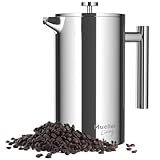
3. MuellerLiving French Press Coffee Maker 34oz, Stainless Steel French Press Coffee, 4 Filter Heat Resistant Double Insulated, Rust-Free, Food Grade, Dishwasher Safe Coffee Pot
Overview:
MuellerLiving’s 34oz French press is a versatile, double-insulated stainless steel brewer designed for portability and robust flavor. It includes a 4-filter system and targets users who brew coffee, tea, or hot chocolate anywhere—from camping trips to home kitchens.
What Makes It Stand Out:
Its portability and rugged 304 stainless steel construction stand out, paired with a unique 4-filter setup (coiled, dual screens, cross plate) for ultra-smooth coffee. The included brewing manual with strength chart simplifies perfect results, and dishwasher safety adds practicality.
Value for Money:
Priced accessibly, it delivers exceptional versatility and durability. The inclusion of specialized filters and travel-friendly design offers more utility than budget presses, justifying the cost for adventurers or multi-drink households versus single-use alternatives.
Strengths and Weaknesses:
Strengths: Highly portable and durable; versatile 4-filter system; clear brewing guidance; dishwasher-safe; ideal for travel/camping.
Weaknesses: Insulation lags behind premium double-wall models; handle lacks heat protection; filters require careful reassembly.
Bottom Line:
An outstanding value for on-the-go coffee lovers. Its rugged build, flexible brewing options, and ease of cleaning make it a versatile workhorse, especially recommended for outdoor enthusiasts seeking reliable, sediment-free coffee anywhere.
4. Ziruma Non-Toxic French Press, Surgical Stainless Steel Coffee Press, Plastic-Free, Heavy Metal-Free, No Endocrine Disruptors, 34 Oz, Double Wall, 4-Layer Filter, Portable Coffee Maker

Overview:
The Ziruma 34oz French press prioritizes health and sustainability, crafted from 316 surgical-grade stainless steel. It eliminates plastics, toxins, and endocrine disruptors, targeting health-conscious consumers without sacrificing brewing performance.
What Makes It Stand Out:
Its 316 surgical steel (more corrosion-resistant than standard 304) and 100% plastic-free construction are unique for safety-focused buyers. Double-wall insulation ensures a cool exterior while retaining heat, and built-in measurement marks with a spoon guarantee precision. The 4-layer filter delivers exceptionally smooth coffee.
Value for Money:
Priced at a premium, it’s justified for those prioritizing material safety over cost. While pricier than 304-steel models, the non-toxic assurance and medical-grade build offer unmatched peace of mind, making it worthwhile for health-focused users despite higher upfront investment.
Strengths and Weaknesses:
Strengths: Unmatched non-toxic materials (316 steel); precise built-in measurements; excellent double-wall insulation; ultra-fine 4-layer filtration; travel-friendly.
Weaknesses: Highest price point; limited color options; niche appeal beyond health-focused buyers.
Bottom Line:
The definitive choice for health-conscious coffee drinkers. While expensive, its surgical steel safety, precision brewing, and portability deliver unparalleled value for those unwilling to compromise on material purity, earning a strong recommendation for this specific audience.
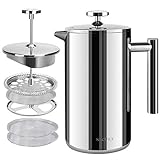
5. Secura French Press Coffee Maker, 304 Grade Stainless Steel Insulated Coffee Press with 2 Extra Screens, 50oz (1.5 Litre), Silver
Overview:
Secura’s larger 50oz (1.5L) French press expands capacity while retaining the brand’s hallmark 304 stainless steel double-wall construction. Designed for families or entertaining, it promises extended heat retention and professional-grade brewing in a robust, plastic-free design.
What Makes It Stand Out:
The 50oz capacity is its key differentiator, ideal for serving multiple people. It features triple-layer filtration with two included extra screens for refined taste, plus Secura’s superior double-wall insulation (retaining heat 60+ minutes longer than glass). The cool-touch handle ensures safety with large volumes.
Value for Money:
Slightly pricier than 34oz models, the added capacity justifies the cost for households or hosts. It outperforms single-serve presses in utility and beats glass carafes in durability. Long-term savings come from eliminating replacements due to breakage or wear.
Strengths and Weaknesses:
Strengths: Generous 50oz capacity; exceptional heat retention; customizable filtration; elegant, durable build; dishwasher-safe.
Weaknesses: Bulky for small kitchens; heavier when full; no volume markings; higher price than standard sizes.
Bottom Line:
An excellent investment for frequent entertainers or large households. Its capacity, durability, and consistent performance make it the top pick for group brewing, offering significant practical value despite the premium size and cost. Highly recommended for shared use.
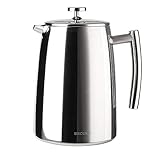
6. Secura French Press Coffee Maker, 50-Ounce, 304 Stainless Steel Insulated Coffee Press with Extra Screen
Overview:
The Secura 50-ounce French press is a large-capacity brewing solution crafted entirely from durable 304 stainless steel. Designed for households or offices needing multiple servings, it emphasizes longevity, heat retention, and sediment-free coffee through its triple-layered filtration system and included spare screens.
What Makes It Stand Out:
Its standout features include the 3-layered stainless steel filter structure that minimizes grounds while preserving rich oils, and the inclusion of an extra screen for customizable brew refinement. The double-walled insulation maintains temperature effectively, and the cool-touch handle/knob ensures safe pouring—a rarity in large presses. All parts are dishwasher-safe, simplifying maintenance.
Value for Money:
Priced competitively for its premium build and 50-ounce capacity, it outperforms cheaper glass or single-wall alternatives in durability and insulation. While larger than daily needs for some, it justifies cost for frequent entertainers or families seeking a long-term investment over budget models prone to breakage.
Strengths and Weaknesses:
Strengths: Exceptional build quality; superior heat retention; minimal sediment; easy disassembly; dishwasher-safe; versatile for tea/cold brew. Weaknesses: Bulky for small kitchens; overcapacity for solo users; extra screens rarely needed, adding minimal value.
Bottom Line:
Ideal for households or offices prioritizing durability and large-batch brewing, this press delivers consistent, full-bodied coffee with minimal fuss. A worthwhile investment despite its size, though solo users may prefer smaller models.
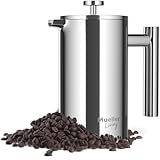
7. MuellerLiving French Press Coffee Maker 20oz, Stainless Steel French Press Coffee, 4 Filter Heat Resistant Double Insulated, Rust-Free, Food Grade, Dishwasher Safe Coffee Pot
Overview:
The MuellerLiving 20oz French press is a compact, travel-friendly stainless steel brewer designed for portability without sacrificing performance. Its double-walled insulation and 4-filter system cater to commuters, campers, or individuals seeking robust flavor in smaller batches.
What Makes It Stand Out:
The 4-level filtration (coiled filter, dual screens, and cross plate) virtually eliminates grounds, producing remarkably clean coffee. Its double-walled design retains heat longer than single-wall competitors, and the included brewing chart helps tailor strength. The durable, rust-proof build excels for on-the-go use.
Value for Money:
At a mid-range price, it offers exceptional value for its portability and filtration quality. It undercuts premium brands while matching their performance, making it a smarter buy than fragile glass presses or poorly filtered budget options for frequent travelers or minimalist households.
Strengths and Weaknesses:
Strengths: Ultra-fine filtration; excellent heat retention; lightweight and portable; simple disassembly; ideal for 1–4 cups; dishwasher-safe. Weaknesses: Small capacity limits group use; plastic knob may feel less premium; double-wall slightly reduces interior space.
Bottom Line:
A top choice for solo drinkers or couples needing a reliable, portable press. Its superior filtration and durability justify the price, especially for camping or office use—though larger households will need a bigger model.
8. SZHETEFU 34 OZ Large French Press, Premium Stainless Steel Sturdy Insulated French Press Coffee Maker, 4-8 Cups French Coffee Press, Tea Presses for Home Kitchen Caming Loose Tea, Elegant Black

Overview:
The SZHETEFU 34oz French press combines elegant matte-black stainless steel construction with versatile 4–8 cup capacity. Targeted at home entertainers, it promises durability, precise brewing control, and insulation for extended heat retention during social gatherings.
What Makes It Stand Out:
Its double-wall insulated design keeps coffee hot significantly longer than single-wall presses, while the all-metal build resists dents and scratches. The plunger allows exact steeping control, and the spacious 34oz capacity accommodates small groups effortlessly—uncommon in similarly priced models.
Value for Money:
It delivers strong value as a mid-tier press with premium features like full stainless steel and insulation. Cheaper alternatives often use mixed materials or lack insulation, making this a cost-effective upgrade for frequent hosts who want reliability without luxury pricing.
Strengths and Weaknesses:
Strengths: Stylish, scratch-resistant finish; excellent heat retention; easy one-step cleaning; ideal group capacity; versatile for tea/cold brew. Weaknesses: Matte coating may show water spots; plunger tension inconsistent initially; no extra filters included.
Bottom Line:
Perfect for hosting due to its capacity and heat retention, this press balances aesthetics and function affordably. Recommended for social households, though occasional sediment may require careful pouring.
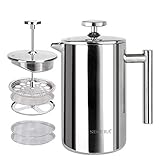
9. Secura French Press Coffee Maker, 304 Grade Stainless Steel Insulated Coffee Press with 2 Extra Screens, 12oz (0.35 Litre), Silver
Overview:
Secura’s compact 12oz French press targets solo coffee enthusiasts with premium 18/8 stainless steel construction. Its insulated double-wall design, triple-layer filter, and two bonus screens prioritize portability and refined brewing in a travel-friendly size.
What Makes It Stand Out:
The inclusion of two extra screens allows customization for ultra-smooth espresso-like results—a rarity in miniature presses. Double-wall insulation outperforms single-wall competitors in heat retention, while the cool-touch handle ensures safety despite the small footprint. Dishwasher-safe parts add convenience.
Value for Money:
Priced higher per ounce than larger models, it’s justified for its niche: unmatched portability with premium features. Budget mini-presses often use plastic or lack insulation, making this a worthy splurge for travelers or desk-bound users needing café-quality single servings.
Strengths and Weaknesses:
Strengths: Exceptional portability; superior heat retention for size; customizable filtration; cool-touch safety; durable all-metal build. Weaknesses: Limited to 1–2 cups; extra screens overkill for casual use; premium price for small capacity.
Bottom Line:
The best mini-press for on-the-go connoisseurs seeking zero compromises. Ideal for camping, offices, or small kitchens—though overpriced if you rarely brew single servings.
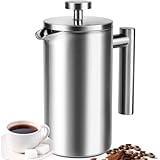
10. French Press 34 oz, Full Stainless Steel French Press Coffee Maker 4 Cups, Upgrated Double-Walled Insulated French Coffee Presses, Food Grade Good for Kitchen Camping, Dishwasher Safe 2 More Filters
Overview:
This 34oz French press delivers a balanced blend of durability and versatility with double-walled stainless steel construction. Designed for both home and outdoor use, it emphasizes easy maintenance, sediment-free brewing, and reliable insulation for 4–8 cups per batch.
What Makes It Stand Out:
Its multi-layer mesh filter effectively traps grounds while preserving flavor oils, and the two included replacement screens extend longevity. The precise pour spout minimizes spills—a practical touch for campers—and the brushed finish resists scratches during travel, setting it apart from basic models.
Value for Money:
Offering robust features at a budget-friendly price, it outperforms cheaper presses in durability and filtration. The extra screens and camp-ready design provide tangible value over entry-level options, making it a smart pick for adventurers or value-focused households.
Strengths and Weaknesses:
Strengths: Reliable sediment control; excellent portability; spill-resistant spout; dishwasher-safe; ideal 34oz capacity; replacement screens included. Weaknesses: Insulation slightly inferior to premium brands; handle design less ergonomic; minor assembly learning curve.
Bottom Line:
A versatile, no-fuss press that excels for camping or daily home use. Its thoughtful design and included extras justify the price, especially for outdoor enthusiasts seeking dependable performance. Highly recommended for its balance of cost and functionality.
Understanding Stainless Steel Grades and Their Impact
Decoding the Numbers: What 18/8 and 18/10 Really Mean
The numbers stamped on stainless steel (like 18/8 or 18/10) aren’t arbitrary—they reveal critical clues about durability. The first number indicates chromium content, which forms a protective oxide layer resisting rust and corrosion. The second refers to nickel, which enhances strength, toughness, and that coveted resistance to scratching. Higher nickel content (18/10) generally means a more robust, lustrous finish that withstands dishwashers and hard water better than 18/8, though both are excellent starting points for long-lasting builds.
Why Thickness Matters More Than You Think
A press can boast “premium stainless steel” but still feel cheap if the metal gauge is too thin. Thicker walls (typically 0.5mm or more) prevent dents from accidental knocks, resist warping under heat stress, and provide crucial insulation—keeping the exterior cooler to the touch during brewing. Thin metal might save a few dollars upfront but often leads to premature failure, especially at stress points like the base or spout. Always prioritize substantial heft when evaluating options.
The Hidden Danger of Inferior Alloys
Not all stainless steel is food-safe or built for thermal cycling. Avoid presses labeled simply as “stainless” without grade specifics. Low-grade alloys might contain higher carbon levels, increasing vulnerability to pitting corrosion over time, especially when exposed to acidic coffee oils or hard water minerals. Stick to 304 or 316-grade stainless steel—these are industry standards for food contact and engineered to handle repeated heating and cooling without degrading.
How Finish Affects Longevity Beyond Looks
That mirror-polished shine isn’t just for aesthetics; a high-quality brushed or polished finish creates a smoother surface that’s harder for coffee oils to cling to, reducing staining and making deep cleaning easier. Conversely, a rough, inconsistent finish can harbor microscopic pits where moisture and oils trap, accelerating corrosion. A seamless, uniform finish also indicates better manufacturing control—a strong predictor of overall durability.
Construction Quality: Where Engineering Meets Everyday Use
The Plunger Assembly: Your First Line of Defense
A wobbly or stiff plunger ruins the experience and strains the entire system. Look for presses where the plunger rod is precision-welded to the base plate, not merely screwed or glued. The mesh filter should be multi-layered (at least double-filtered) with fine, tightly woven stainless steel—cheap single-layer filters let sludge through and tear easily. The rod itself must slide smoothly within the cylinder without lateral play, which wears down seals prematurely.
Welding Techniques: Spot Welds vs. Seamless Bases
Critical joints—like where the handle meets the carafe or the base attaches—reveal a lot about craftsmanship. Spot welding creates weak points prone to cracking under stress. Opt for presses with TIG (Tungsten Inert Gas) welding, which fuses metal seamlessly for a stronger, leak-proof bond that handles thermal expansion without failing. A smooth, continuous weld line around the base is a hallmark of serious durability.
Handle Design: Ergonomics and Structural Integrity
A handle that gets too hot or snaps off mid-pour is a dealbreaker. Durable handles are either cast as a single piece with the carafe (eliminating weak attachment points) or securely riveted with stainless steel hardware. Hollow handles stay cooler but must be robustly anchored. Test virtual “ergonomics” by checking if the handle’s curve fits comfortably in hand and provides leverage for pressing without straining—poor design here leads to dropped presses and broken bases.
The Lid and Spout: Small Parts, Big Consequences
A flimsy lid won’t seal properly, causing splashes and uneven extraction, while a poorly designed spout guarantees drips down the side. Durable presses feature thick, stamped lids that lock securely and spouts molded directly into the carafe body (not glued on). The spout’s lip should be rolled or reinforced to prevent chipping—a tiny detail that prevents frustrating leaks after years of use.
Sealing Mechanisms: Beyond the Obvious Plunger
While the plunger seal gets all the attention, secondary seals matter too. High-end presses often include a silicone gasket where the lid meets the carafe rim. This isn’t just for show—it prevents steam escape during brewing (improving flavor) and stops hot liquid from seeping onto your counter during pouring. Check if this gasket is replaceable; worn-out seals shouldn’t doom the entire press.
Real-World Usage Factors That Test Durability
Thermal Shock Resistance: From Fridge to Boiling Water
Ever poured boiling water into a cold press and heard a worrying ping? That’s thermal stress. Quality stainless steel handles rapid temperature changes, but thin-walled or poorly annealed units can warp or crack. Durability shines when a press transitions smoothly from storing cold brew in the fridge to brewing hot coffee the next morning—without deformation or compromised seals.
Dishwasher Safety: Separating Marketing Hype from Reality
Many brands claim “dishwasher safe,” but harsh detergents and intense heat cycles can degrade lower-grade stainless over time, causing pitting or dulling finishes. True durability means the press emerges unscathed after years of dishwasher use. If opting for dishwasher cleaning, place it upright on the top rack to minimize direct spray on seals and filters—and inspect mesh integrity regularly for warping.
Weight Distribution and Stability on Countertops
A top-heavy press tips easily, especially when the carafe is full. Durable designs prioritize a weighted base and low center of gravity, often achieved through thicker metal at the bottom. This isn’t just about preventing spills—it reduces stress on the handle attachment point during pouring, a common failure zone in flimsy models. A stable press feels planted, not precarious.
Resistance to Scratches and Dings in Daily Life
Your press will live on the counter, get knocked by cookware, and endure sponge scrubs. Brushed finishes hide minor scratches better than mirror-polished ones, but the underlying metal must resist deep gouges. Testimonials often mention how well a press looks after years of use—this speaks to both material quality and thoughtful finish selection. Avoid presses with painted accents; these chip easily, exposing vulnerable metal beneath.
Maximizing Lifespan Through Smart Maintenance
Cleaning Techniques That Preserve, Not Destroy
Scouring pads are the enemy of stainless steel. Use soft sponges and mild dish soap to avoid micro-scratches where corrosion can start. For stubborn coffee oils, a paste of baking soda and water gently lifts residue without abrasion. Never let coffee grounds dry inside the carafe—rinse immediately after use to prevent acidic buildup that can etch surfaces over time.
Filter Care: Preventing Clogs and Tears
Rinse the mesh filter thoroughly after each use, using a soft brush to dislodge fine particles trapped between layers. Avoid forcing it through the plunger mechanism when cleaning—it’s better to remove the entire assembly first. If mesh becomes bent or holes widen, replace it immediately; a damaged filter strains the plunger rod and compromises brew quality.
Storage Solutions to Avoid Unnecessary Wear
Store your press disassembled with the plunger removed. Trapped moisture between the filter and carafe wall fosters mold and accelerates seal degradation. Keep it in a dry place—not under the sink where humidity fluctuates. If stacking other items inside (a common mistake), ensure nothing presses against the delicate mesh, which can warp even when dry.
Frequently Asked Questions
Why is stainless steel better than glass for French press durability?
Stainless steel resists shattering from impacts, handles thermal shock without cracking, and won’t develop weak spots from repeated heating cycles like glass. It’s inherently more resilient for daily use in busy kitchens or outdoor settings.
Can a stainless steel French press make coffee taste metallic?
Not if it’s made with food-grade 304/316 stainless steel. Properly crafted presses use inert alloys that won’t leach metals into coffee. Any metallic taste usually stems from poor initial cleaning—always rinse thoroughly with warm water before first use.
How do I know if the stainless steel is high quality?
Look for specific grade markings (18/8, 18/10, or 304/316) and substantial weight. Flex the body gently—if it feels flimsy or bends easily, the metal is too thin. Avoid presses with visible seams, rough welds, or inconsistent finishes.
Are double-walled stainless steel presses worth it for durability?
Double walls primarily improve heat retention, not structural durability. They add weight and complexity, potentially creating more failure points. For pure longevity, a well-built single-walled press with thick gauge metal often outperforms double-walled alternatives.
What’s the biggest durability red flag in a stainless steel French press?
Handles attached with glue or weak spot welds. These almost always fail first. Also, avoid presses where the plunger rod wobbles significantly inside the cylinder—this indicates poor tolerances that wear down seals rapidly.
Can I use vinegar to descale my stainless steel French press?
Yes, but sparingly. Mix equal parts white vinegar and water, let it sit for 15 minutes, then rinse extremely well. Prolonged vinegar exposure can dull finishes over time. Baking soda is safer for routine descaling.
Why do some stainless steel presses develop rust spots?
True stainless steel won’t rust, but iron particles from manufacturing tools can embed in the surface and corrode. This “rouging” is superficial—scrub with a baking soda paste to remove it. Persistent rust indicates substandard, non-food-grade metal.
How often should I replace the plunger mesh filter?
Inspect it monthly for tears, warping, or widened holes. With proper care, a quality filter lasts 1-2 years. Replace it immediately if coffee sludge appears in your cup—it’s compromising both durability and brew quality.
Does polishing restore a scratched stainless steel press?
Minor scratches can be minimized with a stainless steel polish applied in the direction of the grain. Deep scratches can’t be fully removed without professional buffing, but they don’t affect functionality—just aesthetics. Prevention is key.
Is hand-washing really necessary for maximum lifespan?
While many presses tolerate dishwashers, hand-washing with mild soap significantly extends the life of seals and filters. Dishwasher detergents are highly alkaline and can degrade silicone components faster. For ultimate longevity, hand-wash is recommended.
See Also
- 10 Best Carafe Coffee Makers for Consistent Brewing in 2026
- We Tested 50 Portable Coffee Makers - Here are the 10 Best for Camping
- ‘Best Coffee Makers for Large Families: 10 Expert Picks for 2026’
- 10 Affordable Coffee Maker Water Filters That Don’t Sacrifice Quality in 2026
- Stop Wasting Coffee Pods with the 10 Best Automatic Pod Coffee Makers This