Table of Contents
There’s nothing quite like that first steaming cup of coffee while perched on a rocky overlook at dawn, miles from the nearest power outlet. For travelers who refuse to sacrifice quality brew for the sake of adventure, the humble French press remains a beacon of simplicity. But lugging a heavy glass or stainless-steel model through airport security or deep into the backcountry? That’s a burden few enthusiasts willingly accept. Enter the plastic French press – a category often misunderstood, yet brimming with potential for the mobile coffee lover. Forget the dated notions of flimsy, flavor-tainted camp mugs; modern engineering has transformed food-grade plastics into surprisingly sophisticated travel companions that deliver rich, full-bodied coffee without weighing down your pack.
The quest for the perfect travel French press isn’t just about shedding ounces; it’s a delicate balance of durability, thermal performance, portability, and preserving that essential coffee experience. Plastic, specifically the right kind, offers unique advantages that metals and glass simply can’t match for ultralight journeys. It’s inherently lighter than glass, less prone to catastrophic shattering than ceramic, and often more affordable than premium insulated metals. Yet, navigating the plastic landscape requires knowing which plastics truly perform and what design elements separate the trail-worthy from the trash-bin-bound. This guide cuts through the marketing hype, focusing on the critical features and material science that actually matter when your morning brew depends on a press that survives the journey as well as it brews the coffee.
Top 10 Plastic French Presses
Detailed Product Reviews
1. Bodum Bean Sustainable French Press Coffee Maker, 34 Ounce, Black

Overview: The Bodum Bean is a 34-ounce French press emphasizing eco-conscious design, featuring partial recycled materials and eliminating paper filters or plastic capsules for brewing.
What Makes It Stand Out: Its frame incorporates recycled plastic, rubber, and silicone, while the BPA-free plastic carafe avoids flavor contamination. The innovative locking lid effectively retains heat and prevents spills, enhancing portability and usability. The tinted carafe blocks light to preserve coffee freshness, though precise water measurement is essential.
Value for Money: Positioned as a sustainable mid-range option, it justifies its cost through durable construction and reduced environmental impact compared to single-use systems. While not the cheapest, its longevity and eco-focus offer solid value over disposable alternatives.
Strengths and Weaknesses:
Strengths: Eco-friendly materials; effective spill-proof lid; no paper filters needed.
Weaknesses: Tinted carafe complicates water measurement; plastic carafe may retain odors over time; requires precise grind/coffee ratios.
Bottom Line: Ideal for environmentally conscious users seeking a spill-resistant, sustainable brewer, though beginners may struggle with the tinted carafe’s measurement limitations. A thoughtful buy for eco-focused coffee routines.
2. Veken French Press Coffee Maker 34oz, No Plastic Touching Cafe,Thickened Glass Stainless Steel Brewer, Cold Brew Cafetera Tea pot for Kitchen Travel Camping, Gifts, Decor, Bar Accessories, Dark Pewter

Overview: This 34oz French press prioritizes purity with entirely plastic-free brewing surfaces, using 304 stainless steel and food-grade silicone for safety and flavor integrity.
What Makes It Stand Out: Its 4-level stainless steel filtration system captures fine grounds for smooth, sludge-free coffee, while the thick borosilicate glass carafe withstands thermal shock up to 360°F. The plastic-free design ensures no odors or particles leach into beverages, supporting versatile use for coffee, tea, or cold brew.
Value for Money: Competitive pricing for its premium materials and filtration. The durability and multi-use functionality (home, travel, gifting) enhance long-term value, outperforming glass-only models in safety and ease of cleaning.
Strengths and Weaknesses:
Strengths: True plastic-free brewing; superior 4-layer filtration; dishwasher-safe components; thermal-resistant glass.
Weaknesses: Glass carafe requires careful handling despite thickness; disassembly needed for thorough cleaning.
Bottom Line: Highly recommended for health-conscious users and flavor purists seeking a versatile, durable press. Its filtration and material quality justify the investment for daily use.
3. cev home essentials French Press Coffee and Tea Maker - 400ml (13.5oz) BPA-Free Heat-Resistant Plastic Body - Perfect for Herbal Tea, Filter Coffee, and Espresso Brewing - Sleek Black Design

Overview: A compact 13.5oz French press designed for personal servings, featuring a BPA-free plastic body and black frame suited for coffee, tea, or cold brew.
What Makes It Stand Out: Its small size caters perfectly to solo use, while the heat-resistant borosilicate plastic body offers shatterproof convenience. The sleek, modern design combines portability with style, and detachable parts simplify cleaning.
Value for Money: An affordable entry-point for casual users or those with limited space. While smaller than standard presses, its multi-purpose use (coffee/tea/cold brew) and durability provide reasonable value for individual servings.
Strengths and Weaknesses:
Strengths: Space-efficient; shatterproof plastic; easy disassembly for cleaning; versatile for tea/cold brew.
Weaknesses: Limited capacity for sharing; plastic body may scratch over time; less insulation than glass/metal.
Bottom Line: Best for individuals needing a portable, no-fuss press for single servings. Not ideal for families, but excellent value for solo coffee or tea enthusiasts prioritizing convenience.
4. Bodum Java French Press Coffee and Tea Maker with SAN Plastic Shatterproof Carafe, 34 Ounce, Black

Overview: The Bodum Java is a 34oz French press featuring a shatterproof SAN plastic carafe framed in BPA-free plastic, designed for visible, flavor-pure brewing.
What Makes It Stand Out: The transparent SAN plastic carafe allows full visibility of the brewing process without altering flavor, while the stainless steel plunger minimizes grounds in the cup. It emphasizes durability and simplicity, avoiding glass fragility.
Value for Money: Priced accessibly for its robust construction, it’s a practical choice for households or travel where breakage is a concern. Though less premium than glass models, the shatterproof quality offers long-term reliability at a moderate cost.
Strengths and Weaknesses:
Strengths: Unbreakable carafe; clear brewing view; retains natural coffee flavor; easy to handle.
Weaknesses: Plastic may retain stains/odors; less heat retention than glass; requires precise grind size.
Bottom Line: A reliable, budget-friendly option for durability-focused users, especially in active households or outdoor settings. Choose it over glass if breakage is a primary concern.
5. Utopia Kitchen Borosilicate Glass French Press Coffee Maker 34 Oz, Heat-Resistant Cafetiere & Tea Maker, Thickened Glass Coffee Press for Travel and Camping, Black
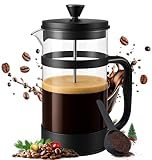
Overview: This 34oz French press uses heat-resistant borosilicate glass and a 4-filter sieve system to deliver rich, residue-free coffee, tea, or cold brew with professional-grade results.
What Makes It Stand Out: Its 80-mesh filter and reinforced piston plate ensure exceptionally smooth coffee, while the borosilicate glass withstands rapid temperature shifts without cracking. Includes a coffee spoon and suits travel, gifting, or multi-beverage use (tea, hot chocolate).
Value for Money: Excellent value given its premium glass construction, included accessories, and commercial-grade filtration. Outperforms cheaper presses in durability and taste clarity, making it a cost-effective upgrade for serious coffee lovers.
Strengths and Weaknesses:
Strengths: Superior 4-filter system; thermal-shock-resistant glass; versatile for multiple beverages; dishwasher-safe components.
Weaknesses: Glass requires hand-washing care; lid finish may scratch with abrasive cleaners.
Bottom Line: Highly recommended for those seeking barista-quality results at home. Its balance of performance, durability, and versatility makes it a top-tier choice worth every penny.
6. Secura French Press Coffee Maker, 304 Grade Stainless Steel Insulated Coffee Press with 2 Extra Screens, 34oz (1 Litre), Silver

Overview: The Secura French Press is a robust, all-stainless-steel brewing solution designed for durability and premium coffee extraction. Crafted entirely from 18/8, 304-grade stainless steel (interior and exterior), it replaces fragile glass models with insulated, double-walled construction to retain heat and resist dents. Its 34oz capacity suits 4-8 servings, targeting home users seeking longevity and consistent performance without plastic components.
What Makes It Stand Out: Its triple-layered stainless steel filter system is exceptional, trapping even fine grounds for sediment-free, full-bodied coffee. The inclusion of two extra screens allows customization of brew strength and clarity. The cool-touch handle and knob enhance safety during pouring, while all parts being dishwasher-safe simplifies maintenance—a rarity in metal presses.
Value for Money: Priced moderately above basic glass presses, it justifies cost through superior build quality and included extras (two spare screens). It outperforms cheaper models in longevity and heat retention, avoiding replacements common with glass breakage or plastic warping. Dishwasher compatibility adds long-term convenience.
Strengths and Weaknesses: Strengths: Unmatched durability; excellent heat retention; versatile triple-filter system; easy cleanup; no plastic taste. Weaknesses: Heavier than glass/plastic alternatives; initial metallic taste may require seasoning; higher price than entry-level models; no visual brew monitoring.
Bottom Line: Ideal for serious coffee enthusiasts prioritizing durability and pure flavor. Its premium build, customizable filtration, and practical extras make it a worthwhile investment for daily use, though casual users may prefer lighter options.
7. BonJour Coffee Unbreakable Plastic French Press, 12.7-Ounce, Ami-Matin, Black

Overview: The BonJour Ami-Matin is a compact, travel-friendly French press made from BPA-free Tritan plastic. Designed for portability and safety, it brews three 4-ounce espresso-style servings and features a colorful frame with an integrated shut-off mechanism. Its small footprint and unbreakable build target commuters, campers, or those seeking a minimalist brewing tool.
What Makes It Stand Out: The patented shut-off infuser—a silicone gasket on the plunger—halts extraction instantly when pressed down, preventing over-brewing and bitterness. The domed lid includes a secondary filter to minimize sediment, while the vibrant, shatterproof plastic ensures resilience during travel. A lifetime warranty underscores its durability claim.
Value for Money: Positioned as a mid-range option, it excels for its niche. The shut-off tech rivals高端 presses at lower cost, and dishwasher safety adds convenience. However, its tiny capacity (12.7oz) limits it to solo use, making it less versatile than larger models for households.
Strengths and Weaknesses: Strengths: Shut-off feature prevents over-extraction; lightweight and unbreakable; vibrant, ergonomic design; dishwasher-safe; lifetime warranty. Weaknesses: Very small capacity; plastic may retain odors over time; limited heat retention; not suitable for shared brewing.
Bottom Line: A top pick for travelers or espresso lovers needing precision in a single serve. Its innovative shut-off mechanism and rugged build deliver exceptional value for its specific use case, though families should consider larger presses.
8. SZHETEFU 34 OZ Large French Press, Premium Stainless Steel Sturdy Insulated French Press Coffee Maker, 4-8 Cups French Coffee Press, Tea Presses for Home Kitchen Caming Loose Tea, Elegant Black

Overview: The SZHETEFU 34oz French Press combines elegant black stainless steel construction with practical insulation for home brewing. Its double-walled design promises heat retention, while the 1L capacity caters to families or small gatherings. Marketed for both coffee and tea enthusiasts, it emphasizes ease of use and durability with a focus on minimalist maintenance.
What Makes It Stand Out: The double-wall insulation effectively keeps coffee hot longer than standard presses—a standout for slow sippers. Its all-metal build (no glass/plastic) ensures sturdiness, and the simple disassembly (removable plunger/filter) enables effortless hand or dishwasher cleaning. The sleek black finish adds modern flair to countertops.
Value for Money: Competitively priced for a full-metal press, it offers excellent utility for households. The insulation and large capacity provide tangible benefits over cheaper glass models, and dishwasher safety reduces long-term hassle. Lacks extras like spare filters but compensates with reliable performance.
Strengths and Weaknesses: Strengths: Superior heat retention; durable all-stainless build; easy disassembly/cleaning; generous 8-cup capacity; stylish matte finish. Weaknesses: No visual brew monitoring; black coating may show scratches; plunger mechanism slightly stiff initially; limited flavor customization.
Bottom Line: A reliable, family-friendly press that excels in heat retention and durability. Best for those prioritizing convenience and aesthetics over fine-tuned brewing control—great value for daily home use.
9. Bodum Kenya 8-Cup French Press Coffee Maker, 34-Ounce, Plastic, Black

Overview: The Bodum Kenya is a classic French press blending traditional glass brewing with modern protective elements. Featuring a borosilicate glass beaker encased in a black plastic frame, it offers the clarity of glass brewing with added safety. Its 34oz capacity serves 3 mugs or 8 espresso cups, appealing to users who prefer the ritual of glass presses but want reduced breakage risk.
What Makes It Stand Out: The heat-resistant borosilicate glass allows precise brew monitoring while the plastic frame absorbs shocks and protects surfaces. Its stainless-steel 3-piece filter system delivers smooth coffee without paper filters, and the entire unit is dishwasher-safe—uncommon for glass models. Bodum’s legacy in press design ensures refined engineering.
Value for Money: Mid-priced, it balances heritage quality with practicality. The frame justifies its cost over bare glass presses by preventing common breakage, and the filter system rivals premium models. However, plastic components may feel less premium than all-metal alternatives at similar price points.
Strengths and Weaknesses: Strengths: Glass enables brew monitoring; sturdy protective frame; excellent 3-part filter; trusted brand reliability; dishwasher-safe. Weaknesses: Glass remains fragile if frame fails; plastic may discolor over time; heat retention inferior to insulated models; frame limits stacking/storage.
Bottom Line: A dependable choice for traditionalists wanting glass’s visual appeal with added safety. Its performance and brand reputation make it a solid mid-range buy, though insulation seekers should look elsewhere.
10. Kaffe French Press Coffee Maker (34oz / 1L) - Borosilicate Glass and BPA-Free Plastic Coffee Press - White - Lightweight Travel & Camping Coffee Maker

Overview: The Kaffe French Press merges borosilicate glass with a protective BPA-free plastic shell for a lightweight, travel-optimized brewer. Its 34oz capacity serves four standard coffees, targeting adventurers and home users who value portability without sacrificing glass-brewed flavor. The white design offers a clean aesthetic, while thermal shock resistance caters to outdoor use.
What Makes It Stand Out: The dual-layer design—borosilicate glass core inside insulating plastic—delivers glass-brewed taste with shatter resistance. A dual-filter system (screen + steel mesh) minimizes sediment, and the 10-minute brew process is straightforward. Its standout feature is the lifetime warranty covering transport damage, a rarity in this category.
Value for Money: Priced accessibly, it offers exceptional travel utility. The glass/plastic hybrid provides better heat retention than pure glass and more flavor authenticity than all-plastic models. The warranty adds peace of mind, though the plastic shell may feel less premium than stainless steel.
Strengths and Weaknesses: Strengths: Lightweight yet durable; authentic glass-brewed flavor; effective dual filtration; simple operation; strong warranty. Weaknesses: Plastic exterior prone to scratches; heat retention lags behind insulated metal; glass still vulnerable if shell cracks; limited color options.
Bottom Line: The ideal travel companion for coffee purists. Its balance of portability, flavor quality, and warranty coverage makes it a compelling value—highly recommended for campers or commuters unwilling to compromise on taste.
Understanding Why Plastic Makes Sense for Travel
The Weight Advantage is Non-Negotiable
When every ounce counts on a multi-day trek or a cramped flight carry-on, the material choice becomes paramount. High-quality plastic French presses consistently tip the scales significantly lighter than their glass or standard stainless-steel counterparts. We’re often talking reductions of 50% or more in the vessel’s weight alone. This isn’t just about initial pack weight; it’s about cumulative fatigue over miles. Lighter gear means more room for essential supplies or simply less strain on your body, making plastic a logical cornerstone of any serious ultralight coffee system.
Durability Beyond the Drop Test
While no container is truly indestructible, modern engineering plastics offer remarkable resilience specifically suited to travel hazards. Unlike glass, which fails catastrophically on impact, quality plastics absorb shock, resisting cracks and shatters from typical knocks against tent poles, uneven ground, or the bottom of a backpack. The best travel designs incorporate thicker walls in critical stress zones and flexible plastics that bend rather than break under pressure, turning potential disasters into minor inconveniences.
Thermal Performance: Managing Expectations
Plastic inherently has different thermal properties than glass or double-walled steel. While it won’t retain heat for hours like a vacuum-insulated model, the right plastic press minimizes heat loss enough for a proper French press steep (typically 4-5 minutes). Crucially, the exterior stays cool to the touch much faster than glass, reducing burn risks during travel prep or while holding your cup. Understanding this realistic thermal window – sufficient for brewing, not for all-day sipping – is key to appreciating plastic’s travel-specific role.
Decoding Plastic Types: Not All Polymers Are Equal
Polypropylene (PP): The Trusted Workhorse
Widely regarded as the gold standard for travel French presses, food-grade Polypropylene (PP) offers an exceptional balance. It’s lightweight, boasts high heat resistance (typically handling boiling water without warping), is highly durable and impact-resistant, and is generally recognized as flavor-neutral when properly manufactured. Look for #5 recycling symbols. Its slightly flexible nature contributes to its shatter resistance, making it the most common and reliable choice for serious travel models.
Tritan Copolyester: Clarity and Confidence
Gaining significant traction, Tritan copolyester is prized for its glass-like clarity, extreme durability (often exceeding PP in impact resistance), and exceptional resistance to odors and stains. Crucially, it’s BPA, BPS, and other bisphenol-free. While sometimes slightly heavier than PP, its toughness and clarity make it a premium option. Ensure it’s specifically marketed as “Tritan” (a branded material) and not just generic “copolyester,” as quality can vary.
Avoiding Problematic Plastics
Steer clear of polycarbonate (often #7, though not always) due to historical BPA concerns, even if labeled “BPA-free” – the alternatives sometimes used can raise similar questions. Polystyrene (#6) is generally too brittle and prone to cracking and flavor absorption. Polyethylene (HDPE #2, LDPE #4) is common in bottles but usually lacks the necessary heat resistance and rigidity for a French press vessel. Always prioritize explicitly food-grade, high-heat resistant plastics like PP or Tritan.
Critical Design Features for Travel Reliability
Lid and Seal Integrity: The Leak-Proof Imperative
A leaking French press in your backpack is a coffee catastrophe. Travel models demand exceptional lid design. Look for lids with integrated, flexible silicone gaskets that create a positive seal against the carafe rim. The lid should lock securely in place, often with a twist mechanism or robust snap-fit, capable of withstanding being jostled upside down in a pack. A secondary locking mechanism for the plunger rod during transport is also highly desirable.
Plunger Mechanism: Smooth Operation Under Duress
A stiff, gritty, or wobbly plunger ruins the experience and can damage the press. The plunger assembly must operate smoothly even after exposure to dust, sand, or temperature extremes. High-quality plastic presses feature precisely molded screens (usually fine mesh stainless steel) and plunger rods that glide effortlessly within the carafe. The fit between the plunger disk and the carafe wall should be snug but not tight, preventing grounds from slipping through without requiring excessive force.
Ergonomic and Secure Handle Design
Handles need to be functional, not just decorative. A well-designed travel handle provides a secure grip even with wet or cold hands, doesn’t conduct heat excessively, and folds or stows compactly. Integrated handles molded directly into the carafe are often the most robust and packable option, eliminating potential weak points from separate attachments. If it has a separate handle, ensure it locks firmly in the “up” position for pouring and stows securely against the carafe for packing.
Optimizing Portability and Packing Efficiency
Collapsible and Nesting Designs
The pinnacle of travel efficiency. Some advanced plastic presses feature sections that collapse inward or lids that nest perfectly within the carafe body, drastically reducing the packed height. This isn’t just about saving space; it protects the fragile plunger screen during transit. A truly compact packed profile makes fitting the press into odd corners of a pack or even a large pocket feasible.
Integrated Measurement and Storage
Clever travel designs often incorporate subtle but crucial features. Look for carafe markings that double as water level guides and coffee scoop measurements. Some models include a small, secure compartment within the lid base to store a single pre-measured dose of coffee grounds, keeping them dry and ready to go. Every integrated feature reduces the need for additional gear.
Streamlined Cleaning in the Field
Cleaning a French press with limited water is a universal traveler’s challenge. Smooth interior walls without crevices or complex seams prevent coffee oils and grounds from clinging. A wide opening facilitates rinsing and scrubbing with minimal tools. Designs where the entire plunger assembly disassembles easily (without tiny, loss-prone parts) are a major advantage for thorough cleaning and drying before repacking.
Ensuring Flavor Fidelity and Safety
Rigorous Flavor Neutrality Testing
The biggest fear with plastic is off-flavors. Reputable manufacturers rigorously test their food-grade plastics (especially PP and Tritan) to ensure no taste or odor transfer, even with prolonged contact with hot coffee. Don’t rely on generic claims; seek out brands known for coffee-specific gear that explicitly states their materials are flavor-neutral and undergo coffee compatibility testing. A simple home test: brew water alone first and smell/taste – it should be completely neutral.
Heat Resistance Verification
Boiling water is standard for French press brewing. The plastic must withstand this without warping, leaching, or degrading. Verify the manufacturer specifies a maximum temperature rating well above 212°F (100°C) – ideally 230°F (110°C) or higher for safety margin. Avoid any press that feels thin, flimsy, or emits a strong plastic smell when filled with hot water initially.
Food-Grade Certification is Mandatory
This isn’t optional. Ensure the product explicitly states compliance with food safety standards like FDA (USA), LFGB (Germany), or equivalent rigorous certifications in your region. Look for this information clearly stated on the product page or packaging, not buried in obscure documentation. This certification covers material safety and manufacturing processes.
Evaluating Real-World Travel Performance
Temperature Drop During Steep
While not a long-term insulator, the press must maintain sufficient heat during the critical 4-minute steep. Test this: time how long it takes the brew to drop below 185°F (85°C) after adding water. A good travel plastic press should stay well within the optimal extraction range (195-205°F / 90-96°C) for the entire steep time. Significant heat loss during brewing leads to weak, under-extracted coffee.
Cold Weather Resilience
Plastics can become brittle in freezing temperatures. If traveling to alpine or winter environments, prioritize PP or Tritan models known for cold-weather performance. Avoid presses that feel overly rigid or “glassy” at room temperature, as they are more prone to cracking when cold. Look for manufacturer notes on low-temperature tolerance.
Dust and Debris Management
Trail conditions are rarely pristine. Evaluate how easily the design keeps dust out. A lid that seals tightly before brewing (not just after) is vital. Consider how the plunger locks down for transport – does it create a secondary barrier? Smooth exterior surfaces that don’t trap dirt are also beneficial for maintaining hygiene.
Making Your Informed Choice
Defining Your Travel Threshold
Be brutally honest about your needs. Are you ultralight backpacking where every gram counts, or car camping where a slightly heavier, more robust model is acceptable? Do you prioritize absolute minimal packed size, or slightly better heat retention? Clarifying your primary use case (backpacking, van life, business travel) immediately narrows the viable options and prevents over- or under-specifying.
Prioritizing the Non-Negotiables
Based on your travel style, identify 2-3 absolute must-haves. For serious backpackers, this is usually: sub-8oz weight, collapsible/nesting design, and absolute leak-proof guarantee. For van lifers, it might be slightly better heat retention and easier cleaning. Sacrificing core requirements for minor features leads to buyer’s remorse. Focus on the fundamentals that align with your adventure.
Reading Between the Lines of Reviews
When researching, look beyond star ratings. Scan reviews specifically mentioning travel use: “survived being at the bottom of my pack,” “no leaks after 3 days on the trail,” “easy to clean with just a stream.” Be wary of reviews focused solely on home use, as travel demands are unique. Pay attention to consistent complaints about plunger stiffness, lid leaks, or plastic taste – these signal fundamental design flaws.
Frequently Asked Questions
Can a plastic French press really handle boiling water without melting or leaching chemicals?
Yes, when made from high-quality, food-grade plastics like Polypropylene (PP) or Tritan copolyester specifically engineered for hot liquids. These materials have heat resistance ratings significantly above 212°F (100°C). Always verify the manufacturer states a max temperature exceeding boiling and look for FDA/LFGB food safety certifications to ensure no harmful leaching occurs.
Will coffee brewed in plastic taste like plastic?
It shouldn’t, if you choose a reputable press made from modern, coffee-tested plastics like PP or Tritan. These are designed to be flavor-neutral. Always rinse the press with hot water before first use. If you detect any plastic taste, it’s likely a sign of low-quality materials or manufacturing; discontinue use. High-quality travel models undergo specific testing to prevent flavor transfer.
How do plastic French presses compare to glass for heat retention during brewing?
Plastic generally loses heat faster than glass after the initial pour. However, for the critical 4-5 minute French press steep time, a well-designed plastic press retains sufficient heat (staying within 195-205°F / 90-96°C) for proper extraction. Don’t expect it to keep coffee hot for an hour like an insulated steel model, but it performs adequately for the brewing process itself.
Are plastic French presses safe for cold brew?
Absolutely, and they are often ideal for it. Cold brew involves room temperature or cold water steeping for 12-24 hours, which poses no heat-related risk to food-grade plastics. The durability and leak-proof nature of a good travel plastic press make it perfect for making cold brew concentrate on the go.
How can I prevent my plastic French press from leaking in my backpack?
Ensure the lid is fully locked and sealed according to the manufacturer’s instructions before packing. Many travel models have a secondary lock for the plunger rod – engage this. Place the press upright in a dedicated, padded spot in your pack, preferably within a waterproof stuff sack for extra security. Test the seal at home by filling it with water, sealing it, and turning it upside down.
Do plastic French presses scratch or cloud easily, affecting longevity?
High-quality plastics like Tritan are highly resistant to scratching and clouding. Polypropylene is also quite durable but may show fine scratches over years of use; this rarely impacts function or safety. Avoid abrasive cleaners or scouring pads. Cloudiness usually comes from mineral deposits – use vinegar soaks periodically to remove them. Proper care ensures long-term clarity and performance.
Is a plastic French press suitable for making tea as well as coffee?
Yes, plastic presses are generally excellent for tea. The same durability and leak-proof features apply. Use slightly cooler water for delicate teas (avoid boiling for green/white teas). The wide opening makes adding tea leaves or bags easy, and the plunger mechanism effectively strains loose leaf tea. Ensure thorough cleaning between coffee and tea to prevent flavor transfer.
How should I clean my plastic French press while traveling with limited water?
Rinse immediately after use with any available water. Use a small, stiff-bristled brush (dedicated for coffee gear) to dislodge grounds from the screen and carafe walls. For deeper cleaning, a small amount of biodegradable soap and a vigorous shake with a little water often suffices. Rinse thoroughly. Ensure all parts are completely dry before repacking to prevent mold.
Can I put a plastic French press in the dishwasher?
It depends entirely on the specific model and manufacturer. Some high-quality PP or Tritan presses are top-rack dishwasher safe, but many are not recommended due to the intense heat and water pressure potentially warping parts or degrading seals over time. Always check the manufacturer’s care instructions. Hand washing with mild soap is generally the safest and most longevity-promoting method for travel gear.
Are plastic French presses environmentally friendly compared to other types?
It’s nuanced. Plastic presses are durable and long-lasting, reducing waste compared to single-use options. Many modern models increasingly use recycled plastics (rPP, rTritan). However, the end-of-life recyclability depends on local facilities accepting those specific plastic types (check the resin code). Their primary eco-benefit for travelers is enabling the use of loose, bulk coffee, drastically reducing packaging waste compared to pods or pre-portioned sachets on the go.
See Also
- 10 Best Carafe Coffee Makers for Consistent Brewing in 2026
- We Tested 50 Portable Coffee Makers - Here are the 10 Best for Camping
- ‘Best Coffee Makers for Large Families: 10 Expert Picks for 2026’
- 10 Affordable Coffee Maker Water Filters That Don’t Sacrifice Quality in 2026
- Stop Wasting Coffee Pods with the 10 Best Automatic Pod Coffee Makers This