Table of Contents
If you’re brewing coffee every single morning, the hidden cost of paper filters adds up faster than you might think. Not just in dollars, but in environmental impact and subtle flavor differences that paper inevitably introduces. Permanent coffee filters represent a one-time investment that transforms your daily ritual—delivering consistently bold, full-bodied coffee while eliminating morning waste and that dreaded “out of filters” panic. As we move into 2026, advances in mesh technology and sustainable materials have made these reusable options more effective and easier to maintain than ever before.
Understanding what separates a mediocre permanent filter from one that becomes an indispensable part of your kitchen requires looking beyond marketing claims. The right filter depends on your specific brewing method, taste preferences, and commitment to maintenance. Whether you’re a pour-over purist or automatic drip loyalist, this guide walks you through everything that matters when selecting a permanent filter built for daily use—no brand bias, just the features and factors that actually impact your morning cup.
Top 10 Permanent Coffee Filters
Detailed Product Reviews
1. Cuisinart GTF Gold Tone Coffee Filter, 10-12 Cup
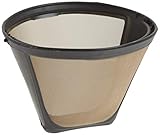
Overview: The Cuisinart GTF Gold Tone Coffee Filter is an OEM accessory designed specifically for select Cuisinart 10-12 cup coffeemakers. This permanent filter replaces disposable paper filters, offering a more sustainable brewing solution while maintaining the brand’s commitment to quality and performance. Constructed with a fine mesh gold-tone material, it’s engineered to deliver full-flavored coffee by allowing natural oils to pass through during extraction.
What Makes It Stand Out: As a genuine Cuisinart component, this filter guarantees perfect compatibility with models DCC-1100, DCC-1200, and DCC-2600. The laser-cut precision ensures consistent filtration and durability that generic alternatives often lack. Unlike universal filters, this model-specific design eliminates guesswork about fit and performance, providing peace of mind for Cuisinart owners who want to maintain their machine’s integrity.
Value for Money: Priced moderately higher than generic options, the GTF filter justifies its cost through superior build quality and guaranteed compatibility. It eliminates recurring paper filter expenses and reduces environmental waste. For Cuisinart owners, the investment protects your coffeemaker’s warranty and ensures optimal brewing performance, making it cost-effective over the long term.
Strengths and Weaknesses: Strengths include perfect fit for specific Cuisinart models, durable gold-tone construction, enhanced flavor extraction, and dishwasher-safe convenience. Weaknesses are its limited compatibility (won’t fit other brands) and slightly higher initial cost compared to universal filters. The filter may also require more thorough cleaning than paper alternatives to prevent oil buildup.
Bottom Line: For owners of compatible Cuisinart coffeemakers, this genuine gold-tone filter is the gold standard. It delivers excellent flavor, reduces waste, and ensures perfect compatibility. While universal filters might save a few dollars upfront, this OEM option provides superior reliability and performance that justifies the modest premium.
2. Hamilton Beach Permanent Gold Filter, Fits Most 8 to 12-Cup Coffee Makers (80675R)
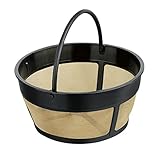
Overview: The Hamilton Beach 80675R is a versatile basket-style permanent coffee filter engineered to fit most 8-12 cup drip coffee makers. This reusable filter eliminates the need for disposable paper filters, combining environmental responsibility with practical design. Crafted from food-grade stainless steel mesh with a BPA-free construction, it features an integrated handle for easy removal and cleaning, making it a convenient upgrade for daily coffee routines.
What Makes It Stand Out: The thoughtful handle design sets this filter apart, allowing users to remove hot grounds safely without mess. Its universal basket-style compatibility covers most major brands, providing flexibility if you upgrade your coffee maker. The fine mesh construction is specifically engineered to let coffee’s natural oils pass through while containing grounds, delivering a richer, more balanced brew than paper filters can achieve.
Value for Money: This filter offers exceptional value, typically priced competitively with just a few months’ worth of paper filters. The dishwasher-safe design saves time and ensures thorough cleaning. By reducing landfill waste and eliminating ongoing filter purchases, it pays for itself within months. The durable construction ensures years of reliable service, making it one of the smartest investments for regular coffee drinkers.
Strengths and Weaknesses: Strengths include universal compatibility, convenient handle, dishwasher-safe cleaning, BPA-free materials, and excellent flavor transmission. Weaknesses involve potential fit issues with some coffee maker models despite “most” claims, and the mesh may clog if not cleaned regularly. The handle, while useful, can sometimes interfere with brew baskets that have tight clearances.
Bottom Line: The Hamilton Beach 80675R is an excellent universal solution for most coffee drinkers. Its combination of thoughtful design, quality materials, and broad compatibility makes it a top choice. While not perfect for every machine, its benefits far outweigh minor fit considerations, delivering both environmental and economic value.
3. GOLDTONE Reusable 8-12 Cup Basket Coffee Filter fits Mr. Coffee Makers and Brewers, Replaces your Paper Coffee Filters, BPA Free
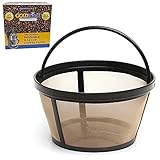
Overview: The GOLDTONE Reusable Basket Filter is a purpose-built replacement for Mr. Coffee 10-12 cup basket-style coffeemakers. Proudly manufactured in the USA, this filter features a solid bottom design with surgical-grade stainless steel woven mesh. It eliminates disposable paper filters while delivering full-flavored coffee through optimal extraction, making it an environmentally conscious choice for dedicated Mr. Coffee users.
What Makes It Stand Out: The “Made in USA” craftsmanship ensures quality control and durability that’s increasingly rare in this category. The solid bottom design provides stability during brewing and prevents grounds from slipping through common in mesh-bottom filters. Precision dimensions (2.25" bottom width, 4.5" top width, 2.5" height) guarantee a perfect fit for compatible Mr. Coffee models, eliminating the frustration of universal filters that don’t seat properly.
Value for Money: While slightly premium-priced, this filter’s American manufacturing and surgical-grade materials justify the cost. It eliminates ongoing paper filter expenses and typically pays for itself within 3-4 months for daily brewers. The rigid plastic frame resists warping and maintains its shape through years of use, offering better long-term value than cheaper alternatives that may need replacement.
Strengths and Weaknesses: Strengths include precise Mr. Coffee compatibility, solid bottom stability, USA manufacturing, surgical-grade mesh, and BPA-free construction. Weaknesses are limited to Mr. Coffee machines (not truly universal), potential staining over time, and the solid bottom may drain slightly slower than mesh-bottom designs. It also requires thorough cleaning to prevent oil accumulation.
Bottom Line: For Mr. Coffee owners seeking a reliable, American-made permanent filter, this GOLDTONE option is outstanding. Its precision fit and quality construction deliver superior performance and longevity. While not the cheapest option, its durability and perfect compatibility make it a worthwhile investment that enhances both your coffee and environmental footprint.
4. Reusable No.4 Cone Coffee Maker Filters for Ninja Coffee Bar Brewer Replacement Permanent Basket Filter (2 Coffee Filters)
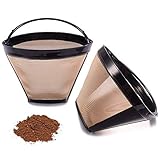
Overview: This two-pack of No.4 cone permanent filters offers a cost-effective solution specifically for Ninja Coffee Bar brewer owners. Designed to replace disposable cone filters in 8-12 cup systems, these filters feature food-grade stainless steel mesh construction. The dual-pack provides immediate backup or allows rotation between brews, ensuring you’re never without a clean filter when you need your morning coffee.
What Makes It Stand Out: The bundled two-filter package delivers exceptional value, essentially providing a spare filter at a price often charged for a single unit elsewhere. The precise No.4 cone dimensions are tailored for Ninja Coffee Bar systems, addressing a specific market need that universal cone filters may not meet perfectly. The fine mesh design is optimized for the higher-pressure brewing characteristics of many Ninja models.
Value for Money: With two filters included, this package offers outstanding value—often costing less than two months of premium paper filters. The ability to rotate filters extends their lifespan and ensures you always have a clean backup. For Ninja Coffee Bar owners, the perfect fit eliminates waste from improper seating and reduces the risk of grounds in your brew, making it economically and practically superior to generics.
Strengths and Weaknesses: Strengths include the two-filter value pack, Ninja-specific design, food-grade materials, and fine mesh for optimal extraction. Weaknesses involve compatibility limited primarily to Ninja systems, cone shape may not suit all preferences, and the mesh requires regular cleaning to prevent clogging. Some users report the seam construction can trap grounds if not cleaned immediately after brewing.
Bottom Line: For Ninja Coffee Bar owners, this two-pack offers unbeatable value and convenience. The Ninja-specific design ensures proper fit and performance, while the spare filter provides practical backup. Though cleaning requires diligence, the economic and environmental benefits make this an excellent choice for daily Ninja brewers seeking to ditch paper filters permanently.
5. Permanent Basket-Style Coffee Filter designed for Mr. Coffee 10-12 Cup Basket-Style Coffeemakers
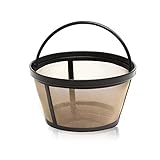
Overview: This permanent basket-style filter is a straightforward, no-frills replacement designed specifically for Mr. Coffee 10-12 cup basket-style coffeemakers. Built to replace disposable paper filters, it offers a basic reusable solution for daily brewing. While product details are minimal, its dedicated design suggests reliable compatibility with compatible Mr. Coffee machines, providing a simple path to reducing waste and ongoing filter costs.
What Makes It Stand Out: Its singular focus on Mr. Coffee compatibility eliminates the uncertainty that comes with universal filters. The product’s minimal marketing approach suggests a functional, purpose-built design without premium pricing for unnecessary features. For Mr. Coffee owners seeking a direct paper filter replacement without brand-name markup, this offers a utilitarian alternative that prioritizes fit and function over flashy specifications.
Value for Money: Typically priced as a budget-friendly option, this filter delivers solid value for cost-conscious consumers. It eliminates recurring paper filter expenses and should pay for itself within a few months of regular use. While it may lack the premium materials or Made in USA credentials of competitors, its affordability makes it an accessible entry point into reusable filtering for Mr. Coffee owners unwilling to pay premium prices.
Strengths and Weaknesses: Strengths include specific Mr. Coffee compatibility, affordable pricing, and basic functionality. Weaknesses stem from limited product information—material quality, BPA status, and construction details are unspecified. It likely lacks features like handles or reinforced rims found on premium alternatives. Durability may be inferior to surgical-grade options, and cleaning convenience is uncertain without dishwasher-safe confirmation.
Bottom Line: This filter serves as a budget-conscious entry into reusable brewing for Mr. Coffee owners. While it lacks detailed specifications and premium features, its dedicated design ensures basic compatibility and function. If you’re seeking the cheapest functional alternative to paper filters and are willing to accept potential trade-offs in durability and convenience, this no-frills option may suffice.
6. 4 Cup Reusable Filter Basket With Mesh Bottom Fits MrCoffee Coffee Maker and Brewer - Permanent Filter Replacement for Mr Coffee Gold Basket-Style Filters 1-Pack

Overview: The BRENSTEN 4-Cup Reusable Filter Basket delivers a targeted solution for owners of smaller Mr. Coffee machines seeking to eliminate disposable paper filters. This permanent basket-style filter combines a surgical-grade stainless steel mesh with a BPA-free frame, engineered specifically for 4-cup brewers. The design emphasizes both environmental consciousness and brewing performance, promising to preserve the full flavor profile of your coffee while reducing kitchen waste. Its compact form factor makes it particularly suitable for individuals or couples who don’t require larger capacity brewing.
What Makes It Stand Out: Unlike universal filters that compromise on fit, this model boasts excellent compatibility with Mr. Coffee’s 4-cup basket design. The addition of a practical handle simplifies removal of hot grounds, a detail often overlooked in competing products. Its dishwasher-safe construction and surgical-grade mesh filtration demonstrate attention to both convenience and quality, ensuring consistent extraction without the papery aftertaste that plagues disposable alternatives.
Value for Money: Priced around $12-15, this single-unit filter represents solid value for dedicated 4-cup brewer owners. The math is straightforward: daily coffee drinkers typically recoup their investment within 3-4 months by eliminating paper filter purchases. Beyond cost savings, the environmental impact of reducing hundreds of paper filters annually adds intangible value. While multi-packs offer better per-unit pricing, this focused single-pack approach ensures you’re not paying for unnecessary extras.
Strengths and Weaknesses: Strengths include precise Mr. Coffee compatibility, surgical-grade mesh quality, integrated handle for safe handling, dishwasher-safe convenience, and robust sustainability credentials. The stainless steel frame ensures longevity far exceeding plastic alternatives. Weaknesses center on its niche application—4-cup capacity only limits versatility for growing households or entertaining. The single-pack configuration provides no backup during cleaning cycles, potentially disrupting morning routines. Some users may find the mesh requires more thorough cleaning than anticipated.
Bottom Line: This filter excels for its intended audience: solo users or couples committed to their 4-cup Mr. Coffee machine. The quality construction and thoughtful features justify the modest investment, delivering tangible flavor improvements and waste reduction. However, households anticipating growth or frequent guests should consider larger capacity options. For target users, it’s a reliable, eco-conscious upgrade that enhances the daily coffee ritual.
7. BIMYJ Reusable Coffee Filters 4 for Permanent Filter for Ninja Coffee Maker for Cuisinart Filter Basket Replacement (2 Coffee Filters and 2 Coffee Coasters)

Overview: The BIMYJ Reusable Coffee Filters 4 set provides a comprehensive solution for owners of #4 cone-style coffee makers, including Ninja, Cuisinart, and Hamilton Beach models. This package includes two stainless steel filters plus two protective coasters, emphasizing both practicality and value. Constructed from 304 stainless steel woven mesh with BPA-free certification, the filters promise durability and health-conscious brewing. The design targets the 8-12 cup market segment, making it suitable for most households.
What Makes It Stand Out: The inclusion of two coasters alongside dual filters creates immediate added value rarely seen in competitor offerings. The ultra-fine mesh design specifically addresses flavor preservation, ensuring no paper taste while maintaining the coffee’s natural oils and aroma. Its broad compatibility across major brands (Ninja, Cuisinart, Black & Decker, Hamilton Beach) makes it a versatile choice for households with multiple machines or those who may upgrade brewers.
Value for Money: With two filters and two coasters typically priced under $20, this package delivers exceptional value. The dual-filter approach provides convenience—one can be cleaned while the other brews—eliminating downtime. Compared to purchasing paper filters indefinitely, the ROI period is under six months for regular users. The coasters, while simple, add tangible utility that competitors charge extra for.
Strengths and Weaknesses: Strengths include versatile brand compatibility, durable 304 stainless steel construction, BPA-free materials, easy-clean design with handles, dishwasher safety, and the practical two-filter system. The ultra-fine mesh enhances flavor extraction. Weaknesses involve potential compatibility verification requirements—users must confirm their specific model accepts #4 cones. The ultra-fine mesh may occasionally allow fine grounds through if grind size isn’t adjusted properly, and the coasters, while useful, may not match all kitchen aesthetics.
Bottom Line: This BIMYJ set represents outstanding value for households using compatible #4 cone brewers. The dual-filter strategy and included coasters solve practical daily challenges, while the quality construction ensures longevity. Verify your machine’s compatibility first, but for eligible users, it’s a cost-effective, flavor-enhancing upgrade that pays dividends quickly.
8. Stainless Steel Reusable Coffee Filters Basket 8 12 Cup Sturdy Permanent Coffee Filter fit for Mr. Coffee Black,Decker Coffee Makers 8 12 cups
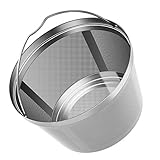
Overview: This Stainless Steel Reusable Coffee Filter Basket targets the 8-12 cup segment for Mr. Coffee and Black+Decker brewers, offering a robust permanent alternative to paper filters. Constructed from food-grade 18/8 stainless steel with a fine mesh bottom, it emphasizes flavor preservation and environmental responsibility. The basket-style design caters to standard drip coffee makers, promising easy integration into existing morning routines without the waste of disposable filters.
What Makes It Stand Out: The explicit environmental messaging—highlighting tree conservation—resonates with eco-conscious consumers. Its universal approach fits most basket-style brewers, though the notable exception (Hamilton Beach 46310) demonstrates unusual transparency about limitations. The fine mesh design specifically aims to retain coffee’s aromatic oils while preventing grounds from escaping, addressing two common complaints about paper filtration.
Value for Money: Typically priced around $10-13, this single filter offers compelling value for owners of compatible machines. The permanent nature eliminates ongoing paper filter costs, with break-even occurring within 4-5 months for daily brewers. The 18/8 stainless steel construction suggests durability that justifies the initial investment, though the lack of multi-pack options means no backup during cleaning.
Strengths and Weaknesses: Strengths include sturdy 18/8 stainless steel build, fine mesh for optimal extraction, broad compatibility with major brands, dishwasher-safe convenience, and strong eco-credentials. The straightforward design ensures reliable performance. Weaknesses are the critical Hamilton Beach 46310 incompatibility (must verify model numbers), single-unit limitation requiring immediate cleaning for back-to-back brewing, and the basic design lacking handles or premium features found in competitors. The marketing copy’s awkward phrasing may raise quality concerns.
Bottom Line: A solid, no-frills choice for Mr. Coffee and Black+Decker owners who prioritize sustainability and flavor. Verify compatibility carefully, especially for Hamilton Beach users. While it lacks premium touches like handles, the core functionality and durable materials deliver reliable performance. For budget-conscious eco-warriors with compatible machines, it’s a practical investment that improves coffee quality while reducing waste.
9. GoldTone Brand (Made in the USA) Reusable No.4 Cone Style Replacement Coffee Filter replaces your Cuisinart Permanent Coffee Filter for Machines and Brewers (1 Pack)
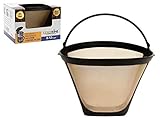
Overview: The GoldTone Reusable No.4 Cone Filter distinguishes itself with USA manufacturing and surgical-grade stainless steel construction. Designed specifically for Cuisinart machines, this form-fitting filter adapts to both oblong and round brew baskets, offering versatility within the brand ecosystem. The single-pack filter targets the 8-12 cup market, emphasizing quality materials and domestic production as key differentiators in a crowded field of imported alternatives.
What Makes It Stand Out: The “Made in USA” badge carries weight for quality-conscious buyers, suggesting superior manufacturing standards and material sourcing. Its unique shape-shifting capability—adjusting from oblong to round based on the brew basket—demonstrates thoughtful engineering that solves compatibility issues across Cuisinart’s varied model designs. The surgical-grade stainless steel promises exceptional durability and flavor neutrality.
Value for Money: Priced at $12-16, this filter commands a slight premium over generic imports, justified by domestic manufacturing and specialized design. For Cuisinart loyalists, the perfect fit and proven compatibility list eliminate guesswork. The investment breaks even within 4-6 months, while supporting American manufacturing adds intangible value for patriotic consumers. However, the single-unit approach lacks the convenience of multi-packs.
Strengths and Weaknesses: Strengths include USA-made quality, surgical-grade materials, excellent Cuisinart compatibility, adaptive shape design, dishwasher-safe cleaning, and full flavor preservation. The extensive compatibility list covers most popular models. Weaknesses involve limited cross-brand utility—it’s primarily for Cuisinart machines. The premium price may deter budget shoppers, and the single-pack provides no brewing backup. Some users report the flexible design requires careful seating to prevent grounds bypass.
Bottom Line: The GoldTone filter is the premium choice for Cuisinart owners who value American manufacturing and guaranteed compatibility. While slightly more expensive than imports, the quality construction and adaptive design justify the cost. Verify your specific model against their compatibility list, but for eligible users, it’s a durable, flavor-enhancing upgrade that supports domestic industry. Eco-conscious Cuisinart fans will appreciate both the waste reduction and USA origin.
10. #4 Reusable Permanent Cone Coffee Filters, 8~12 Cup Size 4 Coffee Filters, Perfect Fit for Cuisinart Hamilton Beach Coffee Maker Filter, Replace Cuisinart GTF Gold Tone Coffee Filters
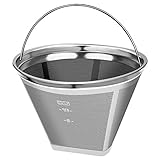
Overview: This #4 Reusable Permanent Cone Coffee Filter positions itself as a universal solution for 8-14 cup coffee makers, with particular emphasis on Cuisinart and Hamilton Beach compatibility. The stainless steel construction promises durability and health benefits, while the extensive compatibility list covers numerous specific models. Backed by a 2-year warranty and no-questions-asked return policy, it emphasizes customer confidence and long-term value.
What Makes It Stand Out: The comprehensive warranty coverage—2 years plus unconditional support—exceeds industry standards and demonstrates manufacturer confidence. Its broad compatibility spans both current and legacy Cuisinart models (DCC-1000BK through DCC-2900, plus SS series), making it ideal for households with older machines. The explicit 8-14 cup range provides flexibility beyond the typical 8-12 cup limitation.
Value for Money: Priced competitively around $10-14, the included warranty transforms this from a simple purchase into a risk-free investment. The potential 14-cup capacity extends utility for larger households or entertaining scenarios. Compared to paper filters, the payback period is under six months, while the warranty ensures protection against defects for two full years—a value proposition unmatched by most competitors.
Strengths and Weaknesses: Strengths include exceptional compatibility breadth, 2-year warranty, stainless steel durability, dishwasher-safe convenience, eco-friendly credentials, and versatile 8-14 cup capacity. The customer support policy is outstanding. Weaknesses involve potential over-promising on universal fit—users should still verify dimensions. The lack of a handle on some versions may complicate hot filter removal. The ultra-fine mesh requires proper grind size to prevent clogging, and the brand recognition is lower than established names like GoldTone.
Bottom Line: This filter is the warranty-conscious buyer’s best bet, offering compatibility and protection that premium brands often lack. The extensive model support and 2-year guarantee make it especially attractive for Cuisinart and Hamilton Beach owners. While brand recognition is modest, the risk-free purchase terms and solid construction deliver confidence. For those seeking maximum compatibility assurance and long-term protection, it’s an unbeatable value that doesn’t compromise on performance.
Understanding Permanent Coffee Filters
What Makes a Coffee Filter “Permanent”?
A permanent coffee filter is engineered for hundreds—often thousands—of uses through durable materials like stainless steel or gold-toned mesh. Unlike their paper counterparts, these filters feature micron-level precision in their weave, designed to trap grounds while allowing essential coffee oils and fine sediment to pass through. The construction typically includes a rigid frame that maintains shape under hot water exposure and repeated cleanings. True permanence comes from welded seams, not folded edges, and food-grade materials that resist corrosion from acidic coffee and mineral-heavy water.
How They Differ from Disposable Paper Filters
The fundamental difference lies in filtration philosophy. Paper filters absorb coffee oils and trap nearly all sediment, creating a cleaner but sometimes thinner cup. Permanent filters preserve these oils, resulting in richer body and more complex flavor profiles. They also eliminate the papery taste that can affect the first few brews with a new paper filter. From a practical standpoint, permanent filters require a few seconds of cleaning rather than disposal, and they maintain consistent flow rates instead of slowing as paper becomes saturated. The environmental contrast is stark—one permanent filter replaces hundreds of paper filters annually.
Key Materials and Construction
Stainless Steel Mesh Options
Stainless steel remains the workhorse material for permanent filters, available in various grades and weaves. Look for 18/8 or 304-grade stainless steel, which resists rust and maintains structural integrity after countless hot water cycles. The mesh count matters—too fine and you’ll get slow drainage; too coarse and sediment invades your cup. Optimal daily-use filters typically feature a dual-layer design: a coarser outer mesh for structure and a finer inner layer for filtration precision. Some designs incorporate a micro-perforated sheet rather than woven mesh, offering more uniform hole sizes but slightly less flexibility.
Gold-Tone Filtration Technology
Gold-tone filters aren’t solid gold—they’re stainless steel filters with a titanium nitride coating that creates that distinctive golden color. This coating adds non-stick properties, making coffee grounds slide off more easily during cleaning. The ultra-smooth surface also prevents micro-grounds from embedding in the mesh weave, which can happen with bare stainless steel over time. For daily users, this translates to more consistent performance and less aggressive scrubbing. The coating must be food-grade and properly applied; thin or uneven coatings can chip and degrade within months of regular use.
Hybrid and Specialty Materials
Emerging options for 2026 include silicone-edged filters that create a better seal against brew baskets, preventing bypass (water flowing around the filter). Some manufacturers are experimenting with ceramic-reinforced polymers for the frame, offering heat resistance with less weight than metal. You’ll also find filters with laser-cut holes instead of woven mesh—more expensive to produce but delivering exact, consistent filtration. For those sensitive to metal flavors, BPA-free polymer meshes exist, though they typically don’t match the durability of steel options for high-volume daily brewing.
Filter Types and Compatibility
Cone-Shaped Filters for Precision Brewing
Cone filters dominate the pour-over world and fit many automatic machines that mimic manual brewing. Their shape promotes even extraction as water flows through grounds in a consistent pattern. For daily use, check the angle—60-degree cones are standard for most pour-over devices, while some automatic brewers use slightly different tapers. The tip design matters too; a reinforced tip prevents deformation when you press the filter against the carafe or brew basket. If you’re brewing single cups frequently, consider whether the filter sits securely on smaller vessels without wobbling.
Basket-Style Filters for Drip Machines
Flat-bottom basket filters work with the majority of automatic coffee makers. The key for daily use is side-wall height and rim construction. A properly designed basket filter should sit at least a quarter-inch below the top of your brew basket, preventing overflow during brewing. The rim needs enough rigidity to support wet grounds without collapsing but enough flexibility to fit slight variations in basket dimensions. Some designs include a handle or lift tabs—crucial features for removing hot filters without spilling grounds.
Disk and Universal Designs
Disk filters serve AeroPress users and some specialty brewers, while universal designs attempt to fit multiple machine types with adjustable or flexible rims. For daily use, universal filters often compromise too much—seals may be imperfect, leading to bypass. Stick to purpose-built filters for your primary brew method. If you use multiple devices, consider that a quality cone filter can often double as a makeshift disk filter for immersion brewing, though results vary.
Performance Factors That Matter
Filtration Precision and Micron Ratings
Micron ratings indicate the size of particles that can pass through the filter. Paper typically filters around 20 microns, while permanent filters range from 50 to 200 microns depending on design. For daily use, aim for the 80-120 micron sweet spot—fine enough to prevent gritty coffee but open enough for proper oil passage. Some high-end filters publish their micron rating; most don’t, requiring you to judge by the weave density. Hold the filter up to light—uniform, tiny pinpricks of light indicate good precision, while larger, irregular gaps suggest inconsistent filtration.
Impact on Coffee Flavor and Oils
The oils in coffee carry aromatic compounds that paper traps. Permanent filters let these through, creating a fuller mouthfeel and more lingering finish. However, this also means more cafestol, a compound that can affect cholesterol levels. If you’re brewing daily, this is worth considering. The flavor difference is most noticeable with medium and dark roasts, which contain more oils. Light roasts may taste slightly more acidic through permanent filters since the oils aren’t there to round out the brightness. Your water quality also interacts with permanent filters—hard water can cause mineral buildup in the mesh, subtly affecting taste over weeks of use.
Flow Rate and Brewing Time
A filter that’s too fine slows drainage, extending brew time and potentially over-extracting your coffee. Too fast, and you get under-extracted, weak coffee. Quality permanent filters balance this through engineered mesh tension and frame design that prevents collapse. For automatic machines, the filter must match the brewer’s water delivery rate—too slow and you’ll have overflow; too fast and the grounds won’t saturate properly. Daily users should look for filters that maintain consistent flow even after months of use, when microscopic grounds might clog some mesh openings.
Daily Use Considerations
Durability for Everyday Brewing
Daily use means 365+ brews per year. Welded seams outperform crimped or folded edges that can separate. The mesh should be taut—not loose or baggy, which leads to uneven filtration. Check the handle attachment; riveted handles last longer than spot-welded ones. For automatic brewers, the filter’s weight matters—lightweight filters can shift during brewing if water hits them at an angle. A quality permanent filter should feel substantial but not cumbersome, with a frame that resists denting if dropped.
Cleaning and Maintenance Routines
The difference between a filter that lasts one year and five years is cleaning diligence. Daily rinsing under hot water removes most oils and grounds. Weekly, a soft brush helps dislodge trapped particles from the mesh weave. Monthly, soak in a solution of water and coffee equipment cleaner to dissolve oil buildup. Avoid harsh scouring pads that can damage coatings or stretch mesh. Dishwasher-safe filters exist, but hand washing extends lifespan significantly. Look for designs without tight corners where grounds can hide—smooth, curved interiors clean faster.
Storage and Countertop Presence
If you’re brewing daily, your filter might live on a drying rack or in the brewer itself. Filters with flat, stable bases can stand upright to dry, preventing moisture from collecting in the bottom. Those with hanging loops or handles can be hung from hooks, saving space. Consider whether the filter’s appearance matters to you—some users prefer the industrial look of bare stainless steel, while others like the premium appearance of gold-tone. For households with multiple coffee drinkers, a filter that nests inside your brew basket when not in use keeps the kitchen tidy.
Cost and Environmental Impact
Long-Term Savings Analysis
A quality permanent filter costs the equivalent of 100-200 paper filters. If you’re brewing daily, you break even within six months to a year. But the real savings accumulate over years of use. Factor in the occasional deep-cleaning solution cost—minimal compared to ongoing paper purchases. For households brewing multiple pots daily, the savings multiply. There’s also the convenience value of never running out of filters, which might save an emergency coffee shop run. Consider the filter’s expected lifespan; a $25 filter that lasts three years costs less than $0.03 per use.
Sustainability Benefits
Each permanent filter prevents hundreds of paper filters from entering landfills annually. While paper filters are biodegradable, many are bleached and the environmental cost of manufacturing, packaging, and transport adds up. Permanent filters have their own footprint—mining and processing metal—but this is amortized over thousands of uses. For eco-conscious daily brewers, the break-even point on environmental impact occurs after roughly 150 brews. After that, permanent filters are decisively greener. Some manufacturers now use recycled stainless steel, further reducing environmental impact.
Waste Reduction Potential
Beyond the filters themselves, consider packaging. Paper filters come in boxes with plastic liners; permanent filters typically have minimal, recyclable packaging. There’s also the waste from imperfect brews—paper filters that collapse or tear, wasting coffee grounds. A reliable permanent filter reduces these mishaps. For composters, permanent filters mean adding coffee grounds directly to compost without paper filter fragments mixed in. Some users even find they use fewer grounds with permanent filters, as extraction efficiency improves, reducing coffee waste.
Common Challenges Solved
Dealing with Sediment and Fine Particles
The most common complaint about permanent filters is fine sediment in the cup. This often stems from using too fine a grind or a low-quality filter with inconsistent mesh. For daily use, pair your filter with a grind size slightly coarser than you’d use for paper. Some sediment is normal and expected—it’s part of the fuller-bodied experience. If it bothers you, let the coffee sit for 30 seconds after brewing; sediment settles to the bottom. Pre-rinsing the filter with hot water before adding grounds can also help by settling the mesh fibers.
Preventing Clogs and Slow Drainage
Over time, oils and micro-grounds can clog mesh openings. The solution isn’t scrubbing harder—it’s preventive maintenance. After each use, tap the filter firmly to dislodge grounds, then rinse immediately. Never let coffee grounds dry in the filter. If drainage slows, soak the filter in hot water with a tablespoon of citric acid for 15 minutes to dissolve oils. For severe buildup, a diluted vinegar soak works, but rinse thoroughly to avoid flavor contamination. Some filters include a cleaning brush specifically designed for their mesh pattern—use it gently, following the weave direction.
Addressing Compatibility Issues
Not all “universal” filters fit all machines. Before purchasing, measure your brew basket’s diameter and depth. Check if your machine uses a spring-loaded pause-and-serve feature that might interfere with a thicker permanent filter. Some automatic brewers have sensors that detect paper filters—rare, but worth verifying in your manual. If the filter sits too high, you can trim some designs, but this voids warranties. Better to find a properly sized filter. For pour-over cones, ensure the filter doesn’t seal completely against the cone walls; you need airflow for proper drainage.
Buying Guide for 2026
Sizing Your Filter Correctly
Size designations like “#2” or “#4” aren’t universal across brands. Measure the top diameter of your current paper filter when flattened, and the height from base to rim. Compare these to permanent filter specifications. For basket filters, note whether your machine uses standard or deep baskets—some newer models accommodate taller filters for larger batches. When in doubt, choose the slightly larger size; most permanent filters have some flexibility to compress into a smaller basket, but an undersized filter leaves gaps for grounds to escape.
Checking Coffee Maker Compatibility
Automatic brewers with showerhead water delivery systems work best with permanent filters that have a wide, flat bottom, ensuring even saturation. For machines with single-stream delivery, a cone filter might actually perform better. Check if your brewer has a filter sensor or requires a specific weight to activate the brewing cycle. Some high-end machines have proprietary filter shapes; third-party options may exist but verify compatibility through user reviews. For 2026, many new brewers are designed with permanent filter use in mind, featuring slightly modified baskets to accommodate their thicker construction.
Evaluating Build Quality and Warranty
A lifetime warranty sounds impressive but read the fine print—many exclude normal wear and tear, which includes mesh stretching. Better indicators of quality are the welding quality (look for smooth, continuous seams) and the rim’s reinforcement. Gently flex the filter; it should feel springy, not floppy. The mesh should remain taut. Some manufacturers offer replacement mesh inserts for the frame, extending life and reducing waste. For daily use, prioritize filters with warranties that specifically cover “mesh integrity” rather than just “manufacturer defects.”
Advanced Features to Consider
Handles and Extraction Aids
A well-designed handle stays cool enough to touch even after brewing, positioned to balance the filter when full of wet grounds. Some filters feature a secondary “extraction aid”—a small lip or ridge that helps break the seal between filter and brew basket, preventing suction that can cause spills. For heavy daily use, silicone-coated handles provide better grip when wet. Consider whether the handle folds for storage or remains rigid; folding handles can weaken at the joint over hundreds of uses.
Reinforced Seams and Edges
The transition from mesh to frame is the failure point in cheap filters. Look for filters where the mesh is either continuously welded to the frame or wrapped around a reinforced edge. Some designs use a double-folded edge with the mesh sandwiched inside, preventing fraying. For basket filters, the corners experience the most stress; reinforced corner welds or gussets prevent tearing. A rolled rim (where the top edge is rounded rather than sharp) adds comfort when handling and prevents the frame from cutting into the mesh over time.
Multi-Stage Filtration Designs
Premium filters for 2026 increasingly feature multi-stage designs: a coarser outer layer to catch large grounds, a fine inner mesh for sediment control, and sometimes a third layer of activated carbon-impregnated material to reduce chlorine taste from water. While effective, these designs clean slower and cost more. For daily use, a well-executed dual-layer design offers the best balance. Some filters incorporate a micro-etched pattern that creates turbulence, theoretically improving extraction uniformity—though the real-world benefit is subtle for most home brewers.
Making Your Final Decision
Assessing Your Brewing Habits
How much coffee do you brew daily? A single-cup drinker needs different durability than a household brewing multiple pots. Do you switch between roast levels frequently? Lighter roasts may benefit from slightly coarser mesh to highlight acidity. Are you meticulous about cleaning, or do you prefer low-maintenance options? Your habits dictate whether a gold-tone filter’s easier cleaning justifies its higher cost. Consider your grinder quality too—blade grinders create more fines that clog fine mesh, making a slightly more open filter preferable.
Balancing Budget and Performance
You can find permanent filters from under $10 to over $50. The sweet spot for daily use lies in the $15-25 range, where you get welded construction, proper food-grade materials, and consistent mesh quality. Below this, filters often have crimped seams that fail within a year. Above it, you’re paying for marginal improvements or brand prestige. Factor in replacement costs—if a $20 filter lasts two years, that’s less than $0.03 per day. A $10 filter that fails in six months actually costs more per use.
When to Replace Your Permanent Filter
Even the best permanent filter won’t last forever. Replace when you notice permanent mesh deformation—sagging or stretching that creates gaps. If cleaning no longer restores flow rate, oils have likely polymerized in the mesh, permanently clogging openings. Rust spots, even small ones, indicate coating failure and potential metal contamination. Most quality filters last 3-5 years with daily use, but heavy roasts with more oils can shorten this. Keep a spare on hand; when you notice performance declining, you can compare directly to a fresh filter to decide if it’s time.
Frequently Asked Questions
How do I stop coffee sediment from getting into my cup with a permanent filter?
Use a medium-coarse grind rather than a fine espresso grind, and avoid blade grinders that create inconsistent particle sizes. Let your brewed coffee sit for 30 seconds before pouring to allow sediment to settle. Some sediment is normal and contributes to the fuller body permanent filters are known for.
Can permanent coffee filters go in the dishwasher?
Most stainless steel and gold-tone filters are technically dishwasher safe, but hand washing significantly extends their lifespan. Dishwasher detergents can be harsh on mesh and coatings. If you do use a dishwasher, place the filter on the top rack and avoid high-heat drying cycles.
Will a permanent filter fit my specific coffee maker model?
Measure your brew basket’s diameter and depth, then compare to filter specifications. Most filters list compatible machine models. For automatic brewers, check if your machine has a pause-and-serve feature that might interfere with thicker permanent filters. When uncertain, purchase from retailers with good return policies.
Do permanent filters change the taste of coffee?
Yes, they allow more coffee oils to pass through, creating a richer, fuller-bodied cup compared to paper. This enhances flavor complexity but may increase bitterness with dark roasts if over-extracted. Many users prefer this taste, but it’s subjective. The difference is most noticeable within the first week of switching.
How often should I deep clean my permanent filter?
For daily use, deep clean monthly by soaking in a solution of hot water and coffee equipment cleaner or citric acid. If you notice oily residue or slower drainage, clean sooner. Daily rinsing after each use prevents most buildup and extends time between deep cleanings.
Are gold-tone filters better than stainless steel?
Gold-tone filters have a non-stick coating that makes cleaning easier and prevents micro-grounds from embedding in the mesh. They perform similarly in filtration but may last slightly longer with less maintenance. They’re typically more expensive; whether the convenience justifies the cost depends on your cleaning habits and budget.
Can I use a permanent filter with fine espresso grind coffee?
It’s not recommended. Fine grinds clog permanent filter mesh quickly and produce excessive sediment. Permanent filters work best with medium to coarse grinds. If you prefer finer grinds, consider a hybrid filter with extremely fine mesh, but expect slower drainage and more frequent cleaning.
How long should a quality permanent filter last?
With proper care, expect 3-5 years of daily use. Heavy oil buildup from dark roasts may reduce lifespan. Signs it’s time to replace include permanent mesh stretching, rust spots, or inability to restore flow rate even after deep cleaning. Many users keep a backup filter to compare performance.
Do permanent filters work with all roast types?
Yes, but they perform differently. Light roasts may taste brighter and more acidic. Medium roasts often show the most balanced improvement. Dark roasts produce more oil, which can clog filters faster but delivers exceptionally rich body. Adjust your grind size and cleaning frequency based on your preferred roast level.
Is sediment in my coffee harmful?
No, the fine particles that pass through permanent filters are just very small coffee grounds. They’re safe to consume and contribute to the coffee’s body. However, excessive sediment indicates your grind is too fine or your filter mesh is damaged. If you have digestive sensitivities, let coffee settle before drinking the last sip.
See Also
- 10 Best Value Coffee Table Drip Trays for Small Apartments in 2026
- Stop Wasting Paper with the 10 Best Reusable Coffee Filters This Year
- 10 Premium Coffee Tamping Mats for Luxury Espresso Setups (Worth the Investment)
- 10 Gold Tone Coffee Filters That Solve Metal Taste Issues in 2026
- We Tested 50 Under-Countertop Drip Trays - Here are the 10 Best for Hidden