Table of Contents
Ever watched a skilled barista transform plain milk into a velvety canvas for intricate swans, hearts, or rosettas? That mesmerizing dance of steam, milk, and precision isn’t just magic—it’s the result of understanding tools, technique, and the science behind perfect microfoam. For latte art enthusiasts, the milk frother isn’t just an appliance; it’s the essential partner in crime, the conductor of the symphony that turns a simple espresso into a visual masterpiece. Getting this step wrong means grainy, bubbly milk that refuses to flow properly, ruining even the most practiced pouring technique. The right tool, however, unlocks consistency, control, and the smooth, paint-like texture that makes latte art truly sing.
Choosing the ideal milk frother specifically for artistic expression goes far beyond simply heating milk. It demands a deep dive into factors most casual users overlook: the ability to create uniform microfoam without large bubbles, precise temperature management to avoid scalding sugars, and the repeatability needed to practice day after day. Whether you’re a dedicated home barista dreaming of competition-level pours or simply want to elevate your morning ritual with beautiful designs, understanding the capabilities and limitations of different frothing technologies is paramount. This guide cuts through the marketing hype to focus solely on what matters for achieving that elusive, glossy, pourable microfoam essential for stunning latte art.
Top 10 Milk Frothers for Latte Art
Detailed Product Reviews
1. DREO Milk Frother, 8-in-1 Electric Stainless Steel Frother for Latte Art Microfoam and Coffee, 9oz/270ml Warm and Cold Foam Automatic Frothers, LED, Easy to Clean

Overview:
This compact 9oz electric frother targets home baristas seeking café-quality microfoam. Its 8-in-1 functionality supports warm/cold frothing, stirring, and multiple foam densities, ideal for lattes, shakes, and chocolate milk. Designed for precision with milk meeting specific protein/fat thresholds (≥3% each), it promises barista-style results without scorching.
What Makes It Stand Out:
The dual-tip system (impeller for silky 0.5mm microfoam, disc for thick foam) and anti-scorch technology are key differentiators. Volume markings simplify dosing, while the waterproof stainless steel build and LED interface ensure effortless operation and cleanup. Its ability to generate foam lasting up to 5 minutes surpasses many competitors.
Value for Money:
Priced mid-range, it justifies cost through versatility—replacing standalone cold frothers and basic stirrers. While larger-capacity models exist, its 9oz size suits single servings efficiently, avoiding the premium markup of DREO’s 15oz variant (Product 2) for users needing smaller batches.
Strengths and Weaknesses:
Strengths: Exceptional microfoam quality for latte art; intuitive one-touch controls; quick, thorough cleaning; consistent anti-scorch performance.
Weaknesses: Limited 9oz capacity for households; requires specific milk types (≥3% protein/fat); impeller rotation mechanism may confuse first-time users.
Bottom Line:
A top pick for solo coffee enthusiasts prioritizing latte art precision in a space-saving design. Its reliability and microfoam excellence offer compelling value, though multi-user homes may prefer larger models.
2. DREO Milk Frother, All-in-1 Electric Foam Maker for Coffee, 15oz/450ml Automatic Foam Frother for Latte Art-level Microfoam, 30+ Drinks, Easy to Clean, Dishwasher Safe, LED display
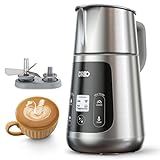
Overview:
DREO’s upgraded 15oz frother delivers professional microfoam at home, targeting serious coffee lovers. With a larger capacity and “reengineered” technology, it supports 30+ drinks—from delicate latte art to thick shakes—using multi-stage temperature and aeration control for consistent results with standard or barista-grade milk.
What Makes It Stand Out:
The 15oz jug accommodates family use, while its micro-mesh impeller creates 0.5mm microfoam (50% finer than rivals). Adjustable speeds and 6 heat levels (up to 149°F) enable unmatched customization for dairy/non-dairy milks. Dishwasher-safe construction and a pro-style pitcher design enhance usability.
Value for Money:
It commands a premium price but excels as a long-term investment. Replacing multiple tools (frother, heater, mixer), it outperforms budget models in foam quality and durability. Cost-effective versus café visits, though overkill for occasional users who’d prefer Product 1’s simplicity.
Strengths and Weaknesses:
Strengths: Superior foam fineness and volume; versatile heat/speed settings; large dishwasher-safe jug; ideal for entertaining.
Weaknesses: Bulky footprint; steeper learning curve for optimal settings; higher price than entry models.
Bottom Line:
Highly recommended for households or coffee connoisseurs wanting café mastery daily. Its precision and capacity justify the cost, though casual users may find it excessive.
3. Milk Frothing Pitcher 350ml/600ml/900ml/1500ml (12oz/20oz/32oz/50oz) Steaming Pitchers Stainless Steel Milk/Coffee/Cappuccino/Latte Art Barista Steam Pitchers Milk Jug Cup with Art Pen,12oz

Overview:
This manual stainless steel pitcher set (available in four sizes) caters to hands-on baristas. Unlike electric frothers, it relies on steam wands or hand-pouring for frothing, featuring a pointed spout for precise latte art and a bundled art pen for freehand designs—ideal for espresso machine owners.
What Makes It Stand Out:
The premium #304 stainless steel construction ensures heat resistance and rust-proof durability. The point-mouth design prevents spills and enables intricate pours, while the included art pen adds creative flair. Its dishwasher-safe, non-toxic build suits eco-conscious users seeking low-waste tools.
Value for Money:
Exceptional value as an affordable, long-lasting accessory. At a fraction of electric frother costs, it’s perfect for upgrading existing setups. The multi-size options (12oz–50oz) and gift-ready packaging enhance versatility for all skill levels.
Strengths and Weaknesses:
Strengths: Durable, dishwasher-safe material; ergonomic handle; precise pouring; includes art pen; cost-effective.
Weaknesses: Requires external heat source (e.g., espresso machine); steep learning curve for latte art; no temperature control.
Bottom Line:
A must-have for espresso machine users or art-focused brewers. While not a standalone solution, its craftsmanship and accessories offer unmatched utility for the price—ideal for gifting or skill-building.
4. DREO Milk Frother, 8-in-1 Electric Frother for Latte Art Coffee, 9oz/270ml Warm and Cold Foam Automatic Frothers for Dairy and Non-Dairy Milk, LED, Easy to Clean, BaristaMaker Air

Overview:
This 9oz electric frother emphasizes compatibility with non-dairy milks (almond, oat, soy), making it accessible for diverse diets. Retaining DREO’s signature 8-in-1 functionality, it targets health-conscious users seeking barista-quality foam without dairy limitations, using patented impeller tech for ultrafine microfoam.
What Makes It Stand Out:
Its specialized non-dairy optimization sets it apart—most frothers struggle with plant-based milks, but this model adjusts aeration for consistent results. The 0.5mm microfoam (half standard bubble size) and anti-scorch impeller ensure rich, lasting foam across all milk types, from thin lattes to thick shakes.
Value for Money:
Priced similarly to Product 1, it offers better value for vegan/vegetarian households by eliminating milk restrictions. Though capacity is limited, its niche focus justifies cost versus generic frothers that underperform with non-dairy options.
Strengths and Weaknesses:
Strengths: Best-in-class non-dairy frothing; versatile 8-in-1 modes; compact and easy to clean; precise microfoam.
Weaknesses: 9oz capacity too small for families; non-dairy results still slightly less stable than dairy; minor learning curve for disc/impeller switching.
Bottom Line:
The top choice for plant-based milk users wanting reliable electric frothing. Its specialized design fills a critical gap, making it worth prioritizing over standard models for dietary-specific needs.
5. Electric Milk Frother for Latte Art Coffee

Overview:
This entry-level electric frother delivers basic warm/cold frothing in a no-frills package. Without specified features, it likely offers standard single-speed operation and a modest capacity (typically 8–12oz), targeting beginners seeking affordable latte art capability without advanced tech.
What Makes It Stand Out:
Its simplicity is the primary draw—minimalist design with essential one-touch controls lowers the barrier for novices. Compact size and straightforward cleanup align with budget-conscious users prioritizing function over features like multi-temperature settings.
Value for Money:
As the most affordable option, it offers solid value for occasional use. While lacking premium elements (e.g., DREO’s microfoam precision), it outperforms manual whisks and justifies cost for infrequent drinkers avoiding $50+ investments.
Strengths and Weaknesses:
Strengths: Low price point; space-efficient; easy operation; adequate for basic foam.
Weaknesses: Inconsistent foam quality; limited capacity; no customization (e.g., heat levels); shorter lifespan than premium models.
Bottom Line:
Worth considering for casual users or as a trial before upgrading. It fulfills core needs but lacks the reliability and finesse of higher-end models—opt only if budget is the absolute priority.
6. Milk Frother, COLDFILL 8-in-1 Milk Frother and Steamer, 400ml Large Capacity Hot & Cold Foam Milk Warmer, Frothers for Coffee with Heating Function, Quiet, Dishwasher Safe

Overview: The COLDFILL 8-in-1 is a versatile countertop milk frother designed for home baristas seeking barista-quality results. It handles hot and cold foam, heating, and stirring for various milk types, leveraging advanced cold-fill technology to prevent scorching and ensure smooth textures. Its 400ml capacity suits individual or light household use.
What Makes It Stand Out: Its true 8-in-1 functionality—including precise temperature control (60°C/80°C), magnetic suspension for 3500 rpm fine foam, and compatibility with plant-based milks (3%+ fat)—sets it apart. The quiet operation, dishwasher-safe stainless steel construction, and 30-minute auto shut-off enhance usability and safety significantly over basic models.
Value for Money: Priced mid-to-high range, it justifies cost through durability (BPA-free 304 steel), multi-functionality replacing several gadgets, and consistent performance. While cheaper frothers exist, they lack temperature precision, cold-fill capability, or plant-milk reliability, making this a cost-effective long-term investment.
Strengths and Weaknesses: Strengths: Exceptional versatility (hot/cold foam, heating), quiet operation, easy dishwasher-safe cleaning, safe auto shut-off, handles diverse milks. Weaknesses: Frothing maxes at 160ml (small for groups), plant-milk success limited to higher-fat varieties, large footprint for compact kitchens.
Bottom Line: An outstanding all-in-one solution for serious home coffee enthusiasts. Its reliability, safety features, and superior foam quality justify the price, especially for those prioritizing customization and ease of maintenance. Highly recommended for daily use.
7. Milk Frother, Paris Rhône 4-in-1 Milk Steamer and Frother, Hot & Cold Foam Milk Warmer with Temperature Control, Auto Shut-Off Frothers for Coffee, Latte, Cappuccino, Macchiato

Overview: The Paris Rhône 4-in-1 combines elegant Parisian-inspired design with practical frothing capabilities. This countertop unit creates hot dense foam, hot airy foam, cold froth, or heated milk up to 70°C, targeting users who value aesthetics alongside functionality for lattes, cappuccinos, and more.
What Makes It Stand Out: Its distinctive Eiffel Tower silhouette and ergonomic, non-slip grip make it a stylish kitchen centerpiece. The single-button operation with LED indicators, rapid 2-minute frothing, ETL safety certification, and Strix temperature control ensure simplicity and safety, differentiating it from cluttered, less intuitive models.
Value for Money: Competitively priced for its build quality and safety credentials. While lacking the temperature granularity of premium rivals, it delivers reliable, quiet performance for essential frothing tasks. It offers better value than budget frothers prone to overheating or inconsistent foam, especially for design-conscious buyers.
Strengths and Weaknesses: Strengths: Attractive, stable design; simple one-button operation; fast, quiet frothing; ETL safety certified; easy manual cleaning with included brush. Weaknesses: Limited to 3 froth levels (no precise temp settings); non-dishwasher-safe base requires careful drying; heating max (70°C) is lower than some competitors.
Bottom Line: A charming and dependable choice for casual home users prioritizing style and simplicity. Its consistent performance for core tasks and strong safety features provide solid value, though enthusiasts seeking precise temperature control may look elsewhere. Recommended for gifting or modest needs.
8. Casimhu 4-in-1 Milk Frother, Electric Milk Frother and Steamer with LED Touch Screen, Ceramic Lining Bottom, Milk Warmer 13.52oz for Lattes, Cappuccinos, and Macchiatos at Home, White
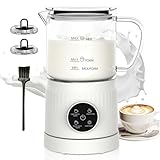
Overview: The Casimhu 4-in-1 is a compact countertop frother featuring a transparent glass body and ceramic lining, designed for users who want visual control over the frothing process. It handles hot/cold foam and milk warming with touch-screen operation, targeting space-conscious coffee lovers.
What Makes It Stand Out: The transparent glass vessel is unique, allowing real-time monitoring of foam texture. Combined with a durable ceramic lining (preventing metallic taste and aiding cleaning), whisper-quiet operation, and a compact footprint, it offers a user-friendly, mess-free experience ideal for small kitchens or offices.
Value for Money: Positioned affordably, it excels in core functionality without premium frills. The ceramic lining ensures longevity over plastic competitors, and the 400ml heating/160ml frothing capacity is practical. It undercuts higher-end models but lacks advanced features like precise temp control, making it great value for basic, reliable use.
Strengths and Weaknesses: Strengths: See-through design for perfect foam control; ceramic lining resists scratches/chips; quiet and fast (2-min froth); compact size; easy cleaning. Weaknesses: Requires dairy milk for optimal foam (struggles with plant-based); touch screen less intuitive than buttons; no temperature customization beyond presets.
Bottom Line: A smart pick for beginners or minimalists wanting simplicity and visual feedback. Its ceramic durability and space-saving design offer excellent utility at a fair price, though dairy-milk dependency limits versatility. Ideal for daily lattes without complexity.
9. Maestri House Barista-Grade Milk Frother, LunaFro Art Rechargeable Handheld Frother with Stepless Speed Control, Silicone Dot-Pad with IPX6 Waterproof, Latte Art-Level Microfoam for Latte & Flat White

Overview: The Maestri LunaFro Art is a rechargeable handheld frother engineered for professional-level microfoam and latte art. Its stepless speed control, silicone pivot Dot-Pad, and high-speed rotor target aspiring baristas needing precision in any pitcher or mug.
What Makes It Stand Out: Revolutionary stepless speed control eliminates splashing by allowing gradual RPM adjustments—unmatched in handhelds. The Dot-Pad stabilizes the device for effortless swirling, while the 2000mAh USB-C battery (3-month life) and IPX6 waterproofing enable cord-free, rinse-friendly use. It crafts stable foam in under 60 seconds with dairy milk.
Value for Money: Premium-priced but justified for serious latte artists. It outperforms fixed-speed handhelds in control and foam quality, rivaling expensive espresso machines for microfoam. The durability (aluminum body), zero-maintenance battery, and included cleaning tools offer long-term savings over disposable-battery models.
Strengths and Weaknesses: Strengths: Unbeatable stepless speed control; Dot-Pad enables pro latte art; USB-C rechargeable; IPX6 waterproof; lightweight yet durable. Weaknesses: Requires dairy milk (≥3.2% fat) for best results; small capacity (200ml); Dot-Pad ineffective with narrow cups.
Bottom Line: The definitive handheld for crafting café-quality microfoam and latte art at home. Its precision and thoughtful engineering justify the investment for enthusiasts, though dairy reliance is a constraint. Essential for flat white lovers; highly recommended.
10. Subminimal NanoFoamer Lithium Performance Milk Foamer | USB-C Rechargeable, IP4 Waterproof, Dual-Speed, Stainless Steel | Premium Microfoamed Milk in 30 Seconds, Barista-Style Coffee Drinks at Home

Overview: Subminimal’s NanoFoamer Lithium is a high-powered, USB-C rechargeable handheld frother built for speed and durability. It leverages patented NanoScreen technology to create ultra-smooth microfoam in 30 seconds, targeting users who demand professional results without machine complexity.
What Makes It Stand Out: Its 300% more powerful motor than standard frothers ensures rapid, lump-free microfoam, while dual-speed control and replaceable NanoScreens adapt to milk or mixing tasks (e.g., matcha). IP4 waterproofing, a battery indicator, and stainless-steel construction enhance usability and longevity, distinguishing it from flimsier handhelds.
Value for Money: A premium investment that delivers exceptional performance per dollar. It outperforms budget frothers in foam quality and build, and its versatility (mixing proteins, etc.) adds value. The rechargeable battery eliminates ongoing costs, making it economical long-term versus disposable-battery alternatives.
Strengths and Weaknesses: Strengths: Blazing-fast 30-second microfoam; dual-speed control; versatile NanoScreen system; durable stainless steel; USB-C rechargeable with battery indicator. Weaknesses: IP4 rating allows only light rinsing (not full submersion); NanoScreens require separate storage; smaller capacity suits single servings only.
Bottom Line: A powerhouse for achieving true barista-style microfoam instantly. Its speed, engineering, and multi-use design offer outstanding value for coffee purists. Minor waterproofing limits are outweighed by performance—highly recommended for daily indulgence.
Understanding the Core Goal: Microfoam Mastery for Art
Before diving into specific tools, it’s crucial to grasp exactly what “latte art microfoam” means. It’s not stiff, dry foam like for cappuccinos; it’s a homogeneous, steaming-hot liquid with microscopic air bubbles suspended throughout, creating a texture akin to wet paint. This smooth, dense consistency allows the milk to integrate seamlessly with espresso and flow predictably when poured, enabling the creation of defined patterns. Achieving this consistently requires tools that offer control over aeration and texture development.
The Critical Role of Temperature Control
Achieving true latte art microfoam hinges critically on hitting the precise temperature sweet spot. Milk proteins and fats behave optimally for texture and sweetness between 140°F and 155°F (60°C - 68°C). Going significantly below this range leaves the milk too cold for the espresso to integrate smoothly, while exceeding 160°F (71°C) risks scalding. Scalded milk develops off-flavors, loses its natural sweetness, and crucially, the proteins denature in a way that destroys the stable microfoam structure needed for art. Look for frothers with accurate, visible thermometers or reliable, adjustable temperature settings within this narrow window.
Why Texture Trumps Volume for Art
While high-volume foam is desirable for some drinks, latte art demands texture over sheer quantity. The ideal tool allows you to introduce just the right amount of air very early in the process (the “stretching” phase) to create the microscopic bubbles, then seamlessly transitions to texturing – heating and incorporating those bubbles without adding more large air pockets. Tools that only create large, coarse bubbles or excessive foam volume will result in milk that separates from the espresso or creates bubbly, undefined designs. The focus must be on smooth, integrated microfoam.
The Non-Negotiable: Consistency is King
Latte art is a skill built on repetition. To refine your pouring technique, you need the exact same milk consistency and temperature every single time you practice. A frother that delivers wildly varying results – one day perfect microfoam, the next scalded or bubbly milk – is incredibly frustrating and hinders progress. Reliability and repeatability in output are arguably more important than raw speed for the serious enthusiast. This consistency stems from precise controls and predictable performance.
Evaluating Different Frother Technologies for Artistic Precision
Not all milk frothers are created equal when the goal is intricate latte art. Each technology has inherent strengths and limitations that directly impact your ability to create and pour microfoam.
Steam Wand Frothers: The Barista’s Traditional Tool
Integrated steam wands, found on espresso machines (both manual and automatic), remain the gold standard for serious latte art. They offer unparalleled direct control over the entire frothing process. By manipulating the wand’s position – dipping it just below the surface to introduce air (stretching) and then submerging it deeper to heat and texture – skilled users can create exceptionally fine, dense microfoam. The key advantage is the tactile feedback and immediate responsiveness, allowing real-time adjustments. However, mastery requires significant practice to avoid burning milk or creating large bubbles.
Manual Control vs. Automatic Systems
Within steam wands, a critical distinction exists. Manual wands (common on prosumer and commercial machines) give the user complete command over steam pressure and wand position, offering the highest potential for perfect microfoam but demanding the most skill. Automatic or “one-touch” steam systems, while convenient, often lack the nuanced control needed for true artistry. They might over-aerate, stop at the wrong temperature, or create inconsistent texture, limiting their effectiveness for dedicated enthusiasts.
The Pitcher Matters as Much as the Wand
Using a steam wand effectively for art requires the right pitcher. A professional-grade, stainless steel pitcher with a sharp, narrow spout (typically 12oz or 20oz) is essential. The shape allows for precise control when pouring the microfoam and the conductive metal provides crucial thermal feedback – you can feel the milk heating through the pitcher, helping gauge temperature and texture development alongside visual cues. Thin or poorly shaped pitchers make consistent results much harder.
Handheld Electric Frothers: Portability vs. Precision
Handheld wand frothers (battery or corded) are popular for their affordability and space-saving design. They work by rapidly spinning a coil or disc to incorporate air. While capable of creating foam useful for simple drinks, they face significant hurdles for true latte art. Achieving microfoam is difficult; they often produce larger, coarser bubbles that collapse quickly or create a layer of dry foam on top of liquid milk – disastrous for pouring defined patterns. Temperature control is usually rudimentary (often just on/off), making scalding a common risk. They lack the finesse for the critical texturing phase.
Automatic Electric Frothers: Convenience with Compromises
These countertop units (often with carafes) heat and froth milk with the press of a button. While convenient and generally better at temperature control than handhelds, they frequently struggle with the texture required for art. Many models over-aerate, creating excessive foam volume with large bubbles, or under-aerate, leaving the milk too thin. The fixed frothing mechanism (whisk or propeller) lacks the dynamic control of a steam wand, often resulting in inconsistent microfoam. Some higher-end models offer adjustable settings, but they rarely match the precision of a skilled steam wand technique for artistic pours.
The Temperature Sensor Factor
A significant advantage of many automatic frothers is the inclusion of accurate, built-in temperature probes that automatically shut off at a set point. This is a major plus for avoiding scalding, a common pitfall for beginners using steam wands. However, the shutdown point is often fixed or has limited adjustment, potentially missing the optimal microfoam temperature window. Ensure any automatic model allows setting within the 140°F-155°F range.
Cleaning Complexity and Milk Residue
Automatic frothers with internal heating elements and complex carafes can be notoriously difficult to clean thoroughly. Milk residues baked onto heating elements or trapped in nooks and crannies not only create odors and bacterial growth but can also subtly alter the taste of subsequent batches – a critical concern when chasing perfect flavor balance for art. Easy disassembly and dishwasher-safe parts are highly desirable features.
Essential Features to Prioritize for Latte Art Success
Beyond the core technology, specific features dramatically impact your ability to consistently produce pourable microfoam.
Precision Temperature Management
This cannot be overstated. Look for:
- Adjustable Thermostats: The ability to set the exact target temperature within the 140°F-155°F range is vital. Fixed settings often miss the mark.
- Accurate Readouts: A clear, easy-to-read thermometer (digital is often more precise than analog) allows you to monitor progress and intervene if necessary, even on automatic models.
- Rapid, Even Heating: Consistent, bubble-free heating prevents localized scalding and ensures uniform texture development.
Material Quality and Thermal Properties
The materials used directly affect performance and durability:
- Stainless Steel Construction (Carafes/Pitchers): Essential for durability, easy cleaning, and crucially, thermal conductivity. You need to feel the heat through the metal to gauge temperature during steam wand frothing. Glass or plastic carafes insulate too well, removing this vital feedback.
- High-Quality Heating Elements: Robust, well-protected elements in automatic frothers resist scaling and milk burn-on, ensuring longevity and consistent heating performance.
- Heat-Resistant Handles: Safety and comfort during handling hot milk are non-negotiable.
Design Elements for Texture Control
Features that give you command over the aeration and texturing process:
- Adjustable Air Intake (Steam Wands): While inherent to wand technique, the wand’s steam tip design influences air incorporation. A well-designed tip facilitates controlled stretching.
- Variable Speed/Frothing Settings (Automatic/Handheld): Models offering different frothing intensities or durations give more control over bubble size and foam density, moving closer to microfoam capability.
- Pitcher Spout Design: As mentioned, a sharp, narrow spout on your pitcher is mandatory for controlled pouring. A rounded spout makes precise art nearly impossible.
Mastering Technique: It’s Not Just the Tool
Even the best frother requires proper technique to unlock its potential for latte art. The tool enables, but skill executes.
The Stretching and Texturing Phases Demystified
Successful microfoam creation is a two-stage process:
- Stretching: Position the steam wand tip just below the milk’s surface. You should hear a gentle paper-tearing sound. This introduces a controlled amount of air, creating the initial bubbles. This phase is very brief (5-10 seconds for 8oz milk).
- Texturing: Once a small amount of air is incorporated, submerge the wand tip slightly deeper (1-2cm) into the milk. The sound should become a smooth, quiet whirlpool. This circulates the milk, evenly heating it and breaking down the larger bubbles into microscopic size, creating the homogeneous, glossy texture. Stop before the milk becomes too hot.
The Visual and Auditory Cues You Must Learn
Relying solely on temperature is insufficient. Develop your senses:
- Sound: The shift from the tearing/stretching sound to the quiet whirlpool/texturing sound is critical. Prolonging the stretching phase creates large, unstable bubbles.
- Visual Texture: Watch the milk’s surface. During texturing, it should become smooth and glossy, like wet paint, with no visible large bubbles. The volume should increase modestly (about 20-30% for latte art microfoam).
- Pitcher Feel: With a metal pitcher, feel the increasing heat. When it becomes too hot to comfortably hold the pitcher base (around 150°F), it’s time to stop.
Troubleshooting Common Microfoam Failures
Understanding why microfoam fails is key to fixing it:
- Large Bubbles/Coarse Foam: Caused by over-stretching (too much air, wand too high/too long), wand positioned incorrectly during texturing, or using old/damaged milk.
- Thin, Watery Milk (No Foam): Insufficient stretching (not enough air incorporated), steam pressure too low, or milk too cold initially.
- Separated Milk (Foam on Top, Liquid Below): Over-aeration followed by insufficient texturing, or letting the microfoam sit too long before pouring (bubbles coalesce).
- Scalded/Sour Milk: Exceeding 160°F, often due to lack of temperature control or monitoring.
Practical Considerations for the Dedicated Enthusiast
Choosing your tool involves weighing practical aspects alongside pure performance.
Budget Realities and Long-Term Value
High-end espresso machines with professional steam wands represent a significant investment but offer the ultimate control and longevity for serious artistry. More affordable automatic frothers might seem attractive but often fall short on texture. Consider the cost per successful latte art attempt over time. A slightly more expensive tool that delivers consistent microfoam saves frustration, wasted milk, and time compared to a cheap tool that rarely performs well. Factor in potential repair costs or replacement frequency.
Space Constraints and Kitchen Workflow
Be honest about your counter space and routine. A large espresso machine demands dedicated space. A compact automatic frother might fit better but may compromise results. Consider storage and setup time. If getting the machine ready discourages daily practice, a simpler, always-ready tool might be better for consistency, even if slightly less optimal.
Cleaning Requirements and Maintenance
Latte art demands pristine equipment. Milk residue is the enemy. Evaluate:
- How easy is it to disassemble for cleaning?
- Are parts dishwasher safe?
- How often does descaling (for automatic units) need to occur based on your water hardness?
- Can the steam wand tip be easily cleaned and purged? Neglecting cleaning leads to poor performance, off-flavors, and bacterial growth – ruining your art and potentially your health.
Frequently Asked Questions
Frequently Asked Questions
Why is my milk frother creating large bubbles instead of smooth microfoam? Large bubbles usually mean over-aeration during the stretching phase. You’re likely holding the steam wand too high above the milk surface for too long, or the frothing mechanism on an automatic unit is too aggressive. Focus on a very brief stretching phase with just a gentle paper-tearing sound, then submerge the wand deeper for texturing.
Can I use non-dairy milk for latte art with any frother? Non-dairy milks (especially oat and soy blends formulated for baristas) can work, but they behave differently. They often require lower temperatures (closer to 140°F) and can scald more easily. Not all frothers handle them well; steam wands generally offer the best control, but some automatic models have specific settings. Results vary significantly by brand and type.
How crucial is the milk pitcher shape for latte art? Extremely crucial. A professional stainless steel pitcher with a sharp, narrow pour spout (like a “tulip” shape) is non-negotiable. It allows precise control over the flow rate and direction of the microfoam during pouring, which is essential for creating defined patterns. Rounded spouts make controlled pouring very difficult.
Why does my microfoam separate before I can pour it? Separation (foam rising to the top, liquid sinking) happens when the microfoam isn’t properly textured or is left to sit too long. Ensure you complete the texturing phase fully to create a homogeneous mixture, and pour immediately after frothing while the milk is still actively swirling and hot (around 145-150°F).
Is a thermometer absolutely necessary, or can I just go by feel? While experienced baristas develop a feel for temperature through the pitcher, a reliable thermometer is highly recommended, especially for beginners. Scalding milk (over 160°F) destroys the proteins needed for stable microfoam and creates off-flavors. Visual and auditory cues are vital, but temperature is a critical objective measure.
What’s the ideal milk temperature for pouring latte art? The optimal pouring temperature for microfoam is between 145°F and 155°F (63°C - 68°C). Below this, the milk is too cold to integrate smoothly with espresso. Above 160°F, the milk risks scalding, which ruins texture and taste. Consistency within this window is key for repeatable results.
Do I need cold milk straight from the fridge for best results? Yes, starting with milk chilled between 34°F and 40°F (1°C - 4°C) is essential. Cold milk provides the thermal mass needed to control the heating process during steaming, allowing you to hit the target temperature precisely without overshooting. Room-temperature milk heats too rapidly and is much harder to control.
How often should I clean my milk frother for optimal latte art performance? Clean your frother immediately after every single use. Milk proteins and fats bake onto surfaces as they cool, becoming incredibly difficult to remove and leading to off-flavors, clogs, and bacterial growth. For steam wands, purge and wipe after each use. For automatic units, disassemble and wash all parts thoroughly right away.
Can a handheld frother ever produce true latte art microfoam? It’s exceptionally difficult. Handheld frothers typically create large, unstable bubbles and lack the controlled texturing phase. They often produce a layer of dry foam over liquid milk, which is unsuitable for pouring defined patterns. While usable for simple foam, they are generally not recommended for serious latte art practice.
Why does my automatic frother shut off before the milk is hot enough for art? Many automatic frothers have fixed or limited temperature settings, often optimized for general foam rather than the specific latte art window. Check if your model allows adjusting the target temperature. If not, you might need to run it a second time briefly (monitoring closely with a thermometer) or consider a model with adjustable temperature control within the 140°F-155°F range.
See Also
- 10 Coffee Makers with Milk Frother That Solve Weak Latte Quality in 2026
- 10 Best Espresso Machine Steam Wands for Home Baristas in 2026
- ‘Battery Operated Milk Frothers: The Secret Weapon for Travelers Who Crave
- Top 10 Best Milk Frothers for Home Baristas in 2026
- How to Choose the 10 Best Replacement Steam Wands for Your Machine in 2026