Table of Contents
Keeping your coffee maker running at peak performance doesn’t have to be a complicated chore. Monthly maintenance with liquid descalers is the secret weapon that coffee enthusiasts and casual drinkers alike use to ensure every cup tastes fresh and their machines last for years. Mineral buildup from water—especially hard water—silently compromises heating elements, clogs water lines, and gradually degrades the flavor of your morning brew. A quick monthly descaling routine prevents these issues before they start, saving you money on repairs and replacements while delivering consistently better coffee.
Understanding what makes an effective liquid descaler and how to use it properly transforms this simple task into a powerful investment in your daily coffee experience. Whether you’re maintaining a basic drip machine or a sophisticated espresso system, the right descaling approach protects internal components, maintains optimal brewing temperatures, and ensures water flows freely through your machine. This comprehensive guide walks you through everything you need to know about selecting and using liquid descalers for monthly maintenance, focusing on features that matter most and techniques that deliver results without damaging your equipment.
Top 10 Liquid Descalers for Coffee Makers
Detailed Product Reviews
1. Essential Values Descaling Solution for Delonghi Keurig Breville Nespresso (4 Uses) - Coffee Machine Descaler Cleaner - Liquid To Descale Automatic Coffee Makers & Espresso Machines

Overview: This citric acid-based descaling solution from Essential Values offers a straightforward approach to maintaining your coffee equipment. Packaged as a two-bottle set with four total uses, it’s designed for universal compatibility across major brands including Keurig, Nespresso, Breville, and DeLonghi. The concentrated formula targets mineral buildup, limescale, and oil residues that accumulate in automatic coffee makers and espresso machines.
What Makes It Stand Out: The product’s commitment to environmental responsibility sets it apart. The concentrated citric acid formula is completely odorless and free from harsh chemicals, making it safe for both your family and your machine. Additionally, the recyclable PET bottle demonstrates a thoughtful approach to sustainability. Its universal compatibility eliminates guesswork for households with multiple coffee maker brands.
Value for Money: At four uses per package, this descaler positions itself as an economical choice for quarterly maintenance. Each application costs significantly less than manufacturer-branded solutions while delivering comparable results. The two-bottle format allows you to keep one in storage while using the other, providing convenience for households that follow the recommended 2-3 month descaling schedule.
Strengths and Weaknesses: Strengths include its natural, non-toxic formula, broad compatibility, eco-friendly packaging, and clear usage instructions. The concentrated citric acid effectively dissolves stubborn scale without leaving chemical residues. However, the four-use quantity may be insufficient for heavy coffee drinkers needing more frequent descaling. The liquid format also requires measuring, which some users may find less convenient than pre-measured tablets.
Bottom Line: Essential Values delivers a reliable, environmentally conscious descaling solution perfect for casual coffee drinkers who prioritize safety and sustainability. It’s an excellent choice for those seeking a no-frills, effective cleaner that works across various machine brands without breaking the bank.
2. ACTIVE Coffee Machine Descaler Descaling Solution - 32oz (8 Uses) Compatible with Keurig,Nespresso,Breville,Delonghi, Jura, Ninja - Espresso Coffee Maker Cleaner,Coffee Pot Cleaning Limescale Remover

Overview: ACTIVE offers a substantial 32-ounce descaling solution providing eight maintenance cycles for virtually any coffee machine on the market. This USA-made formula uses simple, natural ingredients centered on citric acid to combat calcium buildup and limescale across Keurig, Nespresso, Jura, Ninja, and dozens of other brands. The single-bottle design caters to both single-serve and multi-cup systems, including super-automatic espresso machines.
What Makes It Stand Out: The value-size format significantly reduces plastic waste compared to multi-bottle kits while delivering the same number of uses. Its proudly stated American manufacturing and commitment to simple, trustworthy ingredients appeals to quality-conscious consumers. The comprehensive compatibility list covers obscure and premium brands like Moccamaster, Gaggia, and Lavazza, making it a versatile choice for coffee enthusiasts with specialized equipment.
Value for Money: This 8-use bottle offers exceptional cost-per-use value, typically priced competitively against four-use alternatives. By eliminating excess packaging, ACTIVE passes savings to consumers while reducing environmental impact. For households with multiple machines or heavy coffee consumption, this bulk format ensures you’re always prepared for routine maintenance without frequent repurchasing.
Strengths and Weaknesses: Strengths include the generous volume, minimal packaging waste, transparent ingredient sourcing, and extensive machine compatibility. The liquid formula works quickly and rinses cleanly. However, the single large bottle may be cumbersome to store, and light users might struggle to use all eight applications before the solution’s effectiveness diminishes over time. Unlike tablet alternatives, it requires careful measuring for proper dilution.
Bottom Line: ACTIVE’s descaler is ideal for heavy coffee drinkers and households with multiple machines who prioritize value and environmental responsibility. The USA-made formula and extensive compatibility make it a smart, economical choice for serious coffee lovers committed to regular maintenance.
3. Urnex Liquid Dezcal Activated Descaling Solution - 33.6 Ounce (8 Uses) - For Use With Keurig 1.0/2.0, Home Coffee and Espresso Machines, Kettles, Garment Steamers

Overview: Urnex, a trusted name in professional coffee equipment maintenance, brings its expertise to home users with this 33.6-ounce activated descaling solution. Delivering eight uses per bottle, Dezcal targets mineral buildup across a wide range of appliances including Keurig 1.0/2.0 systems, espresso machines, kettles, and garment steamers. The fast-acting liquid formula is engineered for quick penetration and removal of stubborn limescale deposits.
What Makes It Stand Out: The Urnex brand carries significant weight in the coffee industry, lending professional credibility to this home-use product. Its versatility extends beyond coffee makers to other water-heating appliances, offering exceptional utility for comprehensive household descaling needs. The formulation specifically addresses the unique challenges of both older Keurig 1.0 and newer 2.0 systems, ensuring compatibility across generations of machines.
Value for Money: While priced at a premium compared to generic alternatives, the Urnex name represents proven efficacy and safety for valuable equipment. Eight uses provide a full year of quarterly maintenance for most households, making the per-use cost reasonable for a professional-grade product. The multi-appliance functionality eliminates the need for separate descaling products, creating additional value.
Strengths and Weaknesses: Strengths include the reputable brand heritage, rapid action formula, comprehensive appliance compatibility, and clear, professional instructions. The solution effectively extends appliance lifespan and improves performance. However, the higher price point may deter budget-conscious buyers, and those only descaling coffee machines won’t fully leverage its versatility. The liquid format also requires storage space and careful handling.
Bottom Line: Urnex Dezcal is the premium choice for consumers who trust professional-grade products and want a versatile solution for multiple appliances. It’s particularly valuable for Keurig owners and those seeking a single product to maintain various household equipment, justifying its higher cost through proven reliability and broad application.
4. Coffee Machine Cleaner Descaler Tablets - 24 Count, Compatible With Nespresso, Keurig, Ninja, Delonghi, Miele, Coffee Maker Pot Descaling & Cleaning Tabs, Descale Drip Coffe And Espresso Machines

Overview: ACTIVE’s descaling tablets offer a convenient, mess-free alternative to liquid descalers with this 24-count package providing a year’s supply for most users. Each tablet delivers a precise dose of concentrated cleaning agent formulated to combat hard water buildup, calcium, limescale, grime, and oil residues across all major coffee machine brands. The tablet format works with single-serve pods, multi-cup drip systems, and espresso machines alike.
What Makes It Stand Out: The pre-measured tablet design eliminates measuring errors and spills, making descaling as simple as dropping in a tablet and running a cycle. This bulk package’s 24-tablet count represents exceptional convenience for maintenance-minded users who prefer to stock up once and not worry about repurchasing for months. The compact, dry storage format ensures a stable, long-lasting product that won’t degrade over time like liquid alternatives might.
Value for Money: While the upfront cost exceeds single-bottle liquids, the per-use price is highly competitive, and the year-supply quantity eliminates frequent reordering costs and hassles. Tablets prevent waste from over-pouring and have an indefinite shelf life when stored properly, ensuring you get full value even with intermittent use. For households committed to regular maintenance, this bulk purchase delivers both economic and practical advantages.
Strengths and Weaknesses: Strengths include ultimate convenience, precise dosing, compact storage, extended supply, and broad compatibility. The tablet form factor is ideal for travel or small spaces. However, tablets may take longer to fully dissolve in cold water cycles, potentially extending the cleaning process. They lack the versatility of liquids for non-coffee applications like kettles, and the higher initial investment may not suit casual users or those wanting to try a product before committing to bulk quantities.
Bottom Line: These tablets are perfect for organized households that prioritize convenience and want to stock up on maintenance supplies. They’re ideal for users who dislike measuring liquids and prefer a clean, storage-friendly solution for quarterly coffee machine care across multiple brands.
5. Durgol Swiss Espresso, Descaler and Decalcifier for All Brands of Espresso Machines and Coffee Makers, 4.2 Fluid Ounces (Pack of 2)
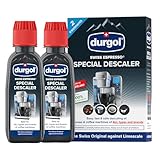
Overview: Durgol’s Swiss Espresso descaler represents the premium tier of coffee machine maintenance products, offering two 4.2-ounce bottles of professional-grade decalcifying solution. Developed and manufactured in Switzerland, this commercial-strength formula targets limescale and calcium buildup across all brands of espresso machines and coffee makers. Each bottle provides one complete descaling cycle, making this a two-use package designed for high-end equipment.
What Makes It Stand Out: Swiss engineering and manufacturing quality distinguish this product from mass-market alternatives. The professional-grade formulation is trusted by commercial establishments and serious home baristas for its consistent, powerful results. The compact bottle size ensures each portion is pre-measured for convenience, eliminating guesswork. Durgol’s reputation for developing specialized household chemicals lends credibility to its performance claims.
Value for Money: This is undoubtedly a premium-priced option, with a per-use cost significantly higher than generic citric acid solutions. However, for owners of expensive espresso machines costing hundreds or thousands of dollars, the investment in a trusted, professional-grade descaler represents cheap insurance against scale-related damage. The cost is justified when protecting high-value equipment where compromise isn’t an option.
Strengths and Weaknesses: Strengths include superior manufacturing standards, proven commercial efficacy, precise portion control, and brand prestige. The formula works rapidly and rinses thoroughly, leaving no residue that could affect coffee flavor. However, the high price makes it impractical for budget-conscious consumers or those with basic drip coffee makers. The two-use quantity requires frequent repurchasing, and the small bottles are easily misplaced. It’s over-engineered for simple machines where basic descalers suffice.
Bottom Line: Durgol Swiss Espresso is the discerning choice for owners of premium espresso machines who demand professional-grade maintenance. It’s worth the premium for protecting high-end equipment but represents unnecessary expense for standard coffee makers where more economical options deliver adequate results.
6. De’Longhi EcoDecalk Descaler, Universal Descaling Solution for Coffee & Espresso Machines, 16.90 oz (5 uses)

Overview: The De’Longhi EcoDecalk is the official descaling solution from the world’s leading espresso machine manufacturer. This 16.9-ounce bottle provides five maintenance cycles, designed to protect your investment in coffee equipment by removing limescale buildup that affects performance and taste.
What Makes It Stand Out: This descaler uses a plant-based lactic acid formula that’s both powerful and environmentally conscious. Unlike generic alternatives, it’s specifically engineered by De’Longhi for optimal compatibility with their machines while remaining universally compatible with major brands like Breville and Ninja. The 15-month supply schedule (descaling every 3 months) provides clear maintenance guidance for average households.
Value for Money: At approximately $20-25 per bottle, the cost per use is $4-5, positioning it as a premium option. While more expensive than DIY vinegar solutions, it offers superior protection for high-end machines. Compared to OEM brand descalers, it’s competitively priced and the five-use quantity reduces frequency of repurchase.
Strengths and Weaknesses: Pros: Trusted brand reputation; scientifically formulated concentration; safe for all machine types; clear usage guidelines; eco-friendly ingredients; prevents warranty issues with De’Longhi machines. Cons: Higher upfront cost; overkill for basic drip coffee makers; some users report needing more than recommended amount for heavy scale.
Bottom Line: Ideal for owners of mid-to-high-end espresso machines who prioritize manufacturer-approved maintenance. The peace of mind and performance benefits justify the premium price for serious coffee enthusiasts.
7. Angelino’s Universal Descaling Solution (4 Uses) – Safe Keurig Descaler & Nespresso Descaling Kit for All Coffee Machines – Removes Limescale to Improve Taste – Works with DeLonghi, Breville & Ninja

Overview: Angelino’s offers a budget-friendly universal descaler targeting single-serve coffee machine owners. This four-use solution promises professional-grade results without the premium price tag, specifically addressing the needs of Keurig and Nespresso users frustrated with persistent “descale” lights.
What Makes It Stand Out: The formula’s primary distinction is its odorless, residue-free composition that eliminates the vinegary aftertaste common with DIY methods. Each 4-ounce dose is pre-measured for convenience, and the solution works across all machine types—from manual espresso makers to automatic drip systems. The brand emphasizes cost-effectiveness as a core value proposition.
Value for Money: Typically priced under $15 for four uses (under $3.75 per cycle), this represents excellent value. It delivers comparable performance to branded OEM solutions at 30-50% less cost. For households descaling quarterly, one purchase covers a full year of maintenance, making it one of the most economical professional-grade options available.
Strengths and Weaknesses: Pros: Extremely affordable; no unpleasant odors; universal compatibility; easy measurement; effective on heavy scale; extends machine lifespan significantly. Cons: Smaller brand recognition; limited availability in physical stores; bottle design makes precise pouring tricky; some users prefer more established manufacturer formulas.
Bottom Line: Perfect for budget-conscious consumers who refuse to compromise on performance. Angelino’s delivers professional results without the brand tax, making it our top pick for value seekers with single-serve machines.
8. IMPRESA Coffee Machine Descaler (2 Uses Per Bottle) - Made in the USA - Universal Descaling Solution, Compatible with Nespresso, Delonghi and All Single Use Coffee and Espresso Machines

Overview: IMPRESA’s American-made descaler targets consumers who prioritize domestic manufacturing and broad compatibility. Each bottle provides two maintenance cycles for virtually any coffee or espresso machine, from pod systems to commercial units, emphasizing simplicity and effectiveness.
What Makes It Stand Out: The “Made in USA” certification appeals to patriotic buyers and those seeking stringent quality control. Its custom-formulated solution works on an exceptionally wide range of brands including Tassimo, Krups, and Saeco—many competitors don’t explicitly support these. The gentle-on-machine yet tough-on-scale chemistry protects internal components while delivering thorough cleaning.
Value for Money: Priced around $12-14 per bottle ($6-7 per use), it sits in the mid-range. While not the cheapest option, the domestic production and extensive compatibility justify the moderate premium. However, the two-use-per-bottle design means more frequent repurchasing compared to five-use alternatives, slightly diminishing long-term value.
Strengths and Weaknesses: Pros: American manufacturing; extremely broad machine compatibility; gentle formula; effective limescale removal; improves coffee taste noticeably; clear instructions. Cons: Only two uses per bottle; higher cost-per-use than bulk options; limited brand recognition; packaging could be more eco-friendly.
Bottom Line: A solid choice for owners of less common European machine brands or those who specifically want USA-made products. The versatility makes it worth the slight premium, though heavy users should consider multi-use alternatives.
9. Urnex Coffee Maker Cleaner and Descaler Kit - 2 Single Use Bottles - Professional at Home Coffee Machine Cleaning and Descaling

Overview: Urnex takes a comprehensive approach with this two-bottle kit, addressing both scale buildup and coffee oil residue—two enemies of optimal coffee flavor. The kit includes a carafe cleaner (four uses) and descaler (single use), providing complete maintenance for automatic drip coffee makers.
What Makes It Stand Out: This is the only product here offering a dual-action solution. The carafe cleaner tackles rancid coffee oils that descalers alone can’t address, making it uniquely suited for drip machine owners. Urnex’s professional-grade reputation in the café industry lends credibility, and the biodegradable, phosphate-free formula appeals to environmentally conscious users.
Value for Money: At roughly $10-12 for the kit, it’s exceptionally priced for a specialized solution. The carafe cleaner’s four uses effectively add bonus value. While the descaler portion offers only one use, the combined cleaning power exceeds what you’d get from a standalone descaler at this price point, making it a smart bundled purchase.
Strengths and Weaknesses: Pros: Dual cleaning action; professional café-quality formula; biodegradable ingredients; eliminates both scale and oils; trusted commercial brand; affordable entry point. Cons: Descaler only single-use; limited to drip machines (not ideal for espresso); requires two-step process; smaller quantity than competitors.
Bottom Line: Essential for automatic drip coffee maker owners who’ve never cleaned their carafe properly. The two-in-one approach solves multiple problems affordably, though espresso enthusiasts will need a separate solution.
10. Philips CA6700/22 Universal Liquid Descaler for Philips, Saeco and Other Fully Automatic Coffee Machines Value Pack 2 x 250 ml

Overview: Philips delivers its OEM descaler in a convenient twin-pack format, specifically formulated for their fully automatic machines but compatible with most coffee equipment. This value pack contains two 250ml bottles, providing multiple maintenance cycles for high-end super-automatic espresso systems.
What Makes It Stand Out: As the manufacturer’s own solution, it guarantees perfect compatibility with Philips and Saeco super-automatics, preventing potential warranty complications. The formula is engineered for the precise water circuits and thermoblock systems found in these complex machines, where improper descaling can cause costly damage. The twin-pack ensures you always have a backup.
Value for Money: Priced at $25-30 for the pair, it’s a premium investment that costs roughly $6-8 per use depending on machine size. While expensive compared to universal options, it’s inexpensive insurance for $1,000+ super-automatic machines. Using non-approved descalers can void warranties, making this essential for newer Philips/Saeco owners despite the higher price.
Strengths and Weaknesses: Pros: Manufacturer-approved; perfect for complex super-automatics; prevents warranty issues; gentle on sophisticated components; reliable performance; convenient twin-pack. Cons: Premium pricing; overkill for simple machines; limited to approximately 2-3 uses total; brand-specific marketing may deter universal buyers.
Bottom Line: Non-negotiable for Philips and Saeco fully automatic machine owners under warranty. For others, it’s a quality option but unnecessary. Buy this for compliance and peace of mind, not for casual drip coffee makers.
Why Regular Descaling Is Essential for Your Coffee Maker
The Science Behind Mineral Buildup
Every time you brew coffee, water leaves behind trace amounts of minerals—primarily calcium and magnesium—that gradually accumulate as limescale. This rock-hard deposit clings to heating elements, water tubes, and internal sensors. In just a few months, even a thin layer of scale acts like insulation, forcing your machine to work harder and use more energy to heat water to the proper brewing temperature. The process accelerates exponentially: each new layer of scale provides more surface area for additional mineral deposits, creating a compounding problem that can reduce heating efficiency by up to 30% within six months in hard water areas.
Impact on Coffee Quality and Machine Performance
Scale buildup directly sabotages your coffee’s flavor profile. When heating elements can’t maintain precise temperatures between 195-205°F, extraction becomes inconsistent—under-extracted coffee tastes sour and weak, while overheated water scorches grounds creating bitter, unpleasant flavors. Water flow restriction from scaled tubes leads to uneven saturation of coffee grounds, further compromising taste. Beyond flavor, scale forces pumps to operate under increased pressure, accelerating wear on seals and gaskets. Sensors coated in scale send inaccurate readings, causing automatic machines to malfunction or shut down prematurely.
Long-Term Cost Benefits
Monthly descaling represents perhaps the highest return-on-investment maintenance task for any coffee equipment. A $15-25 annual descaling supply investment can prevent $200-600 in premature replacement costs. Commercial cafes that implement strict monthly descaling schedules typically see their espresso machines last 8-12 years versus 3-5 years for neglected equipment. For home users, consistent descaling often means the difference between a machine that fails after two years versus one that reliably brews for a decade. The energy savings alone—maintaining efficient heat transfer—can offset the cost of descaling supplies within the first year.
Understanding Liquid Descaler Formulations
Citric Acid-Based Solutions
Citric acid descalers dominate the market for good reason: they’re highly effective at dissolving calcium carbonate scale while being relatively gentle on common machine materials. These formulations typically contain 15-30% citric acid concentration and work by chelating mineral ions, breaking their bond to metal surfaces. The food-grade nature of citric acid means residue concerns are minimal, though thorough rinsing remains essential. These solutions excel in monthly maintenance applications because they work at room temperature and don’t produce harsh fumes, making them ideal for kitchen use.
Lactic Acid-Based Options
Lactic acid formulations offer a slightly more aggressive approach for moderate to heavy scale situations while remaining biodegradable and food-safe. Derived from fermented plant sugars, lactic acid penetrates scale layers more deeply than citric acid, making it particularly effective for machines that haven’t been descaled in 3-6 months. These solutions often include corrosion inhibitors specifically formulated to protect aluminum components common in boiler systems. The trade-off is a slightly higher cost and a milder odor that some users find more pleasant than citric acid’s sharp citrus scent.
Sulfamic Acid Formulations
For severe scale challenges or annual deep-cleaning protocols, sulfamic acid-based descalers provide maximum strength. These professional-grade solutions dissolve scale rapidly but require careful handling and extended rinse cycles. The aggressive nature makes them less suitable for monthly maintenance on residential machines, as overuse can slowly degrade rubber gaskets and plastic components. However, for commercial environments or homes with extremely hard water, a quarterly sulfamic acid treatment supplemented by monthly gentler descaling creates an optimal maintenance rhythm. Always verify material compatibility before using these stronger formulations.
Plant-Based and Eco-Friendly Alternatives
Emerging biodegradable descalers use proprietary blends of plant-derived acids like gluconic, malic, and tartaric acids. These formulations appeal to environmentally conscious consumers and those with septic systems. While typically 20-30% slower acting than synthetic acids, they offer comparable scale removal with zero toxic residue concerns. Many carry eco-certifications like EPA Safer Choice or EU Ecolabel. The monthly maintenance approach works perfectly with these gentler solutions, as consistent use prevents heavy buildup that requires stronger chemicals.
Multi-Metal Compatibility Considerations
Modern coffee makers contain diverse materials—stainless steel boilers, aluminum thermoblocks, copper tubing, brass fittings, and various plastics. Quality liquid descalers include metal-specific corrosion inhibitors that create a protective molecular layer on vulnerable surfaces during the descaling process. This is crucial because scale removal temporarily exposes fresh metal that’s highly reactive. Monthly use of incompatible descalers can cause galvanic corrosion between dissimilar metals, leading to pinhole leaks and component failure after 12-18 months of well-intentioned but damaging maintenance.
Key Features to Evaluate When Choosing a Descaler
Concentration Levels and Dilution Ratios
Concentrated descalers offer better value and reduced packaging waste but require careful measurement. Ready-to-use formulas provide convenience at a premium price. For monthly maintenance, concentrates make economic sense—most require dilution of 1:10 to 1:20 with water, meaning a 1-liter bottle provides 10-20 monthly treatments. Look for products with clear measuring guidelines and consider purchasing a dedicated measuring cup to ensure consistency. Over-concentration doesn’t improve performance and increases rinse time; under-concentration wastes time and fails to remove all scale.
Biodegradability and Environmental Impact
Monthly descaling means regular disposal of solution down your drain. Biodegradable formulas break down into harmless components within 28 days in municipal wastewater systems, preventing long-term environmental accumulation. Check for OECD 301 test compliance, which verifies rapid biodegradability. Phosphate-free formulations protect waterways from algae-promoting nutrients. For homes with septic systems, choose products specifically labeled septic-safe, as some acid concentrations can disrupt bacterial balance if used excessively.
Odor and Residue Characteristics
Descaling shouldn’t leave your kitchen smelling like a chemical lab. Quality formulations minimize volatile compounds and rinse completely. Citric acid leaves a mild, clean scent that dissipates quickly. Some products add food-grade fragrances, but these can interfere with coffee flavor if not thoroughly rinsed. Residue testing is simple: after rinsing, run a plain water cycle and taste the water—it should be neutral with no metallic or chemical notes. Monthly users should prioritize low-residue formulas to avoid cumulative flavor contamination.
Safety Certifications and Food-Grade Standards
Look for NSF certification or equivalent food-grade standards, which verify the product is safe for use in equipment that contacts food. This ensures no harmful contaminants are present in the raw materials. For European products, check for EU Regulation 1935/2004 compliance. These certifications matter most for monthly users, as repeated exposure increases any risk from substandard formulations. Products should also carry standard safety data sheets (SDS) accessible online, detailing handling procedures and first-aid information.
Packaging and Measuring Convenience
Monthly maintenance means you’ll handle the product regularly, so packaging matters. Flip-top caps prevent spills better than screw tops. Bottles with built-in measuring chambers eliminate separate tools. Consider storage space—smaller concentrate bottles fit better under sinks. Some brands offer subscription services delivering pre-measured pouches monthly, eliminating guesswork entirely. For concentrate users, transferring solution to a smaller dispensing bottle with volume markings improves convenience and reduces the risk of handling large containers near your coffee station.
Safety Protocols for Descaling
Protective Equipment Recommendations
Even food-safe acids can irritate skin and eyes. Wear nitrile gloves—not latex, which some acids degrade—and safety glasses when mixing concentrates. Keep a dedicated set of cleaning cloths separate from dish towels to avoid cross-contamination. If you have sensitive skin, consider a long-sleeved shirt. Work in a well-ventilated area, though most monthly maintenance solutions produce minimal fumes. Keep a bowl of baking soda nearby to neutralize any spills instantly—acids react with baking soda to form harmless salt and carbon dioxide.
Ventilation Requirements
While citric and lactic acid descalers emit minimal fumes, opening a window ensures fresh air circulation. This is more critical with sulfamic acid formulations or when descaling multiple machines simultaneously. Run your range hood on low setting to create gentle air movement away from your face. Never descale in enclosed spaces like pantry cabinets. The monthly frequency means even low-level fume exposure adds up over time, so establishing proper ventilation habits protects your respiratory health long-term.
Rinse Procedures for Food Safety
Inadequate rinsing is the most common mistake in descaling. After the descaling cycle, run minimum three full water tanks through the machine—more for espresso machines with large boilers. For drip makers, brew three full pots of plain water, discarding each. Taste the final rinse water; it should be completely neutral. Some users add a quarter teaspoon of baking soda to the final rinse tank to neutralize any residual acidity, though this requires an additional plain water rinse. Monthly descaling with proper rinsing actually improves coffee flavor by removing scale that harbors old coffee oils and bacteria.
Child and Pet Safety Storage
Store descalers in original containers on high shelves or locked cabinets, even if labeled food-safe. The colorful packaging can attract children, and the sweet smell of some formulations may seem appealing. Never transfer to beverage containers—this is a common poisoning risk. For homes with curious pets, ensure bottle caps have child-resistant features. Keep the product’s SDS number saved in your phone for quick reference. Monthly users should mark the purchase date on the bottle to track age and ensure you’re using fresh, effective product.
Step-by-Step Monthly Descaling Process
Preparing Your Coffee Maker
Begin by emptying all water from reservoirs and drip trays. Remove and clean filters, portafilters, and brew baskets with warm soapy water—never descale with coffee grounds or old filters in place. Wipe down external surfaces to prevent drips from leaving marks. For machines with water filters, remove them temporarily; descaling solutions can degrade filter media. Check your manual for specific descaling instructions—some machines have dedicated descaling modes that optimize temperature and flow rates. Place a large container under all spouts to catch the volume of solution plus rinse water.
Mixing and Applying the Solution
Measure concentrate precisely using the manufacturer’s ratio—typically 100ml per liter of water for monthly maintenance. Use warm (not hot) water to help the acid dissolve completely. Stir gently to avoid creating foam. Fill the reservoir completely to ensure solution contacts all internal surfaces. For espresso machines, you’ll also need to prepare a separate container with solution for soaking portafilters and baskets. Never exceed the maximum fill line. If your machine has a hot water spout, draw 100ml of solution through it to protect that pathway as well.
Running the Descaling Cycle
Start the brew cycle immediately after filling—don’t let solution sit in the reservoir. For drip machines, run a full brew cycle and pause halfway for 15 minutes, allowing solution to soak the heating element. For espresso machines, activate the descaling mode if available, which automatically cycles solution through brew heads and steam wands. Without a dedicated mode, alternate between brewing into a container and running steam for 30-second intervals. The entire process should take 20-30 minutes. Never leave solution sitting in the machine overnight—extended acid contact can damage components even in compatible formulations.
Post-Descaling Rinse Protocol
Immediately after the descaling cycle, empty the reservoir completely and rinse it with fresh water three times. Refill with clean water and run a full cycle, discarding the output. Repeat this process minimum three times. For the final rinse, use distilled water if available—this prevents new mineral deposits from forming on freshly cleaned surfaces. Wipe all external surfaces with a damp cloth to remove any splashed solution. Reinstall water filters and brew a test cup of coffee, which you should discard to clear any residual taste. Monthly descaling should take under an hour from start to finish, including rinse cycles.
Frequency Adjustments for Water Hardness
The “monthly” guideline assumes average water hardness of 120-180 ppm (7-10 grains). Test your water with inexpensive strips or a digital meter. If your water exceeds 250 ppm, descale every two weeks. Below 60 ppm, quarterly descaling suffices. Homes using water softeners can extend to every 6-8 weeks since softeners don’t remove all minerals. Seasonal changes matter—well water often gets harder during summer droughts when mineral concentrations increase. Keep a log of descaling dates and water test results to optimize your schedule. Over-descaling wastes product and risks component wear; under-descaling allows damaging scale accumulation.
Environmental and Sustainability Factors
Eco-Certifications to Look For
Third-party certifications provide objective verification of environmental claims. EPA Safer Choice means every ingredient has been reviewed for human and environmental health. EU Ecolabel considers the full lifecycle from raw material extraction to disposal. Cradle to Cradle certification evaluates material health, recyclability, and renewable energy use in manufacturing. For monthly users, these certifications ensure your regular maintenance routine aligns with sustainable values. Be wary of vague “eco-friendly” claims without specific certification—greenwashing is common in cleaning products.
Packaging Waste Reduction
Concentrated formulas in minimal packaging generate 70% less plastic waste than ready-to-use products. Some brands offer refill pouches that use 90% less plastic than rigid bottles. Glass bottles, while heavier, are infinitely recyclable and don’t leach chemicals. For monthly users, buying a 1-liter concentrate annually versus 12 ready-to-use bottles eliminates significant waste. Consider brands with take-back programs that recycle empty containers. Powdered descalers in paper-based packaging offer another low-waste option, though they require more careful handling and mixing.
Septic System Compatibility
Septic systems rely on bacterial balance to function properly. Strong acids in large quantities can disrupt this ecosystem. Monthly descaling with septic-safe products poses minimal risk—most of the acid is neutralized by scale and the remainder is heavily diluted by rinse water and household wastewater. Look for products specifically tested for septic safety, which contain buffering agents that prevent pH shock to your system. Avoid descaling multiple machines on the same day if you have a septic tank; space treatments a few days apart to allow bacterial recovery. Never pour unused concentrate directly into drains—always use it in your machine where scale neutralizes most of the acidity.
Cost-Effectiveness Analysis
Concentrate vs. Ready-to-Use Pricing
Ready-to-use descalers typically cost $8-12 per treatment, while concentrates average $15-25 for 10-20 treatments—a savings of 70-85% per use. The math is compelling: annual ready-to-use spending of $120-144 versus $15-25 for concentrates. Even factoring in the cost of distilled water for mixing ($5-10 annually), concentrates deliver massive savings. The slight inconvenience of measuring is repaid hundreds of times over. For monthly users, the annual savings from switching to concentrates can fund higher-quality coffee beans or even contribute to your next machine upgrade.
Bulk Purchasing Considerations
Professional-grade concentrates sold in 5-liter containers can reduce per-treatment cost to under $1. However, shelf life becomes a consideration—most descalers remain effective for 2-3 years if stored sealed in a cool, dark place. Splitting a bulk purchase with coffee-loving friends or family members makes economic sense. Some roasters and coffee shops sell descaler by the ounce, allowing you to refill small bottles. Before buying in bulk, verify your machine’s warranty requirements—some manufacturers specify approved descalers, and using unapproved bulk chemicals could void coverage.
Preventative Savings Calculations
A $200 coffee maker descaled monthly can easily last 10 years ($20/year amortized cost). The same machine without descaling often fails within 2-3 years ($67-100/year amortized). Scale-related repairs like heating element replacement cost $75-150 plus labor. Energy inefficiency from scale adds approximately $5-8 annually to electricity bills. Over a decade, monthly descaling saves $400-600 in replacement costs alone, plus repair and energy savings. This doesn’t account for improved coffee quality, which is harder to quantify but equally valuable to enthusiasts.
Troubleshooting Common Descaling Issues
Persistent Scale Deposits
If white deposits remain after descaling, you likely have heavy buildup requiring a second treatment or a stronger formulation. For stubborn scale, repeat the process immediately while internal components are still warm—heat accelerates the chemical reaction. Never increase concentration beyond manufacturer recommendations; this risks damage without improving results. In extreme cases, professional servicing with mechanical descaling may be necessary. Going forward, shorten your maintenance interval to prevent recurrence. Monthly descaling should prevent deposits from becoming thick enough to resist a single treatment.
Unusual Odors After Descaling
A sour or chemical smell indicates incomplete rinsing. Run three additional full water cycles, using slightly warm water to help flush residual acid. If the odor persists, fill the reservoir with water plus one tablespoon of baking soda, run a cycle, then rinse twice with plain water. Metallic odors suggest the descaler may be incompatible with your machine’s metals—discontinue use and consult the manufacturer. For monthly users, persistent odors often signal it’s time to replace water filters or clean brew groups, as these can harbor old descaler residue.
Cloudy or Discolored Water Output
Cloudy rinse water is normal initially—it contains dissolved scale particles. However, if cloudiness persists beyond the second rinse cycle, you may have a failing internal component releasing metal particles. Brown or rust-colored water indicates corrosion, suggesting an incompatible descaler or pre-existing internal damage. Stop descaling immediately and have the machine professionally inspected. Monthly maintenance with compatible descalers should never cause discoloration; this is a warning sign of serious issues unrelated to normal scale buildup.
Machine Error Messages
Many modern machines display specific descaling error codes. “Descale” lights that won’t reset after treatment often require holding a button combination for 5-10 seconds—check your manual. If error messages appear during descaling, the machine may have detected abnormal flow rates from dislodged scale clogging sensors. Stop the cycle, let the machine cool, then restart. Persistent errors after descaling indicate scale particles have lodged in solenoid valves or flow meters, requiring professional cleaning. Monthly descaling prevents scale from reaching volumes that can break free and clog sensitive components.
Coffee Maker Compatibility Guidelines
Single-Serve Pod Machines
Pod machines have narrow water lines and small boilers, making them extremely vulnerable to scale clogging. Use only descalers specifically approved by the manufacturer—many brands require proprietary solutions to maintain warranty coverage. The monthly process is faster due to smaller capacity, typically requiring only 20 minutes total. Never submerge the machine base; only solution in the reservoir contacts internal components. After descaling, run five rinse cycles instead of three due to the machine’s compact internal pathways that hold residual solution.
Drip Coffee Makers
Standard drip machines are the most forgiving for descaling. Their simple design and larger water pathways accommodate any food-grade descaler. Monthly treatment is straightforward: fill reservoir, brew halfway, pause, then complete the cycle. The heating plate can be cleaned separately with a damp cloth—never pour descaler on external surfaces. Glass carafes may develop scale stains that respond to a 30-minute soak in diluted descaler. Thermal carafes require thorough rinsing as their insulation can retain solution in crevices.
Espresso Machines
Espresso equipment demands the most careful descaler selection due to high pressures, multiple metals, and precise temperature control. Monthly descaling must address the boiler, brew group, steam wand, and often a separate hot water circuit. Use only formulations rated for multi-metal compatibility. The process involves alternating between brewing and steaming to ensure solution reaches all pathways. Never descale an espresso machine while it’s under pressure or hot. Professional-grade machines may require backflushing with blind filters after descaling to remove loosened scale from three-way valves.
Super-Automatic Systems
These complex machines with built-in grinders and automated brew units often have descaling programs that control the entire process. Manual intervention may void warranties. Use only manufacturer-approved descalers, as these machines contain plastic gears and seals not found in simpler equipment. The monthly cycle typically takes 45-60 minutes including automatic rinses. Never interrupt the programmed sequence. Some models require removing the water filter and disabling the grinder during descaling. Keep the machine plugged in throughout—power loss mid-cycle can lock the machine in descale mode requiring service.
Commercial vs. Residential Models
Commercial machines in home settings require commercial-grade descaling schedules—typically weekly due to heavy use. Residential descalers may be too mild; use products rated for commercial equipment. The process is similar but scaled up: larger boilers need more solution, and multiple group heads require sequential treatment. Commercial machines often have dedicated descaling ports that bypass sensitive electronics. Monthly maintenance for true commercial equipment in low-volume settings is insufficient; stick to weekly treatments. Conversely, using commercial-strength descalers monthly on residential machines risks component damage from over-treatment.
DIY Natural Descaling Solutions vs. Commercial Products
Effectiveness Comparisons
White vinegar (5% acetic acid) dissolves light scale but struggles with moderate buildup and leaves a strong odor requiring extensive rinsing. Lemon juice works similarly to citric acid descalers but at much lower concentration, making it cost-prohibitive for monthly use. Baking soda is alkaline and doesn’t dissolve scale. Commercial formulations combine optimal acid concentrations with corrosion inhibitors and wetting agents that penetrate scale faster. For monthly prevention, commercial products outperform DIY solutions in speed, completeness, and safety. DIY may suffice for quarterly light maintenance but fails as a reliable monthly protocol.
Safety and Warranty Implications
Most coffee maker warranties explicitly state that use of non-approved descaling solutions voids coverage. Vinegar’s acetic acid can degrade rubber seals and corrode aluminum, leading to leaks that manufacturers won’t repair under warranty. Commercial products carry liability insurance and are tested on specific machine models. Document your monthly descaling with photos and dates using approved products to maintain warranty validity. If a component fails and you can prove proper maintenance, manufacturers are more likely to honor claims even outside the official warranty period.
When to Choose Professional-Grade Formulations
Professional descalers become necessary when dealing with water hardness above 300 ppm, commercial equipment, or machines that haven’t been descaled in over a year. These concentrated solutions require precise dilution and longer rinse cycles but restore heavily scaled machines that consumer products can’t salvage. For monthly maintenance, professional-grade is overkill and increases corrosion risk. However, alternating between standard monthly descaling and annual professional-grade deep cleaning provides optimal results for challenging water conditions. Never use professional formulations more frequently than quarterly, even in hard water areas.
Recognizing When Descaling Is Needed
Visual Indicators
Check your machine’s water reservoir monthly for white, chalky deposits on walls or heating elements visible through transparent tanks. Scale on the shower screen or brew head appears as white spots or a crusty ring. Steam wands develop scale internally first, but external white buildup around the tip signals it’s overdue for maintenance. Drip machines may show scale flakes in the carafe. These visual cues mean scale has already formed; monthly descaling should occur before visible signs appear. Consider them warning flags that your schedule needs adjustment.
Performance Warning Signs
Slow water flow, extended heating times, or reduced steam pressure indicate scale is impeding function. If your machine takes 30 seconds longer to heat than when new, scale is the culprit. Inconsistent shot times on espresso machines or weak steam that cuts out prematurely are classic symptoms. Unusual noises from pumps struggling against restriction also signal buildup. Monthly descaling should prevent these symptoms entirely. If they appear between scheduled maintenance, your water hardness may have increased or your interval is too long.
Water Hardness Testing Methods
Test strips costing under $10 provide instant readings and last for 50+ tests. Digital TDS meters measure total dissolved solids but don’t distinguish scale-forming minerals from harmless ions—use hardness-specific strips for accuracy. Many municipalities publish water quality reports online. Test at different times of year, especially if you use well water. For the most accurate assessment, send a sample to a lab for $30-50—this one-time expense helps you calibrate your descaling schedule perfectly. Hardness above 180 ppm warrants bi-weekly descaling; below 60 ppm allows quarterly treatment.
Long-Term Maintenance Strategies
Water Filtration Integration
Installing an inline water filter or using filtered water in the reservoir reduces mineral input by 70-90%, extending descaling intervals to every 6-8 weeks. However, filters don’t remove all minerals, so descaling remains necessary. Change filters according to manufacturer schedules—exhausted filters can harbor bacteria. Some advanced filters include scale inhibitors that crystallize minerals to prevent adhesion. For monthly descalers, filtered water means each treatment works on lighter buildup, improving effectiveness and reducing chemical usage over time.
Preventative Cleaning Schedules
Combine monthly descaling with weekly brew group cleaning and daily portafilter rinsing. This prevents coffee oil buildup that can trap scale particles and create stubborn compound deposits. Clean shower screens weekly with a brush to maintain even water distribution. Backflush espresso machines weekly with plain water to flush loose particles. These simple habits make monthly descaling more effective because the acid can reach scale directly without fighting through coffee residue layers. Document your full cleaning schedule alongside descaling dates.
Professional Servicing Intervals
Even with perfect monthly descaling, professional servicing every 2-3 years replaces wear items like gaskets and seals that descaling can’t address. Technicians can disassemble components you can’t access, removing scale from solenoid valves and checking heating element condition. They’ll also test pressure and temperature accuracy, recalibrating if needed. For machines under warranty, annual professional service may be required to maintain coverage. Keep receipts and service records to demonstrate comprehensive maintenance, which significantly boosts resale value if you upgrade.
Frequently Asked Questions
How do I know if my liquid descaler is working properly? You’ll notice improved heating speed, stronger water flow, and better coffee flavor within 1-2 brews after descaling. The solution coming out during treatment often appears cloudy or contains visible particles—that’s dissolved scale. If performance doesn’t improve, you may have heavy buildup requiring a second treatment or the descaler may be expired.
Can I use the same descaler for all types of coffee makers? Not necessarily. Check your machine’s manual for material compatibility, especially with espresso and pod machines. While most drip coffee makers accept any food-grade descaler, high-end machines often require specific formulations to maintain warranty coverage and protect sensitive components.
What happens if I descale too frequently? Over-descaling can degrade rubber gaskets, plastic components, and certain metals over time. It also wastes money and water. Follow manufacturer recommendations based on your water hardness. Monthly descaling is ideal for average hardness (120-180 ppm); adjust based on actual water test results.
Is it safe to descale a coffee maker with a stainless steel interior? Yes, stainless steel is highly resistant to food-grade acids. However, ensure the descaler includes corrosion inhibitors to protect any aluminum or copper components that may also be present. Most quality descalers are specifically formulated for multi-metal compatibility.
How long does liquid descaler last in storage? Unopened bottles typically last 2-3 years when stored in a cool, dark place. Once opened, use within 12 months for maximum effectiveness. Acid concentration slowly degrades over time, especially if exposed to heat or sunlight. Write the opening date on the bottle.
Can descaling damage my coffee maker’s warranty? Using non-approved descalers or improper technique can void warranties. Always follow manufacturer recommendations and document your maintenance. Approved monthly descaling often extends practical warranty coverage by demonstrating proper care.
What’s the difference between descaling and cleaning? Descaling removes mineral buildup from water; cleaning removes coffee oils, grounds, and organic residue. Both are essential. Descale monthly and clean weekly for optimal performance. Some products claim to do both but are generally less effective at each task than dedicated solutions.
Why does my coffee taste sour after descaling? Residual acid is the most likely cause. Run two additional full rinse cycles with fresh water. If the taste persists, brew and discard one full pot or several espresso shots. The sourness should disappear completely. Persistent off-flavors may indicate damaged internal components.
Can I make my own descaling solution at home? White vinegar or citric acid powder can work for light scale but lack corrosion inhibitors and may void warranties. Commercial formulations are optimized for effectiveness and safety. For monthly maintenance, commercial products provide better results and peace of mind.
How do I dispose of used descaling solution? Diluted solution from the descaling process is safe for septic systems and municipal drains. The acid is largely neutralized by dissolving scale. Never pour unused concentrate down drains. For disposal of old, unused product, contact your local hazardous waste facility—don’t simply throw full bottles in the trash.
See Also
- 10 Best Carafe Coffee Makers for Consistent Brewing in 2026
- We Tested 50 Portable Coffee Makers - Here are the 10 Best for Camping
- ‘Best Coffee Makers for Large Families: 10 Expert Picks for 2026’
- 10 Affordable Coffee Maker Water Filters That Don’t Sacrifice Quality in 2026
- Stop Wasting Coffee Pods with the 10 Best Automatic Pod Coffee Makers This