Table of Contents
Your morning espresso ritual depends on one silent enemy lurking in your water supply: mineral scale. That same water that extracts perfect crema from your coffee grounds leaves behind calcium and magnesium deposits that gradually choke your machine’s internal pathways. Over time, these mineral buildups restrict water flow, damage heating elements, and compromise the precise temperature control essential for exceptional espresso—turning your premium equipment into an underperforming appliance that delivers bitter, lukewarm shots.
Regular descaling isn’t just maintenance; it’s preventative medicine for your espresso machine. The right descaling kit acts as a targeted treatment, dissolving mineral deposits without corroding delicate brass, copper, or stainless steel components. Understanding which formulation works best for your specific machine type, water hardness level, and usage patterns can mean the difference between extending your equipment’s lifespan by decades or facing costly repairs within months. Let’s explore everything you need to know about selecting and using descaling solutions that protect your investment while preserving your coffee’s flavor integrity.
Top 10 Espresso Machine Descaling Kits
Detailed Product Reviews
1. Descaler (2 Pack, 2 Uses Per Bottle) - Made in the USA - Universal Descaling Solution for Keurig, Nespresso, Delonghi and All Single Use Coffee and Espresso Machines

Overview: This two-pack descaling solution from Impresa delivers four total cleaning sessions for virtually any single-serve coffee or espresso machine. Each 8-ounce bottle provides two uses, making it a comprehensive maintenance kit for Keurig, Nespresso, De’Longhi, and dozens of other brands. The Made in USA formula targets limescale and mineral buildup that compromise performance and coffee flavor.
What Makes It Stand Out: The concentrated formula requires only 4 ounces per session—half a bottle—making it more economical than many competitors. Its universal compatibility spans pod machines, drip coffee makers, kettles, and commercial equipment. The solution actively prevents corrosion while extending machine lifespan, addressing both immediate cleaning needs and long-term protection. The plant-based lactic acid formulation offers effective descaling without harsh chemicals.
Value for Money: With four descaling sessions per pack and recommended quarterly use, this kit provides a full year of maintenance. Priced competitively against brand-specific solutions, it eliminates the need for multiple single-use products. The concentration reduces waste and shipping weight compared to less efficient formulas.
Strengths and Weaknesses: Pros include exceptional compatibility across 20+ brands, concentrated dosing that reduces cost-per-use, and USA manufacturing quality. The liquid format allows precise measurement for various machine sizes. Cons: liquid solutions require more handling than tablets, and users must measure exact amounts. The 3-4 month recommendation may not suit heavy users or hard water areas.
Bottom Line: An excellent universal descaler for households with multiple coffee machine types. The concentrated formula and broad compatibility make it a smart, cost-effective choice for routine maintenance.
2. ACTIVE Coffee Machine Descaler Descaling Solution - 32oz (8 Uses) Compatible with Keurig,Nespresso,Breville,Delonghi, Jura, Ninja - Espresso Coffee Maker Cleaner,Coffee Pot Cleaning Limescale Remover

Overview: ACTIVE’s 32-ounce descaling solution offers eight cleaning sessions in a single bottle, providing a natural citric acid formula for virtually all coffee and espresso machines. From single-serve Keurig systems to super-automatic espresso units, this USA-made solution tackles calcium buildup and oil residue that degrade coffee quality and machine performance.
What Makes It Stand Out: The value-size format reduces plastic waste versus multi-bottle kits while delivering identical cleaning power. Its natural citric acid composition offers a food-safe alternative to harsh chemical descalers. The formula works across the entire spectrum: pod brewers, drip machines, semi-automatic and super-automatic espresso systems. ACTIVE emphasizes quick maintenance cycles that minimize downtime.
Value for Money: Eight uses from one bottle translate to roughly two years of maintenance for average households, making it exceptionally economical. The bulk format costs significantly less per ounce than smaller alternatives. For offices or coffee enthusiasts with multiple machines, it eliminates purchasing separate products. The concentrated nature means no dilution guesswork.
Strengths and Weaknesses: Pros include superior cost-per-use ratio, eco-friendly citric acid base, universal compatibility including Jura and Moccamaster, and reduced packaging waste. The large bottle stores efficiently. Cons: liquid format requires careful pouring, and the single-container design means losing the entire supply if compromised. Not ideal for those preferring pre-measured tablets.
Bottom Line: Outstanding value for heavy users or multi-machine households. The natural formula and bulk sizing make it a practical, environmentally conscious choice for comprehensive coffee equipment care.
3. De’Longhi EcoDecalk Descaler, Universal Descaling Solution for Coffee & Espresso Machines, 16.90 oz (5 uses)

Overview: From the world leader in espresso equipment, De’Longhi’s EcoDecalk provides five descaling sessions in a 16.9-ounce bottle. This plant-based lactic acid solution is engineered specifically for coffee and espresso machines, maintaining optimal brewing temperature and flow rate while removing limescale deposits that accumulate from regular use.
What Makes It Stand Out: De’Longhi’s expertise in espresso machine design informs a precisely calibrated formula that protects sensitive internal components. The plant-based lactic acid is biodegradable and food-safe, appealing to environmentally conscious users. While branded for De’Longhi, it’s universally compatible with Breville, Ninja, Philips, and other premium machines. The solution preserves heating elements and pumps from corrosion.
Value for Money: Five uses provide approximately 15 months of maintenance for typical households, aligning with the recommended quarterly schedule. The premium price reflects brand reputation and specialized formulation. While costlier per use than generic alternatives, it offers peace of mind for owners of high-end machines worth protecting. The concentrated formula ensures no wasted product.
Strengths and Weaknesses: Pros include trusted brand heritage, plant-based eco-friendly composition, optimized performance for espresso machines, and clear usage instructions. The formula is gentle yet effective on delicate components. Cons: higher price point than competitors, fewer uses per package, and liquid format requires measurement. Brand-specific marketing may deter users seeking generic solutions.
Bottom Line: Ideal for De’Longhi owners and premium machine enthusiasts who prioritize manufacturer-recommended care. The eco-friendly formula justifies the modest premium for those valuing brand-aligned maintenance.
4. ACTIVE Espresso Machine Cleaning Tablets Descaling - 120 Tabs | Compatible with Breville Barista Express, Gaggia, Delonghi, Jura, Philips | Expresso Maker Backflush Oil Remover Solution Clean Tablet

Overview: ACTIVE delivers 120 concentrated cleaning tablets designed specifically for espresso machine backflushing and descaling. These tablets target coffee oils, grime, and limescale in group heads, valves, and internal lines of semi-automatic and super-automatic machines. Compatible with major brands like Breville, Gaggia, De’Longhi, and Jura, they provide daily maintenance essentials.
What Makes It Stand Out: The massive 120-count supply supports daily backflushing routines for four months, far exceeding typical 8- or 30-count packages. Each tablet is precisely dosed, eliminating measurement errors associated with powders or liquids. The concentrated formula penetrates stubborn coffee oil buildup that liquids alone cannot remove, maintaining flow rate and temperature stability critical for quality espresso.
Value for Money: This bulk package offers exceptional cost-per-tablet value, particularly for serious home baristas or small cafés. One purchase covers nearly half a year of daily cleaning, eliminating frequent reordering. Compared to smaller sachets or liquid alternatives, the tablet format reduces waste and ensures consistent dosing. The price per cleaning cycle is significantly lower than OEM branded tablets.
Strengths and Weaknesses: Pros include huge quantity for frequent users, pre-measured convenience, specialized espresso-focused cleaning power, and broad compatibility across commercial and home machines. Tablets store compactly and won’t spill. Cons: not suitable for drip coffee makers or kettles, requires backflush capability, and daily use may be excessive for casual espresso drinkers. Some machines need tablet-specific adapters.
Bottom Line: Perfect for dedicated espresso enthusiasts committed to daily machine care. The bulk quantity and targeted formulation make it an economical powerhouse for maintaining peak extraction quality.
5. Coffee Machine Cleaner Descaler Tablets - 24 Count, Compatible With Nespresso, Keurig, Ninja, Delonghi, Miele, Coffee Maker Pot Descaling & Cleaning Tabs, Descale Drip Coffe And Espresso Machines

Overview: This 24-tablet descaler offers a year-long maintenance solution for virtually all coffee machine types, from single-serve pod systems to multi-cup drip brewers and espresso machines. The concentrated formula tackles hard water buildup, calcium deposits, coffee oils, and grime in one convenient tablet format, compatible with over a dozen major brands including Nespresso, Keurig, and Miele.
What Makes It Stand Out: The tablet design provides pre-measured convenience without the mess of liquids or powders, dissolving completely in water for thorough cleaning. Its universal compatibility spans single-cup, pod, and multi-cup systems, making it ideal for households with different machine types. The 24-count package aligns with recommended quarterly descaling, delivering a full year of maintenance in one purchase.
Value for Money: Offering a year’s supply in one package, these tablets eliminate frequent repurchasing while remaining competitively priced against both liquid solutions and smaller tablet packs. The cost per use is reasonable for the convenience factor, and the extended supply reduces shipping costs and packaging waste over time. For light to moderate users, it’s perfectly portioned.
Strengths and Weaknesses: Pros include mess-free tablet convenience, broad cross-brand compatibility, year-long supply in modest packaging, and dual descaling/cleaning action. The format suits users uncomfortable measuring liquids. Cons: fewer tablets than bulk options like ACTIVE’s 120-count, higher per-tablet cost than large quantities, and dissolution time may vary by water temperature. Not optimized for daily espresso backflushing.
Bottom Line: An excellent middle-ground choice for casual coffee drinkers seeking convenient, universal maintenance. The tablet format and year-long supply make it a practical, no-fuss solution.
6. CleanEspresso - Designed For Breville Cleaning Kit - 40 Breville Compatible Cleaning Tablets + 2 Espresso Machine Water Filters + 2-Use Descaler - Espresso Machine Accessories
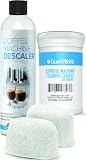
Overview: This comprehensive cleaning kit from CleanEspresso provides everything needed to maintain your Breville espresso machine. The package includes 40 powerful 2-gram cleaning tablets, two replacement water filters, and a two-use descaling solution. Designed specifically for Breville compatibility, it addresses both daily cleaning needs and periodic deep maintenance to ensure optimal coffee flavor and machine longevity.
What Makes It Stand Out: The triple-action approach sets this kit apart by combining cleaning tablets, water filters, and descaler in one convenient package. The 2-gram tablets deliver double the cleaning power of standard 1-gram alternatives, effectively handling Breville’s cleaning cycle pressure. The inclusion of both tablets and descaler addresses oily residue and mineral buildup simultaneously, while the replacement filters ensure water purity from the start.
Value for Money: Purchasing these components separately would cost significantly more, making this kit an economical choice for comprehensive maintenance. With 40 tablets providing months of daily backflushing and the descaler tackling quarterly deep cleans, the per-use cost rivals generic alternatives while maintaining Breville-specific formulation. The added water filters eliminate an additional purchase, delivering genuine bundled savings.
Strengths and Weaknesses: Pros: Complete all-in-one maintenance solution; 2-gram tablets offer superior cleaning power; Genuine Breville compatibility; Extends machine lifespan significantly; Convenient bundled packaging. Cons: Only two descaler uses included, requiring separate purchase sooner than tablets run out; May be more than casual users need; Filter quantity feels minimal compared to 40 tablets.
Bottom Line: This kit is ideal for Breville owners committed to proper maintenance. While the descaler supply seems modest, the overall value and convenience make it a smart investment for preserving your machine’s performance and coffee quality.
7. Breville Compatible Descaling Solution. Specially Formulated to Clean & Descale your Breville Espresso Machine. 2 Uses per Bottle, 2 Pack. Eco-Friendly Carbon Neutral Descaler Kit.

Overview: This eco-conscious descaling solution offers a specialized formula designed exclusively for Breville espresso machines. The twin-pack provides four total uses, delivering a carbon-neutral, environmentally safe alternative to harsh chemical descalers. Focused solely on mineral removal, this solution targets limescale buildup that affects both machine performance and coffee taste.
What Makes It Stand Out: The carbon-neutral, eco-friendly formulation distinguishes this from conventional descalers, appealing to environmentally aware consumers. Its odor-free processing eliminates the unpleasant fumes common with vinegar or chemical alternatives. The Breville-specific chemistry ensures effective scale removal without compromising internal components, while maintaining a fresh, neutral taste profile in subsequent brews.
Value for Money: At four uses per package, the cost-per-cleaning is competitive with premium branded descalers while offering superior environmental credentials. The concentrated formula requires no mixing, reducing waste and measurement errors. Compared to purchasing single-use packets, this two-bottle system provides better long-term value and reduces packaging waste.
Strengths and Weaknesses: Pros: Eco-friendly and carbon-neutral; Completely odor-free during use; Specially formulated for Breville machines; Extends equipment lifespan effectively; No chemical aftertaste in coffee. Cons: Limited to descaling only—no cleaning tablets included; Four uses may not last a full year for heavy users; Higher upfront cost than vinegar alternatives; Requires separate purchase of cleaning tablets.
Bottom Line: Perfect for environmentally conscious Breville owners who prioritize sustainable maintenance. This descaler excels at its singular purpose, though you’ll need complementary products for complete machine care.
8. CleanEspresso - Designed For Breville Cleaning Kit - 40 Cleaning Tablets and 6 Water Filters for Breville Espresso Machines - 2g Espresso Machine Tablets

Overview: CleanEspresso’s focused kit prioritizes daily maintenance with 40 powerful 2-gram cleaning tablets and six replacement water filters. Tailored for most Breville models, this set emphasizes removing oily coffee residue and ensuring water purity. The generous filter count makes it particularly suitable for users in areas with harder water or those who change filters frequently.
What Makes It Stand Out: The enhanced filter quantity—six versus the typical two—addresses water quality proactively, preventing scale before it starts. The 2-gram tablets provide robust cleaning power that withstands Breville’s automated cleaning cycles without crumbling. This kit’s model-specific design ensures compatibility across Barista Express, Oracle, and other popular Breville lines, though users should verify their specific model first.
Value for Money: This package excels in per-component value, offering three times the filters of comparable kits at a modest price increase. The 40 tablets provide approximately 6-12 months of daily cleaning, while the filters extend protection against scale formation. For users already owning descaler or preferring separate deep-cleaning products, this focused approach eliminates paying for unwanted components.
Strengths and Weaknesses: Pros: Six water filters included; Powerful 2-gram tablet formulation; Excellent for daily maintenance; Prevents scale buildup proactively; Broad compatibility with Breville models. Cons: No descaler included for deep cleaning; Not compatible with Barista Touch or newer Oracle models; Requires separate purchase for complete maintenance; Tablet packaging could be more resealable.
Bottom Line: An excellent choice for Breville owners who prioritize daily cleaning and water filtration. The generous filter supply adds value, but plan to buy descaler separately for comprehensive maintenance.
9. Breville Descaler (10 Uses) Specially Formulated to Descale and Clean Your Breville Espresso Machine Carbon Friendly Descaling Kit 2.5 Year Supply

Overview: This high-capacity descaling kit provides a 2.5-year supply with ten uses in a single package. Formulated with natural citric acid, it offers a powerful yet gentle solution specifically designed for Breville machines while remaining safe for other brands. The extended supply eliminates frequent repurchasing, making it ideal for committed espresso enthusiasts focused on long-term equipment care.
What Makes It Stand Out: The exceptional longevity—ten uses covering 30 months of quarterly descaling—sets this apart from standard 2-4 use packages. The natural citric acid formula provides effective scale removal without harsh chemicals, ensuring no residue affects coffee flavor. Its multi-brand versatility means you can use it across different machines, though it’s optimized for Breville’s specific components and water flow dynamics.
Value for Money: While the initial investment exceeds smaller packages, the per-use cost drops significantly, offering savings of 30-40% compared to buying individual packets. The 2.5-year supply means no price fluctuations or emergency purchases. For households with multiple coffee makers, the universal formulation adds versatility value that single-brand products cannot match.
Strengths and Weaknesses: Pros: Ten uses provide exceptional longevity; Natural citric acid formula; Safe for multiple machine brands; Prevents corrosion effectively; No chemical traces in coffee; Reduces packaging waste. Cons: Higher upfront cost; Descaler-only solution; Citric acid may require longer contact time; Overkill for casual coffee drinkers; Large bottle storage needed.
Bottom Line: A cost-effective, long-term solution for serious coffee enthusiasts. The natural formula and multi-brand compatibility make it a versatile choice, though budget-conscious buyers may prefer smaller quantities.
10. Angelino’s Universal Descaling Solution (4 Uses) – Safe Keurig Descaler & Nespresso Descaling Kit for All Coffee Machines – Removes Limescale to Improve Taste – Works with DeLonghi, Breville & Ninja

Overview: Angelino’s universal formula tackles limescale across all major coffee machine brands, including Keurig, Nespresso, DeLonghi, and Breville. This four-use kit provides professional-grade descaling in an odorless, residue-free solution. Designed for households with multiple brewing systems, it eliminates the need for brand-specific cleaners while delivering consistent results.
What Makes It Stand Out: True universal compatibility is the key differentiator, working safely in single-serve, automatic, and manual machines alike. The professional-grade formula rinses completely clean, avoiding the vinegary aftertaste common with DIY solutions. Its concentrated 4-ounce-per-use measurement simplifies the descaling process, while the compact bottles store easily compared to larger containers.
Value for Money: This kit offers branded-cleaner performance at a fraction of the cost, particularly valuable for multi-machine households that would otherwise need separate products. Four uses typically cover a full year of quarterly maintenance, making it competitively priced per cleaning. The universal approach saves money and storage space compared to maintaining multiple brand-specific descalers.
Strengths and Weaknesses: Pros: Universal machine compatibility; Odorless and residue-free; Cost-effective for multiple machines; Easy-rinse formula; Prevents mechanical failures; Compact storage. Cons: Only four uses per package; Not specifically optimized for Breville; Requires separate cleaning tablets; Less economical for single-machine owners; Limited availability in some regions.
Bottom Line: Perfect for households with multiple coffee makers or those wanting one solution for everything. While not Breville-specific, its versatility and clean-rinsing formula make it a practical, budget-friendly maintenance option.
Why Scale Buildup Threatens Your Espresso Machine
The Science Behind Limescale Formation
When water heats inside your espresso machine, dissolved minerals precipitate out and crystallize on surfaces. This process accelerates dramatically at the high temperatures required for espresso extraction—typically 190-205°F. The harder your water, the faster these deposits accumulate, creating insulating layers that force heating elements to work overtime. This mineral blanket doesn’t just reduce efficiency; it creates hot spots that can permanently damage boiler walls and group head components.
How Scale Damages Internal Components
Scale buildup restricts water flow through solenoid valves and narrow tubing, causing pressure inconsistencies that affect shot quality. In thermoblock systems, scale acts as an insulator, preventing proper heat transfer and forcing the machine to cycle more frequently, which wears out electrical components. Over time, heavy deposits can completely block water passages, leading to pump failure or boiler overheating that cracks internal chambers—damage that often exceeds the machine’s replacement value.
Signs Your Machine Needs Descaling
Watch for subtle performance changes: shots pulling faster than usual, inconsistent water temperature, unusual pump noises, or white flakes appearing in your cup. If your machine takes longer to heat up or the steam wand produces weak pressure, scale is likely restricting water flow. Many modern machines have descaling indicator lights, but these typically activate only after significant buildup has occurred—making proactive treatment far more effective than reactive cleaning.
Understanding Descaling Kit Formulations
Citric Acid-Based Solutions
Citric acid offers gentle yet effective scale removal, making it ideal for home espresso machines with moderate buildup. This food-grade acid breaks down calcium carbonate without aggressive chemical reactions that might damage seals or gaskets. Solutions typically require 30-60 minutes of contact time and leave minimal odor or aftertaste when properly rinsed. Most formulations work best at a 5-8% concentration, though heavily scaled machines might need multiple treatments.
Vinegar-Based Natural Options
White vinegar provides an accessible, inexpensive descaling alternative, though its acetic acid content can be harsh on internal rubber components with repeated use. The strong odor persists through multiple rinse cycles, potentially affecting coffee flavor for days afterward. While effective for light maintenance, vinegar lacks the targeted additives found in commercial kits that protect metal surfaces and neutralize mineral deposits completely. Most manufacturers specifically warn against vinegar use, as it may void warranties.
Commercial Descaling Powders
Powdered formulations offer concentrated cleaning power with extended shelf life, making them economical for frequent users. These powders typically combine multiple acids—like sulfamic and citric—with corrosion inhibitors that protect brass and copper fittings. The dry format allows precise dosing based on your machine’s water capacity, but requires thorough mixing to avoid undissolved granules that could clog filters. Always verify the powder is completely dissolved before running it through your machine.
Liquid Concentrates vs. Pre-Mixed Solutions
Concentrated liquids provide flexibility in dosing strength, letting you adjust for water hardness or scaling severity. One bottle often yields multiple treatments, reducing packaging waste. Pre-mixed solutions eliminate mixing errors and offer convenience, but cost more per use and require more storage space. Concentrates work particularly well for commercial environments where different machines need varying treatment strengths, while pre-mixed suits home users who prefer straightforward application.
Eco-Friendly and Biodegradable Formulas
Newer plant-based descalers use ingredients like gluconic acid derived from corn, offering effective scale removal with minimal environmental impact. These formulas break down completely in wastewater systems and avoid phosphates that contribute to water pollution. While typically gentler and requiring longer contact times, they protect both your machine and local water systems. Look for biodegradable certifications and phosphate-free labels when sustainability is a priority.
Key Features to Evaluate in Descaling Kits
Compatibility with Machine Materials
Your espresso machine contains various metals—aluminum boilers react differently to acids than stainless steel systems. Brass components need corrosion inhibitors, while copper tubing requires pH-balanced solutions. Check your machine’s manual for material specifications before selecting any descaler. Some high-end machines with proprietary coatings require manufacturer-approved solutions to maintain warranty coverage. Using the wrong formulation can cause pitting, discoloration, or premature seal degradation.
Concentration Strength and Dilution Ratios
Effective descaling depends on proper concentration—too weak and you’ll need repeated treatments; too strong and you risk damaging components. Most kits specify dilution ratios based on water hardness levels, measured in grains per gallon or parts per million of calcium carbonate. Hard water regions (over 180 ppm) need stronger solutions or longer contact times. Quality kits provide clear mixing instructions for different scenarios, taking guesswork out of the process.
Odor and Residue Considerations
No descaler should leave chemical tastes or smells if rinsed properly, but some formulations make this easier than others. Sulfamic acid-based cleaners often produce less odor than citric acid options, while vinegar leaves the most persistent smell. Look for kits that include neutralizing agents or specify thorough rinse protocols. Residue concerns matter most for super-automatic machines with internal milk systems where descaler could contaminate coffee pathways.
Packaging Size and Number of Uses
Calculate cost-per-treatment rather than focusing on package price alone. A concentrated powder that provides six treatments offers better long-term value than a single-use liquid, provided you’ll use it before expiration. Consider your descaling frequency—hard water areas need treatment every 1-2 months, while soft water users might descale quarterly. Bulk containers work for multiple-machine households or office settings, but single-serve packets prevent measuring errors and maintain freshness.
Safety Certifications and Food-Grade Standards
Reputable descalers carry NSF certification or similar food-grade safety approvals, ensuring they’re safe for coffee equipment and won’t leave harmful residues. These certifications verify the product meets strict standards for material safety and effectiveness. Avoid industrial descalers not specifically formulated for food equipment, as they may contain heavy metal inhibitors or other additives unsuitable for ingestion, even in trace amounts.
Matching Kits to Your Espresso Machine Type
Single Boiler Machines
These entry-level machines have simple internal pathways, making them forgiving with most descaling formulations. However, their smaller boilers mean scale buildup affects performance more quickly. Choose gentle, food-grade solutions that won’t damage the boiler’s heating element. The descaling process is straightforward—fill the boiler, heat briefly, let soak, then flush thoroughly. Avoid overly aggressive acids that could attack the single boiler’s thinner metal walls.
Heat Exchanger Systems
Heat exchangers circulate fresh brewing water through a tube running through the steam boiler, creating complex flow patterns where scale can hide. These machines need descalers that effectively clean both the main boiler and the narrower exchanger tube. The process requires alternating between brew and steam modes to move solution through all passages. Look for kits specifically noting heat exchanger compatibility, as improper cleaning can leave scale in the exchanger while cleaning the boiler, or vice versa.
Dual Boiler Espresso Machines
With separate brewing and steam boilers, dual boiler systems need descaling solutions that can treat both circuits effectively without damaging the precise temperature controls. These premium machines often have proprietary materials or coatings requiring manufacturer-approved descalers. The process involves treating each boiler separately, sometimes with different concentrations. Never use universal descalers that don’t explicitly state dual boiler compatibility, as you risk damaging the complex electronic controls or solenoid valves.
Super-Automatic and Pod-Based Systems
These machines have integrated grinders, milk frothers, and intricate tubing that make thorough rinsing critical. Only use descalers formulated for super-automatics, which typically include lower concentrations and specific rinse protocols to protect internal sensors and plastic components. The automated descaling cycles in these machines require exact solution strengths—too concentrated and you trigger error codes; too weak and the cycle won’t complete effectively. Always follow the machine manufacturer’s recommended treatment schedule.
Commercial vs. Home Use Requirements
Commercial machines face constant use and massive scale accumulation, requiring industrial-strength descalers that can handle large boiler volumes without multiple treatments. These formulations often include stronger acids and work faster but demand precise handling and ventilation. Home machines benefit from gentler, slower-acting solutions that prioritize equipment longevity over speed. Commercial operators should stock descalers in bulk and schedule treatments during off-hours, while home users need convenient, single-use packets that store easily.
The Descaling Process: Step-by-Step Best Practices
Preparing Your Machine
Begin by removing water filters and emptying the boiler completely. For machines with water softeners, bypass them during descaling to prevent the softener from absorbing the descaling solution. Heat the machine to normal operating temperature, then turn it off before adding the descaler—this prevents immediate chemical reactions that could cause foaming. Have several containers ready to catch expelled solution, as you’ll need to flush multiple boiler volumes.
Running the Descaling Cycle
Add the properly diluted descaler to the water reservoir and run about half the solution through the brew head in short pulses, alternating with steam wand activation. This moves the solution through all pathways. Let the machine sit for 15-30 minutes with the solution inside, then repeat the pulsing process. For heavy scale, extend the contact time but never exceed the manufacturer’s maximum recommended duration, as prolonged acid exposure can etch metal surfaces.
Rinsing and Flushing Protocols
Rinsing is the most critical step—residual descaler will ruin coffee flavor and potentially damage components. Flush the machine with at least three full boiler volumes of fresh water, running water through both brew head and steam wand. Taste-test the expelled water; if you detect any sourness or chemical notes, continue rinsing. Some kits include pH test strips to confirm neutral water. For super-automatics, run the automated rinse cycle twice, then manually flush additional water.
Post-Descaling Maintenance Tips
After descaling, replace water filters and consider installing a softener if you have hard water. Run a test shot and discard it to ensure no residual taste. Check group head seals and gaskets—descaling can reveal wear by cleaning away mineral deposits that were masking leaks. Schedule your next descaling based on water hardness and usage; mark your calendar. Keep a maintenance log to track treatment frequency and any performance improvements noticed after descaling.
Cost Analysis and Value Considerations
Price Per Use Calculations
A $20 descaling kit providing five treatments costs $4 per use, while a $15 single-use packet seems cheaper but offers worse long-term value. Commercial concentrates might cost $50 but yield 20+ treatments at $2.50 each. Factor in your descaling frequency—hard water users treating monthly will spend $48-60 annually on a quality multi-use kit versus $180+ on single-use solutions. Calculate based on your machine’s capacity; larger boilers need more solution per treatment.
Bulk Purchasing vs. Single Kits
Buying descaler in bulk containers saves 30-50% per treatment but requires proper storage to maintain potency. Powdered descalers store for 2-3 years in sealed containers, while liquids typically last 12-18 months before losing effectiveness. Single-serve packets eliminate measuring errors and stay fresh indefinitely, making them ideal for occasional users. Consider splitting bulk purchases with other coffee enthusiasts to gain volume pricing without overstocking.
Subscription Services and Auto-Delivery
Some suppliers offer descaler subscriptions that automatically ship kits based on your usage schedule, ensuring you never run out while saving 10-15% on each order. These services typically customize delivery frequency based on your water hardness and machine type. While convenient, compare subscription costs to bulk buying—subscriptions excel for predictable schedules but may cost more than annual bulk purchases. Look for services that allow pause or skip options to avoid overstocking.
Safety and Environmental Impact
Handling Chemical Solutions Safely
Always wear gloves and eye protection when mixing concentrated descalers, as even food-grade acids can cause skin irritation. Work in ventilated areas, especially with vinegar-based or stronger commercial formulations. Keep children and pets away during the process. If spilled on skin, flush immediately with water for 15 minutes. Store descalers in original, labeled containers away from food items, and never transfer them to unmarked bottles that could be mistaken for beverages.
Disposal Guidelines
Never pour used descaling solution down drains connected to septic systems—the acidic pH can disrupt beneficial bacteria. For municipal sewage, neutralize the solution with baking soda before disposal to protect plumbing and wastewater treatment processes. Check local regulations; some areas classify chemical cleaners as hazardous waste requiring special disposal. Collect used solution in a sealed container and contact your local waste management authority for guidance if unsure.
Sustainable Packaging Options
Look for descalers in recyclable HDPE bottles or cardboard packaging rather than multi-layer plastic pouches. Some brands offer refill programs where you return empty containers for reuse. Powdered descalers typically use less packaging per treatment than liquids, reducing plastic waste. Biodegradable formulas often come in compostable packaging, though the actual descaler should never be composted. Consider the entire lifecycle impact, from manufacturing to disposal, when choosing environmentally conscious options.
Frequently Asked Questions
How often should I descale my espresso machine? Descaling frequency depends entirely on your water hardness and usage volume. With hard water (over 180 ppm), descale every 1-2 months. Medium hardness (120-180 ppm) requires quarterly treatments, while soft water users can extend to every 4-6 months. Commercial machines need monthly descaling regardless of water type due to continuous operation. Test your water hardness with inexpensive strips and adjust your schedule accordingly—waiting for visible scale means you’ve already caused damage.
Can I use homemade vinegar solutions instead of commercial descalers? While white vinegar technically dissolves scale, most manufacturers strongly advise against it. Vinegar’s acetic acid is more aggressive on rubber gaskets and seals than formulated descalers, potentially causing premature failure. The strong odor permeates internal tubing and requires extensive rinsing—often 5-7 full boiler flushes—to eliminate. Vinegar also lacks corrosion inhibitors that protect metal components. Using vinegar may void your warranty, and for high-end machines, the risk isn’t worth the minimal cost savings.
Will descaling improve the taste of my espresso? Absolutely. Scale buildup affects temperature stability, causing under-extraction that produces sour, weak espresso. Mineral deposits can also flake off into your coffee, creating gritty textures and metallic tastes. After descaling, you’ll notice more consistent shot times, better crema formation, and cleaner flavor profiles as your machine maintains proper brewing temperature. The improvement is often dramatic, especially if you’ve been compensating for scale-related temperature fluctuations by adjusting grind size or dose.
What happens if I never descale my machine? Neglect leads to progressive damage. Initially, you’ll notice longer heat-up times and weaker steam pressure. Scale will eventually clog the solenoid valve and group head, preventing water flow entirely. The heating element overheats due to mineral insulation, burning out and requiring replacement that often costs more than the machine’s value. In extreme cases, scale cracks the boiler, causing leaks and electrical hazards. A $20 descaling kit prevents thousands in repairs or replacement costs.
Are all descaling kits safe for any espresso machine? No—compatibility is crucial. Aluminum boilers require milder acids than stainless steel systems. Machines with brass components need corrosion inhibitors. Super-automatics have plastic parts and sensors that certain chemicals can damage. Always check your machine’s manual for approved descaler types. When in doubt, contact the manufacturer directly. Using the wrong descaler can etch metal surfaces, degrade seals, or trigger error codes in electronic systems.
How long does the descaling process typically take? Plan for 45-90 minutes total, including preparation, treatment, and rinsing. The actual chemical contact time is usually 20-30 minutes, but you’ll spend additional time pulsing solution through various components and flushing with fresh water. Rinsing is the most time-consuming phase—expect to flush at least three full boiler volumes, which can take 30+ minutes for larger machines. Super-automatics with automated cycles may take longer due to built-in pauses and multiple rinse stages.
Can descaling damage my machine if done too frequently? Yes, over-descaling causes more harm than good. Excessive acid exposure, even from gentle formulas, gradually etches metal surfaces and degrades rubber seals. Follow the recommended schedule based on water hardness rather than descaling “just in case.” If you use softened or filtered water, you may need descaling only once or twice yearly. More important than frequency is using the correct concentration and thoroughly rinsing afterward—properly executed descaling at appropriate intervals extends machine life.
What’s the difference between descaling and cleaning tablets? Descalers dissolve mineral scale from water heating components, while cleaning tablets remove coffee oils and residue from brew groups and group heads. Both are essential but serve different purposes. Cleaning tablets (or backflushing powder) should be used weekly to maintain coffee flavor, while descaling addresses water-related buildup less frequently. Some all-in-one products claim to do both, but dedicated solutions perform each task more effectively. Never substitute one for the other.
Should I descale if my machine has a built-in water softener? Yes, but less frequently. Water softeners exchange calcium and magnesium ions with sodium, reducing scale formation but not eliminating it completely. Softeners also become saturated and less effective over time, especially in very hard water areas. Descale every 4-6 months with a softener, compared to monthly without one. Remember to bypass or remove the softener during descaling, as it will absorb the descaling chemicals, reducing effectiveness and potentially damaging the softening resin.
How do I know if I rinsed enough after descaling? The definitive test is taste—expelled water should taste completely neutral, with no sourness or chemical notes. For scientific verification, use pH test strips; you’re aiming for the same pH as your tap water (typically 6.5-8.5). Run water through the steam wand and brew head, collecting samples from both. If you detect any odor or off-taste, continue flushing. Super-automatic users should run the machine’s rinse cycle twice, then manually dispense at least 10 cups of water before brewing coffee. When in doubt, rinse one more time—residual descaler ruins coffee flavor and can damage components.
See Also
- 10 Essential Espresso Machine Cleaning Accessories for Quick Daily Wipe-Downs
- 10 Best Portable Espresso Machines for Outdoor Adventures in 2026
- How to Solve Weak Coffee with the 10 Best Espresso Machines with Pod Function
- 10 Essential Superautomatic Espresso Machines with Grinder Every Home Needs
- The 10 Best Espresso Machine Descalers for Consistent Performance in 2026