Table of Contents
Mornings in a large household can feel like orchestrating a small circus—between getting everyone dressed, fed, and out the door on time, the last thing you need is a coffee carafe that gives up after two mugs. For families of five or more, that standard 12-cup brewer often falls short, leaving someone with the dreaded lukewarm dregs or forcing you into a second brewing cycle when you’re already running late. The right carafe isn’t just about capacity; it’s about maintaining the perfect temperature, pouring without spills, and surviving the occasional bump from busy little hands.
As we look toward 2026, coffee carafe technology continues to evolve with smarter insulation, more durable materials, and family-friendly features that actually make sense for high-volume brewing. Whether you’re upgrading your existing machine or investing in a complete system, understanding what separates a truly functional large-family carafe from a disappointing one will save you money, time, and countless frustrating mornings. This guide breaks down everything you need to evaluate—from thermal dynamics to ergonomic design—so you can make an informed decision that keeps everyone caffeinated and happy.
Top 10 Coffee Maker Carafes for Large Families
Detailed Product Reviews
1. Cuisinart 14-Cup Coffee Maker, Programmable PerfecTemp Glass Carafe Coffee Machine with 1-4 Cup Setting, Brew Strength Control and Pause, Stainless Steel, DCC-3200NAS

Overview: The Cuisinart DCC-3200NAS is a robust 14-cup programmable drip coffee maker designed for serious coffee drinkers and larger households. Featuring a glass carafe with an adjustable temperature warming plate, this stainless steel machine delivers customizable brewing with regular and bold strength options. The 24-hour programmability, 1-4 cup setting, and Brew Pause function provide everyday convenience for busy mornings.
What Makes It Stand Out: The three-level adjustable carafe temperature is a standout feature rarely found in this price range, allowing you to keep coffee at your preferred heat without scorching. The 14-cup capacity is generous for families or entertaining, while the Brew Pause lets you grab a cup mid-cycle. The combination of programmability and brew strength control offers genuine customization that adapts to your daily preferences.
Value for Money: Priced around $90-100, this Cuisinart sits in the sweet spot for feature-rich drip makers. You’re getting premium functionality—adjustable temperature, large capacity, and full programmability—without jumping to $150+ models. Comparable 14-cup makers often lack the temperature control, making this a smart mid-range investment for households needing volume and versatility.
Strengths and Weaknesses: Strengths include exceptional capacity, adjustable warming plate temperature, reliable programmability, and brew strength options. The glass carafe provides visible coffee levels. Weaknesses involve the glass carafe’s fragility and the warming plate’s potential to overheat coffee if left too long, creating bitter flavors. The machine’s footprint is also substantial for smaller kitchens.
Bottom Line: Perfect for large households wanting hot, customizable coffee on demand. The adjustable temperature control and generous capacity justify the price, though those preferring thermal carafes should look elsewhere.
2. Cuisinart 12-Cup Coffee Maker, Programmable PerfecTemp Thermal Carafe Coffee Machine with 1-4 Cup Setting, Brew Strength Control and Brew Pause, Stainless Steel, DCC-3400NAS, Silver

Overview: The Cuisinart DCC-3400NAS is a sophisticated 12-cup programmable coffee maker featuring a double-walled thermal carafe that keeps coffee hot for hours without a warming plate. This stainless steel unit boasts 24-hour programmability, self-clean functionality, and brew strength control. Expert coffee-making technology ensures hotter brewing temperatures while preserving flavor integrity for discerning palates.
What Makes It Stand Out: The thermal carafe is the star—maintaining optimal temperature without continuous heating prevents coffee from developing that burnt taste. The self-clean feature simplifies maintenance, while the backlit LCD and ready tone add user-friendly touches. Cuisinart’s hotter coffee technology genuinely delivers better extraction compared to standard drip makers, creating a noticeable difference in flavor.
Value for Money: At $110-130, it’s pricier than glass carafe models but the thermal carafe justifies the premium. You’ll save energy by eliminating the warming plate and enjoy better-tasting coffee longer. Compared to similar thermal carafe makers from Bonavita or Technivorm ($200+), this offers excellent value while delivering comparable heat retention and brewing performance.
Strengths and Weaknesses: Strengths include superior heat retention, energy efficiency, self-cleaning cycle, hotter brewing temperature, and included gold-tone filter. The thermal carafe is durable and won’t break. Weaknesses include a smaller 12-cup capacity, difficulty seeing coffee levels, and the carafe’s narrow opening makes hand-cleaning challenging. It’s also slightly more expensive upfront than glass models.
Bottom Line: Ideal for coffee enthusiasts who prioritize temperature stability and flavor preservation. The thermal carafe and hotter brewing technology make this worth the investment over glass models.
3. BLACK+DECKER 12 Cup Thermal Programmable Coffee Maker with Brew Strength and VORTEX Technology, Black/Steel, CM2046S
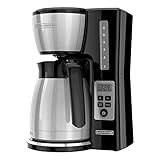
Overview: The BLACK+DECKER CM2046S is a budget-conscious 12-cup thermal coffee maker that punches above its weight class. Featuring a 4-layer vacuum-sealed thermal carafe and proprietary VORTEX technology, this programmable brewer keeps coffee hot for up to two hours without a warming plate. The straightforward design includes brew strength selection and a no-drip spout for clean pouring.
What Makes It Stand Out: The 4-layer thermal carafe is impressive at this price point, delivering genuine heat retention that rivals premium brands. VORTEX technology’s showerhead design ensures even saturation for full flavor extraction. The automatic shutoff after brewing enhances safety and energy savings, while the Brew Strength selector offers customization typically absent in budget models.
Value for Money: At just $50-70, this is exceptional value. You’re getting thermal carafe technology typically found in $100+ machines. While it lacks some premium features like self-cleaning or adjustable temperature, the core brewing performance and heat retention make it a steal for budget-minded buyers who refuse to compromise on hot coffee.
Strengths and Weaknesses: Strengths include outstanding price-to-performance ratio, effective thermal carafe, VORTEX extraction technology, and simple operation. The no-drip spout works well. Weaknesses involve a less durable build quality, basic display, no brew pause feature, and the brand’s reputation isn’t as premium as Cuisinart. The carafe lid can be finicky and may require practice to pour without dribbling.
Bottom Line: A practical choice for those wanting thermal carafe benefits without the premium price. It delivers solid performance and excellent value, though long-term durability may not match higher-end competitors.
4. Keurig K-Duo Hot & Iced Single Serve & Carafe Coffee Maker, MultiStream Technology, 72oz Reservoir (Gen 2)

Overview: The Keurig K-Duo Gen 2 revolutionizes kitchen countertops by combining single-serve pod brewing with full carafe drip coffee in one machine. This versatile brewer features MultiStream technology for optimal extraction, a 72-ounce reservoir, and unique Brew Over Ice functionality. Brew with K-Cup pods or your own grounds for both single cups and 6-12 cup carafes with remarkable flexibility.
What Makes It Stand Out: True dual functionality sets this apart—you’re getting two coffee makers in one. MultiStream technology saturates grounds more evenly than traditional single-needle systems. The Brew Over Ice feature automatically adjusts temperature for less dilution, while Strong Brew and Extra Hot options cater to specific preferences that standard Keurigs can’t match.
Value for Money: At $160-180, it’s a significant investment, but eliminates the need for separate machines. K-Cup convenience comes at ongoing cost—pods run $0.50-1.00 each versus pennies for ground coffee. For households split between pod and drip preferences, it pays for itself in convenience and counter space within months of daily use.
Strengths and Weaknesses: Strengths include unmatched versatility, large water reservoir, iced coffee capability, and MultiStream extraction. The machine is well-built and intuitive with multiple size options. Weaknesses involve high upfront cost, expensive K-Cups, complexity means more potential failure points, and the 12-cup carafe is glass, not thermal, which feels like a miss at this price.
Bottom Line: Perfect for households divided between pod convenience and traditional brewing. The versatility justifies the price if you’ll use both functions regularly, but ground-coffee purists can find better value elsewhere.
5. Hamilton Beach 2-Way 12 Cup Programmable Drip Hot and Iced Coffee Maker & Single Serve Coffee Machine, Glass Carafe, Auto Pause and Pour, Black (47500J)

Overview: The Hamilton Beach 47500J is a versatile 2-way coffee maker that brews both single-serve cups and full 12-cup pots using ground coffee. This programmable machine features six brew settings including hot and iced coffee, an AquaFlow showerhead for optimal extraction, and an intuitive touchscreen display. The glass carafe includes auto pause and pour functionality for mid-brew serving.
What Makes It Stand Out: The six brew settings offer remarkable versatility—regular, bold, hot, and iced options cover virtually any preference without pod waste. The included mesh scoop simplifies single-serve brewing: just scoop, place, and brew. AquaFlow technology ensures even saturation, while the touchscreen provides modern, easy programming up to 24 hours ahead.
Value for Money: Priced at $70-90, this is excellent value for a dual-brew system. Unlike Keurig’s K-Duo, you’re not locked into expensive pods. The iced coffee functionality is a rare find at this price point. For households wanting variety without premium cost, it’s hard to beat the feature set relative to the investment.
Strengths and Weaknesses: Strengths include versatile brew options, pod-free single-serve, intuitive touchscreen, iced coffee capability, and competitive price. The AquaFlow showerhead performs well. Weaknesses include a glass carafe (not thermal), single-serve side limited to grounds only (no K-Cups), and the machine’s plastic components feel less premium. The footprint is also sizable for smaller counters.
Bottom Line: An outstanding value for versatile brewing without pod dependency. The iced coffee feature and multiple settings make it ideal for households wanting variety on a budget, though thermal carafe seekers should consider other options.
6. BLACK+DECKER 12-Cup Coffee Maker with Easy On/Off Switch, Easy Pour, Non-Drip Carafe with Removable Filter Basket, Vortex Technology, Black

Overview: The BLACK+DECKER 12-Cup Coffee Maker delivers straightforward drip coffee brewing with several user-friendly enhancements. This model features Vortex Technology, an exclusive showerhead design that evenly saturates grounds for fuller flavor extraction. The simple on/off switch operation makes it accessible for any user, while practical features like Sneak-A-Cup, a no-drip spout, and a removable filter basket streamline the daily brewing routine. The keep-hot carafe plate maintains drinking temperature after brewing completes.
What Makes It Stand Out: Vortex Technology distinguishes this budget brewer by improving extraction uniformity typically found in higher-end models. The Sneak-A-Cup function is genuinely useful, temporarily halting flow for 30 seconds so you can pour mid-brew without mess. The Perfect Pour spout actually works, eliminating the drips and spills that plague standard carafes. Combined with dishwasher-safe components, these features punch above the machine’s price class.
Value for Money: Priced in the budget tier, this coffee maker offers exceptional value for money. You’re getting thoughtful engineering like even saturation and mess-free pouring typically reserved for mid-range models. While it lacks programmability and thermal carafe options, it competes favorably against bare-bones alternatives from store brands. For under $40, the feature set is remarkably complete for basic brewing needs.
Strengths and Weaknesses: Strengths include easy operation, effective no-drip spout, convenient Sneak-A-Cup pause, dishwasher-safe removable basket, and Vortex extraction technology. The glass carafe and hot plate design is familiar and effective for immediate consumption. Weaknesses involve the lack of programmable timer, no brew strength control, and the hot plate’s potential to scorch coffee left for extended periods. The 30-second Sneak-A-Cup limit requires quick action.
Bottom Line: This BLACK+DECKER model is an excellent choice for budget-conscious buyers seeking reliable, no-fuss coffee brewing with premium touches. It prioritizes essential convenience features over complex programming, making it ideal for households wanting quality drip coffee without unnecessary complications or expense.
7. BLACK+DECKER 12-Cup Thermal Coffeemaker, Black/Silver, CM2035B
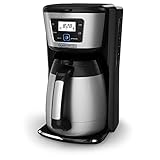
Overview: The BLACK+DECKER CM2035B Thermal Coffeemaker addresses the primary weakness of glass carafe models by incorporating a double-walled thermal carafe that maintains coffee temperature without a heating plate. This 12-cup brewer focuses on practical design elements, featuring a wide-mouth carafe opening for effortless cleaning and the same no-drip Perfect Pour spout found in other BLACK+DECKER models. The washable, dishwasher-safe brew basket simplifies maintenance.
What Makes It Stand Out: The thermal carafe is the star feature, keeping coffee hot for hours while preserving flavor without the scorching risk of hot plates. The wide-mouth opening is a standout design choice, allowing you to reach inside with a cloth for thorough cleaning—something narrow-mouth thermal carafes make difficult. The no-drip spout maintains its reputation for clean pouring. This combination of thermal retention and easy maintenance is rare in this price category.
Value for Money: Positioned in the mid-range segment, this model offers compelling value for those who savor coffee throughout the morning. The thermal carafe alone justifies the price premium over basic glass models, eliminating wasted coffee and burnt flavors. Compared to thermal competitors costing nearly twice as much, BLACK+DECKER delivers essential functionality without unnecessary frills. It’s an economical entry into thermal carafe brewing.
Strengths and Weaknesses: Strengths include excellent thermal retention, easy-to-clean wide-mouth design, no-drip pouring spout, dishwasher-safe brew basket, and attractive black/silver aesthetics. The thermal carafe is durable and portable. Weaknesses include slower brewing than some models, lack of programmable features or brew strength control, and difficulty judging coffee level through stainless steel. The initial price may deter budget buyers.
Bottom Line: The CM2035B is perfect for coffee drinkers who value temperature retention and flavor preservation over advanced programming. It’s a smart, mid-range investment that pays dividends in coffee quality and convenience, especially for households that consume coffee gradually throughout the morning rather than all at once.
8. Mr. Coffee 10-Cup Programmable Coffee Maker, Insulated Thermal Carafe, Brew Strength Selection, Brew Now or Later, Stainless Steel
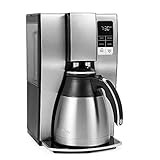
Overview: Mr. Coffee’s 10-Cup Programmable model elevates the home brewing experience with advanced features typically found in premium machines. The Optimal Brew system delivers water at up to 205°F, 20% faster than comparable models, while the double-walled stainless steel thermal carafe maintains temperature for hours. Programmable functionality includes Brew Later timing and brew strength selection, complemented by the Grab-A-Cup auto pause feature for immediate serving.
What Makes It Stand Out: The Optimal Brew technology is genuinely impressive, achieving proper extraction temperature and speed that meets Specialty Coffee Association guidelines. The Strong Brew selector provides noticeable flavor intensity adjustment, while the Brew Later function offers 24-hour programming flexibility. The thermal carafe’s heat retention capabilities outperform most competitors, keeping coffee genuinely hot—not just warm—for extended periods without degradation.
Value for Money: This model sits in the upper-mid-range price bracket but delivers features approaching high-end machines. The combination of precise temperature control, programmability, thermal carafe, and brew strength customization represents excellent value. You’re essentially getting a specialty coffee association-compliant brewer without the premium brand markup. For feature-conscious buyers, it outperforms similarly priced competitors.
Strengths and Weaknesses: Strengths include superior brewing temperature and speed, effective thermal carafe, intuitive programming, meaningful brew strength control, and Grab-A-Cup convenience. The stainless steel construction is durable and attractive. Weaknesses include the 10-cup capacity (versus standard 12-cup), more complex operation for beginners, and the thermal carafe’s opaque design making water-level visibility challenging. The machine requires more counter space than basic models.
Bottom Line: This Mr. Coffee model is ideal for enthusiasts seeking customizable, high-quality brewing without breaking the bank. The thermal carafe and precise temperature control make it a standout choice for those who appreciate nuanced coffee flavor and desire the convenience of programmable operation.
9. BUNN 33200.0015 VPR-2GD 12-Cup Pourover Commercial Coffee Brewer with Upper and Lower Warmers and Two Glass Decanters, Black, Stainless, Standard
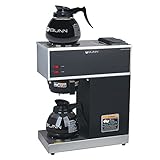
Overview: The BUNN VPR-2GD is a commercial-grade pourover coffee brewer built for high-volume environments like offices, cafes, or waiting rooms. This robust machine features upper and lower warming plates, allowing simultaneous brewing and warming of two 12-cup glass decanters. The pourover design requires no direct water line, offering placement flexibility. Constructed with stainless steel and black finishes, it prioritizes durability and continuous operation over advanced programming features.
What Makes It Stand Out: Commercial construction quality sets this apart from residential brewers, with components designed for years of heavy use. The dual-warmer system maximizes output, keeping one pot serving-ready while brewing another. BUNN’s reputation for rapid brewing means coffee is ready in approximately three minutes. The included two glass decanters provide immediate value, and the pourover flexibility eliminates installation costs.
Value for Money: For commercial applications, the price represents solid value given its durability and capacity. However, for home use, it’s a significant investment with features that exceed typical household needs. The cost per cup over time is low in commercial settings, but residential buyers are paying for capability they’ll rarely utilize. It competes well against other commercial brewers but is overpriced for home markets.
Strengths and Weaknesses: Strengths include exceptional durability, dual-warmer efficiency, rapid brewing, commercial-grade components, and included decanters. The pourover design offers installation flexibility. Weaknesses include large footprint, lack of programmability or advanced features, high price for home use, and manual water filling. It’s loud, energy-intensive, and aesthetically industrial. No thermal carafe option means potential for burnt coffee on warmers.
Bottom Line: The VPR-2GD is strictly for commercial or heavy-duty office use. It’s a workhorse machine that delivers volume and durability but is entirely unsuitable for typical households. Buy this for break rooms or small cafes, not for your kitchen counter.
10. Hamilton Beach 2-Way Programmable Coffee Maker, 12 Cup Glass Carafe And Single Serve Coffee Maker, Black with Stainless Steel Accents, 49980RG

Overview: The Hamilton Beach 49980RG solves the dilemma between full-pot and single-serve brewing by combining both functions in one compact unit. This versatile machine brews up to 12 cups in a glass carafe or up to 14 ounces directly into a cup or travel mug using the included mesh scoop. Programmable up to 24 hours with bold/regular strength options, it eliminates the need for separate machines or expensive pods. The AutoPause feature allows mid-brew pouring from the carafe side.
What Makes It Stand Out: True 2-in-1 functionality is the primary draw, offering genuine flexibility without proprietary pods. The mesh scoop system for single-serve is brilliantly simple and eco-friendly, using your own ground coffee. Programmable controls cover both brewing methods, and the separate water reservoirs prevent cross-contamination. The ability to select brew strength for either function is uncommon in dual-purpose machines.
Value for Money: This model delivers outstanding value, essentially providing two coffee makers for the price of one mid-range unit. The elimination of pod costs saves hundreds annually compared to K-Cup systems. For households with varying coffee consumption patterns—some wanting quick single cups, others needing full pots—it pays for itself quickly. Few competitors offer this versatility at a similar price point.
Strengths and Weaknesses: Strengths include exceptional brewing flexibility, eco-friendly pod-free single-serve, 24-hour programmability, brew strength control, AutoPause convenience, and cost savings. The stainless steel accents look sharp. Weaknesses include the 14-ounce single-serve limit, inability to use K-Cups (though intentional), more cleaning requirements, and shared counter space needs. The single-serve side lacks a dedicated water heater, potentially slowing sequential cups.
Bottom Line: Perfect for diverse households, this Hamilton Beach model is the ultimate versatile coffee solution. It masterfully bridges the gap between single-serve convenience and traditional drip brewing while saving money and reducing waste. If you need both functions, this is your best value option.
Understanding Capacity Needs for Large Families
Calculating True Serving Requirements
When manufacturers label a carafe as “12-cup,” they’re using a 5-ounce coffee cup measurement—roughly the size of a teacup, not your actual morning mug. Most adults pour 10 to 12 ounces per serving, meaning that “12-cup” carafe realistically yields only five to six servings. For a family of six, you’ll need a carafe that holds at least 14 cups by manufacturer standards, which translates to about 70 ounces of actual brewed coffee. Consider your family’s consumption patterns: do teenagers grab coffee on their way out? Does your partner take a travel mug plus a cup at home? Multiply your household size by 12 ounces and add two extra servings for guests or that inevitable second cup.
Factoring in Growth and Entertaining
Your family’s needs today might not match next year’s, especially with growing teenagers whose caffeine consumption mysteriously increases overnight. A wise approach is to size up by 20-30% beyond your current daily requirement. If you regularly host brunch gatherings or have extended family visiting during holidays, a larger capacity becomes even more valuable. Some households find that having two mid-sized carafes offers more flexibility than one massive unit—allowing you to brew different roasts simultaneously or keep decaf and regular options available without investing in a dual-system machine.
Thermal vs. Glass Carafes: Which Is Right for Your Family?
The Science Behind Thermal Retention
Thermal carafes use double-wall vacuum insulation—the same technology found in premium water bottles—to keep coffee hot for 4-6 hours without a warming plate. This matters for large families because you’re not racing against a 30-minute warming timer. The coffee stays at an optimal 175-185°F, avoiding the burnt taste that develops when glass carafes sit on hot plates too long. For households with staggered wake-up times, this means the late risers get coffee that’s genuinely fresh-tasting, not oxidized and bitter. Thermal models also eliminate the fire hazard of leaving a warming plate on all morning, a real concern in homes with curious pets or small children.
Glass Carafe Benefits and Drawbacks
Glass carafes let you see coffee levels at a glance—a surprisingly useful feature when you’re half-awake and trying to figure out if there’s enough left for your spouse. They typically cost less upfront and are easier to clean since you can visually inspect for residue. However, the warming plate that keeps coffee hot continuously cooks it, creating that distinctive “diner coffee” taste after 45 minutes. For large families, this means either drinking mediocre coffee or pouring money down the drain as you dump stale brew and make fresh pots. Glass also breaks more easily—a single dropped carafe can sideline your morning routine for days while you wait for a replacement.
Hybrid Considerations for 2026
Emerging designs now combine elements of both, with thermal carafes featuring transparent windows or glass carafes with improved insulation and automatic shut-off plates that activate only when coffee is poured. These hybrid approaches attempt to solve the visibility problem of thermal models while maintaining temperature stability. For large families, these innovations mean fewer compromises, though they often come at a premium price point that requires careful evaluation of whether the convenience justifies the cost.
Material Matters: Durability and Safety Considerations
Stainless Steel Grades and Longevity
Not all stainless steel carafes are created equal. Food-grade 18/8 stainless steel (also called 304 grade) resists corrosion and won’t impart metallic flavors, even after years of daily use. Lower grades may develop rust spots around the spout or lid mechanism where moisture accumulates. For families with young children, look for dent-resistant construction—some premium models use reinforced walls that can survive drops from counter height. The interior finish matters too: electropolished interiors are smoother, reducing coffee oil buildup and making cleaning more effective.
Glass Quality and Thermal Shock Resistance
If you opt for glass, borosilicate glass is non-negotiable for large families. This material withstands rapid temperature changes without cracking—essential when you’re brewing back-to-back pots on busy mornings. Cheap soda-lime glass carafes might shatter if you rinse them with cool water while they’re still warm from the previous brew. Check for a thick, reinforced base and a handle that’s securely attached with stainless steel rather than plastic, which can loosen over time with heavy use.
BPA-Free and Family-Safe Components
Every component that touches hot coffee should be BPA-free, including the lid, spout mechanism, and any internal gaskets. High-heat exposure can cause lower-quality plastics to leach chemicals or impart unpleasant flavors. For 2026, look for carafes advertising “100% plastic-free contact” or those using silicone seals instead of rubber, which degrades faster. If anyone in your family has chemical sensitivities, consider carafes with ceramic or glass interiors, even within thermal models, for the purest flavor profile.
Key Features That Make Morning Routines Easier
Programmable Brewing and Auto-Shutoff
For families operating on tight schedules, programmable timers that start brewing before the first person wakes up are invaluable. But the real game-changer is auto-shutoff that doesn’t compromise the coffee’s temperature. Advanced models now offer customizable warming durations—set it for two hours on weekdays when everyone leaves quickly, or four hours on lazy Sunday mornings. Some systems even detect when the carafe is empty and automatically power down, saving energy and eliminating that nagging “did I turn it off?” anxiety.
One-Handed Pouring Mechanisms
When you’re holding a toddler, a phone, or a stack of homework, needing two hands to pour coffee is a deal-breaker. Look for push-button or lever-activated spouts that open with thumb pressure while your hand remains securely on the handle. The mechanism should be intuitive enough for older children to use safely but secure enough that it won’t open if the carafe tips over. Spring-loaded designs that automatically close after pouring prevent spills if the carafe gets knocked on its side—a common occurrence in crowded kitchens.
Keep-Warm Functions That Actually Work
Traditional warming plates create hot spots that scorch the bottom inch of coffee. Newer technologies use induction heating that circulates warmth evenly or pulse-heating that maintains temperature without continuous cooking. For thermal carafes, pre-warming the interior with hot water before brewing can extend heat retention by up to two hours—a simple step that makes a significant difference during busy mornings when the carafe gets opened frequently.
Design Elements That Enhance Functionality
Ergonomic Handle Design for Heavy Loads
A full 14-cup carafe weighs over seven pounds—that’s a lot of hot liquid to maneuver before you’ve had your coffee. Handles should be wide enough for a secure grip, even with oven mitts, and positioned to balance the weight properly. Offset handles that align with the carafe’s center of gravity reduce wrist strain and pouring fatigue. Rubberized or textured grips prevent slipping, especially important in households where hands might be wet or greasy from breakfast prep.
Spout Engineering for Drip-Free Pouring
Nothing ruins a morning like coffee dripping down the side of the carafe onto the counter, your hand, or the floor. Precision-engineered spouts create a clean stream that cuts off instantly when you stop pouring. Some designs incorporate air-return channels that prevent the “glug-glug” effect that causes splashing. For large families, this means fewer messes to clean up and safer pouring, especially when kids are helping themselves. Test the pour angle in store if possible—steeper spouts generally perform better than shallow ones.
Counter Space and Storage Footprint
Large-capacity carafes are, by necessity, bigger all around. Measure your cabinet clearance if you plan to store it overhead—some thermal models are too tall for standard upper cabinets. Consider the base diameter too; a stable footprint prevents tipping when bumped, but an overly wide base might not fit on crowded counters alongside toasters and fruit bowls. Some families find that a carafe with a separate heating base offers more flexibility, allowing you to store the carafe elsewhere and only bring it out for brewing.
Maintenance and Cleaning Considerations
Dishwasher Safety and Hand-Washing Realities
While many carafes claim to be dishwasher-safe, the high heat and harsh detergents can degrade seals and fade measurement markings over time. For daily cleaning, a quick rinse with hot water and occasional washing with mild soap is usually sufficient. However, deep cleaning is essential for large families who brew multiple pots daily. Look for wide-mouth openings that fit your hand for manual scrubbing, or carafes that come with specialized brushes. If you do use the dishwasher, place the carafe on the top rack and remove any rubber gaskets first.
Descaling and Mineral Buildup Management
Hard water is the silent killer of coffee equipment. In large families where the machine runs constantly, mineral deposits can clog brewing mechanisms and affect taste within weeks, not months. Carafes with removable brew baskets and accessible water reservoirs make descaling easier. Some newer models include built-in water filters that reduce scale buildup—particularly valuable if you live in an area with very hard water. Plan on descaling every 40-80 brew cycles, which might mean monthly maintenance for high-volume households.
Budget Planning for Quality Carafes
Price Tiers and What They Deliver
Entry-level large-capacity carafes ($30-60) typically offer basic functionality but may compromise on insulation quality or durability. Mid-range options ($60-120) hit the sweet spot for most families, providing reliable thermal retention, better materials, and useful features like programmable timers. Premium models ($120+) justify their cost through exceptional build quality, extended warranties, and innovative features like precision temperature control or smart home integration. For a large family, spending more upfront often saves money within the first year by reducing coffee waste and replacement costs.
Common Mistakes to Avoid When Choosing
Ignoring Warranty and Replacement Part Availability
That perfect carafe becomes a paperweight if you can’t replace a broken lid or worn gasket. Before purchasing, check the manufacturer’s website for replacement parts availability. A two-year minimum warranty is standard, but some brands offer five-year coverage on thermal carafes—a strong indicator of confidence in their product. For large families, consider how quickly you can get a replacement carafe if disaster strikes. Some manufacturers offer expedited shipping for warranty claims, while others might leave you waiting weeks.
Overlooking Compatibility with Your Coffee Maker
Not all carafes work with all coffee makers—even within the same brand. The carafe’s height, lid mechanism, and base diameter must match your machine’s brewing basket and warming plate (if applicable). Thermal carafes often require specific brew baskets that seal properly to maintain temperature. Check the manufacturer’s compatibility list, and if you’re buying separately from the coffee maker, measure your existing machine carefully. The wrong fit can lead to brewing overflow, poor temperature retention, or the carafe not triggering the machine’s safety sensors.
How to Evaluate Long-Term Value
Cost-Per-Use Calculations
A $150 carafe that lasts five years costs about 8 cents per day for a family brewing two pots daily. Compare that to a $40 carafe that needs replacement every 18 months due to seal failure or denting—that’s 7 cents per day, but with the hassle of shopping and potential downtime. Factor in coffee waste too: a thermal carafe that keeps coffee hot for four hours might save you from brewing a third pot on lazy mornings, saving $0.50-$1.00 in grounds daily. Over a year, that adds up to hundreds of dollars—often justifying a higher initial investment.
Making Your Final Decision
The Ultimate Large-Family Carafe Checklist
Before you click buy or head to the store, run through this checklist: Does it hold enough for everyone plus two extra servings? Is it thermal if your family wakes up over several hours? Are all plastic components BPA-free and rated for high heat? Can you pour it one-handed? Is the opening wide enough for your hand to clean? Does the warranty cover at least two years of daily use? Are replacement parts readily available? Will it fit your counter and storage space? Does it work with your existing coffee maker or the model you’re considering? If you answer “yes” to at least eight of these, you’ve found a winner that will serve your family well into 2026 and beyond.
Frequently Asked Questions
What’s the realistic serving capacity of a “12-cup” carafe?
A standard 12-cup carafe yields about 60 ounces, which translates to five to six typical 10-12 ounce mugs. For large families, this often means brewing two pots or sizing up to a 14-16 cup model.
How long should a thermal carafe keep coffee genuinely hot?
Quality thermal carafes maintain temperatures above 160°F for 4-6 hours. Pre-warming the carafe with hot water before brewing can extend this by another 1-2 hours, crucial for families with staggered schedules.
Are glass carafes ever better than thermal for large families?
Glass works well if everyone drinks coffee within 30-45 minutes of brewing and you prioritize seeing the coffee level. They’re also typically less expensive, making them practical for families on tight budgets who don’t mind the time pressure.
Can I put my coffee carafe in the dishwasher?
While many are technically dishwasher-safe, hand-washing extends the life of seals and measurement markings. If you use the dishwasher, place it on the top rack and remove any rubber components first.
How often should I descale my coffee maker and carafe?
For high-volume households brewing daily, descale every 40-80 cycles. Hard water areas need more frequent maintenance. Look for models with built-in water filters to reduce buildup.
What’s the best carafe material for families with young children?
Stainless steel thermal carafes are safest—they’re shatterproof and eliminate the burn risk of exposed warming plates. Ensure all plastic components are BPA-free and the lid locks securely.
Why does my thermal carafe coffee taste different than glass?
Thermal carafes preserve flavor better by preventing continued cooking. If you taste metal, your carafe may use lower-grade steel or need deep cleaning. Try a mixture of baking soda and water to remove oil buildup.
How do I prevent coffee from dripping down the spout?
Look for carafes with precision-engineered spouts and air-return channels. Pouring at a consistent angle and avoiding sudden stops also helps. Some high-end models have anti-drip coatings on the spout edge.
Is it worth buying a carafe separately from my coffee maker?
Only if you verify compatibility. Many machines require specific carafe designs to trigger safety sensors and fit brewing baskets. Check the manufacturer’s compatibility list before purchasing separately.
What warranty should I expect on a quality large-capacity carafe?
Two years is standard, but premium models often offer five-year warranties. For large families, longer warranties indicate better durability and provide peace of mind for daily heavy use.
See Also
- 10 Best Carafe Coffee Makers for Consistent Brewing in 2026
- We Tested 50 Portable Coffee Makers - Here are the 10 Best for Camping
- ‘Best Coffee Makers for Large Families: 10 Expert Picks for 2026’
- 10 Affordable Coffee Maker Water Filters That Don’t Sacrifice Quality in 2026
- Stop Wasting Coffee Pods with the 10 Best Automatic Pod Coffee Makers This