Table of Contents
Ever poured hot water over what you thought was a perfect pour-over, only to get a bitter, uneven mess? Or maybe your French press brew tastes thin and watery despite following the recipe to the letter. More often than not, the culprit isn’t your beans or your technique – it’s lurking right on your counter: your coffee grinder. For beginners stepping beyond pre-ground coffee, navigating the world of grinders can feel overwhelming. Terms like “burr,” “conical,” and “stepless adjustment” swirl around, promising better coffee but adding confusion. This journey into fresh grinding is absolutely worth it, unlocking flavors and aromas pre-ground coffee simply cannot deliver, but knowing what to look for in your first grinder is the key to avoiding frustration and wasted beans.
Think of your grinder as the unsung hero of your morning cup. It’s not just about breaking beans into smaller pieces; it’s about achieving a consistent particle size tailored precisely to your chosen brewing method. Inconsistency – a mix of fines (tiny particles) and boulders (large chunks) – leads to over-extraction (bitterness) from the fines and under-extraction (sourness) from the boulders, all in the same cup. The right beginner grinder empowers you to control this critical variable, transforming your daily ritual from a gamble into a reliable, enjoyable experience. Forget chasing complex gear lists; focus instead on understanding the fundamental features that genuinely impact your brew quality and ease of use as you start this fresh grind adventure.
Top 10 Coffee Grinders for Beginners
Detailed Product Reviews
1. SHARDOR Conical Burr Espresso Coffee Grinder Electric with Precision Timer 2.0, Touchscreen Adjustable Burr Mill with 51 Precise Settings for Home Use, Anti-static, Stainless Steel
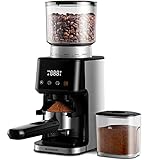
Overview:
The SHARDOR Conical Burr Grinder targets serious home baristas seeking precision. Featuring a 40mm stainless steel burr set, it minimizes heat and static while delivering uniform grounds across 51 settings, from espresso-fine to French press-coarse. Its touchscreen interface and portafilter cradle streamline espresso preparation.
What Makes It Stand Out:
Its 51 micro-adjustable grind settings and 0.1-second precision timer ensure unparalleled dose consistency, critical for espresso. The anti-static technology and dedicated portafilter cradle eliminate mess and save time, while the stainless steel burrs preserve coffee oils for optimal flavor extraction—features rare in sub-$200 grinders.
Value for Money:
Priced mid-to-high range, it outperforms budget blade grinders and competes with pricier commercial models. The precision justifies the cost for espresso enthusiasts, though casual drip-coffee drinkers may find it over-specified. Long-term durability offsets the initial investment compared to cheaper alternatives.
Strengths and Weaknesses:
Strengths: Exceptional grind consistency; intuitive touchscreen; anti-static design; portafilter compatibility; 51 precise settings.
Weaknesses: Steep learning curve for beginners; larger footprint; touchscreen may attract fingerprints; not ideal for large-batch brewing.
Bottom Line:
A top-tier choice for espresso lovers demanding barista-level control at home. Its precision and build quality make it worth the premium, though drip-coffee users should consider simpler options.
2. Amazon Basics Electric Coffee Grinder, Coffee Bean and Spice Grinder, With Heavy-Duty Stainless Steel Grind Blades
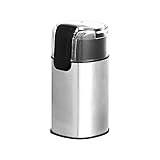
Overview:
This entry-level blade grinder offers basic functionality for budget-conscious users. It swiftly grinds 30g of beans in 10 seconds for drip coffee and handles spices, nuts, and herbs. Its compact design and clear safety lid provide visibility during operation.
What Makes It Stand Out:
The heavy-duty stainless steel blades deliver rapid grinding at an ultra-affordable price point. The transparent lid allows monitoring consistency—a rarity in budget grinders—while its versatility for spices and small batches adds practical value for occasional users.
Value for Money:
Exceptional for under $20, it outperforms dollar-store alternatives in durability and speed. Ideal for infrequent users or students, but the blade mechanism’s inconsistency makes it poor value for coffee purists seeking optimal flavor extraction.
Strengths and Weaknesses:
Strengths: Very low cost; compact size; fast for small batches; multipurpose (spices/herbs); simple operation.
Weaknesses: Inconsistent grind size; generates heat affecting flavor; no grind settings; messy residue; loud operation.
Bottom Line:
A functional emergency grinder for tight budgets or spice preparation, but avoid if you prioritize coffee quality. Not recommended for daily espresso or pour-over brewing.
3. Hamilton Beach Custom Grind Electric Coffee Grinder for 4-14 Cups, One-Press Hand-Free Operation with Auto Shutoff, Removable Grinding Bowl For Easy Pour and Clean, Stainless Steel (80406)

Overview:
Hamilton Beach’s grinder combines cup-adjustable grinding (4–14 cups) with hands-free operation. Its removable stainless steel bowl and adjustable grind ring cater to diverse brew methods, from French press to espresso, while auto-shutoff enhances safety.
What Makes It Stand Out:
The one-press hand-free operation with auto-shutoff is unique in its price bracket, allowing stable countertop grinding without holding the lid. The removable bowl simplifies pouring and dishwasher-safe cleaning, bridging convenience between basic blade and burr grinders.
Value for Money:
Priced moderately, it offers exceptional practicality for drip or French press users. The durable stainless steel components and cup-based grinding justify the cost over cheaper blade models, though burr grinders provide superior consistency for espresso.
Strengths and Weaknesses:
Strengths: True hands-free grinding; adjustable grind size; removable/dishwasher-safe bowl; sturdy build; versatile for spices.
Weaknesses: Blade mechanism causes inconsistent grounds; limited precision for espresso; noisy; residual static cling.
Bottom Line:
Best for drip/French press drinkers wanting hassle-free operation and easy cleanup. Skip if you need espresso-level fineness or uniformity.
4. Cuisinart Coffee Grinder, Electric One-Touch Automatic Burr Coffee Grinder with 18-Position Grind Selector, Cup Size Selector for 4 – 18 Cups, DBM-8P1, Black Stainless

Overview:
Cuisinart’s flat-burr grinder delivers consistent results for 4–18 cups with 18 grind settings. It features removable bean and grind chambers, one-touch operation, and compact storage solutions, targeting home users prioritizing freshness and convenience.
What Makes It Stand Out:
The 18-position grind selector provides reliable consistency across all brew methods, while the removable 8oz bean hopper and grind chamber simplify refilling and cleaning. The dedicated cup selector (4–18) and included cleaning brush enhance user-friendliness.
Value for Money:
Competitively priced for a burr grinder, it offers professional-grade uniformity at a fraction of high-end models. The durability justifies the cost for daily users, though the plastic components may not match premium metal builds long-term.
Strengths and Weaknesses:
Strengths: Uniform burr grinding; intuitive cup/grind selectors; removable parts for easy cleaning; quiet operation; compact cord storage.
Weaknesses: Plastic construction feels less premium; grind chamber capacity limits large batches; slight learning curve for settings.
Bottom Line:
An excellent mid-range burr grinder for home use, balancing performance and affordability. Highly recommended for pour-over or drip coffee lovers seeking consistency.
5. KRUPS Electric Blade Coffee Grinder 1.6 Oz, Adjustable Coarse to Fine for the Perfect Espresso, Grind Coffee Beans, Spices & Herbs, Removable Dishwasher Safe Bowl, Black
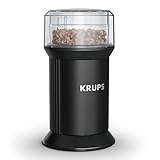
Overview:
KRUPS’ compact blade grinder features a 1.6oz capacity and push-lid operation for manual grind control. Designed for quick single-serve grinding, it handles coffee, spices, and herbs with a dishwasher-safe bowl.
What Makes It Stand Out:
The push-lid mechanism gives direct control over grind texture—press longer for finer results—ideal for espresso experimentation. Its small footprint and dishwasher-safe bowl prioritize convenience for space-limited kitchens or travel.
Value for Money:
Budget-friendly and space-efficient, it’s a solid value for occasional users needing speed over precision. However, blade inconsistency makes it poor value for espresso enthusiasts compared to affordable burr alternatives.
Strengths and Weaknesses:
Strengths: Ultra-compact design; intuitive push-lid control; dishwasher-safe bowl; affordable; versatile for spices.
Weaknesses: Highly inconsistent grind; heat buildup alters flavor; too small for >2 cups; noisy; static causes mess.
Bottom Line:
A decent emergency grinder for tiny kitchens or spice prep, but avoid for daily coffee. Not suitable for espresso quality despite marketing claims.
6. SHARDOR Electric Super Silent Blade Coffee Grinder, Timed Grind Control Rotary Knob, Adjustable Coarse to Fine for Coffee Beans, Spices & Herbs, Black
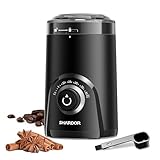
Overview: The SHARDOR Electric Super Silent Blade Grinder is a compact, multi-functional appliance designed for coffee beans, spices, and dry ingredients. Its space-saving build and quiet 63 dB operation cater to small kitchens and early risers seeking minimal disturbance.
What Makes It Stand Out: Adjustable precision via a timed rotary knob (coarse to fine) and exceptional versatility stand out—handling coffee, herbs, grains, and rock sugar eliminates the need for multiple single-use tools. The ultra-quiet operation and travel-friendly size further differentiate it from louder competitors.
Value for Money: Priced mid-range, it offers strong value with a 2-year warranty, included cleaning brush/spoon, and multi-role functionality. It outperforms basic grinders by consolidating spice and grain prep into one device, saving both money and counter space long-term.
Strengths and Weaknesses:
Strengths: Near-silent operation ideal for households; compact for travel/small spaces; versatile for diverse ingredients; intuitive timed knob control.
Weaknesses: Blade grinders lack the consistency of burr models for espresso; small capacity limits batch sizes; plastic build may feel less durable than premium alternatives.
Bottom Line: An excellent budget-friendly choice for casual coffee drinkers and spice enthusiasts needing quiet, versatile grinding without burr-grinder investment—perfect for apartments or travel, but not for espresso purists.
7. BLACK+DECKER One Touch Coffee Grinder, 2/3 Cup Coffee Bean Capacity, Spice Grinder, One Touch Push-Button Control -150 Watts -Stainless Steel Blades
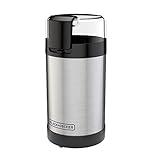
Overview: The BLACK+DECKER One Touch Grinder delivers straightforward, no-frills grinding for coffee beans and spices with a 2/3-cup capacity. Its emphasis on safety and simplicity makes it ideal for beginners or those prioritizing ease of use.
What Makes It Stand Out: The lid-locking safety feature prevents accidental activation, while the intuitive one-touch button offers instant coarse-to-fine control. Stainless steel blades and bowl ensure durability and uniform grinding, backed by a claim of “30% better grinding” consistency.
Value for Money: As an entry-level grinder, it provides solid value with reliable stainless steel construction at an affordable price. Though lacking advanced features, it outperforms cheaper plastic models in longevity and grind quality, making it a cost-effective staple.
Strengths and Weaknesses:
Strengths: Safety lock prevents spills; robust stainless steel components; simple one-button operation; compact footprint.
Weaknesses: Blade grinder limits precision for espresso; no timer or settings for consistency; smaller capacity than burr alternatives; basic design lacks portability features.
Bottom Line: A dependable, safe, and economical pick for drip coffee or French press users who want hassle-free grinding—skip if you need espresso-level finesse or larger batches.
8. Aromaster Conical Burr Coffee Grinder with 25 Grind Settings,Adjustable 2-12 Cups Timer,Coffee Bean Grinder,3-Ear Portafilter Holder, Anti-static Design,Cleaning Brush Included,Black

Overview: The Aromaster Conical Burr Grinder targets serious coffee enthusiasts with precision engineering, featuring 25 grind settings, portafilter compatibility, and anti-static technology for consistent results across brewing methods from French press to espresso.
What Makes It Stand Out: Unmatched versatility shines via 25 micro-adjustable settings and a 2-12 cup timer, while the 51-53mm portafilter holder streamlines espresso prep. The stainless conical burr ensures uniform grounds, and anti-static design reduces messy residue—a rarity in this price tier.
Value for Money: Positioned as a mid-to-high-end option, it justifies its cost with professional-grade consistency, durability, and included accessories (brush, portafilter holder). It outperforms blade grinders and basic burr models, offering near-specialty quality for home use.
Strengths and Weaknesses:
Strengths: Exceptional grind precision for all brew types; direct portafilter grinding saves time; quiet DC motor; easy disassembly for cleaning.
Weaknesses: Portafilter holder only fits specific 3-ear models; 12-month warranty lags behind competitors; compact bean hopper limits large-batch grinding.
Bottom Line: Highly recommended for espresso lovers and home baristas seeking café-quality control without commercial pricing—ideal if you prioritize grind accuracy over ultra-large capacities.
9. Wancle Electric Coffee Grinder, Spice Grinder, One Touch Coffee Mill for Beans, Spices and More, with Clean Brush Black
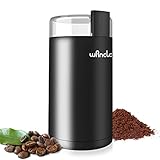
Overview: The Wancle Electric Grinder emphasizes effortless operation with a transparent lid, pure copper motor, and one-touch control. It targets users wanting speed and multi-ingredient versatility for coffee, spices, nuts, and herbs in a sleek, space-saving design.
What Makes It Stand Out: The transparent lid lets you monitor grinding in real-time, while the pure copper motor prevents bean scorching for optimal flavor. Its one-touch “press-and-hold” mechanism offers instant coarse-to-fine control unmatched by timed grinders, enhancing user customization.
Value for Money: An affordable all-in-one solution, it delivers strong performance for the price with stainless steel components and included brush. Though not a burr grinder, its copper motor and versatility outshine similarly priced blade models, especially for spice enthusiasts.
Strengths and Weaknesses:
Strengths: Real-time grinding visibility via transparent lid; responsive one-touch control; copper motor preserves bean aroma; compact footprint; multi-ingredient capability.
Weaknesses: Blade-based inconsistency for espresso; small 60g capacity; plastic construction feels less premium; no safety lock feature.
Bottom Line: A top pick for casual users needing quick, aromatic coffee or spice grinding with intuitive control—best for drip or pour-over, but avoid for precision espresso demands.
10. KRUPS Precision Burr Coffee Grinder: 12 Settings, 8 oz Capacity for Drip, French Press, Espresso, Pour Over, Cold Brew - Stainless Steel, 110W, Auto-Stop, Easy Clean - Coffee Grinders for Home Use

Overview: The KRUPS Precision Burr Grinder combines commercial reliability with home convenience, featuring 12 grind settings, an 8 oz capacity, and auto-stop functionality for consistent results across all major brewing styles, from cold brew to espresso.
What Makes It Stand Out: Its flat metallic burrs ensure uniform grinding for balanced extraction, while the auto-stop function halts grinding at the selected cup quantity (2-12 cups). The removable burr and chamber simplify cleaning, and stainless steel construction promises durability.
Value for Money: A premium but fair investment, it rivals pricier specialty grinders with metal burrs, auto-stop, and high capacity. Regular cleaning minimizes static issues, and the 110W motor offers efficient performance—making it cost-effective for daily heavy use.
Strengths and Weaknesses:
Strengths: Consistent burr grinding for espresso to French press; auto-stop prevents overfilling; large 8 oz capacity; durable stainless steel build; easy disassembly.
Weaknesses: Static cling requires pre-tap cleaning; no portafilter holder; settings lack granularity compared to 25+ setting models; bulky for small kitchens.
Bottom Line: An outstanding choice for households grinding daily for multiple brew methods—prioritize this if you demand reliability and volume, but consider size constraints and static management.
Understanding the Core Grind: Why Your Grinder Choice Matters
The Critical Role of Grind Consistency
Achieving uniform particle size is the single most important factor your grinder influences. Inconsistent grinds sabotage extraction, leading to unbalanced, unpleasant cups. High-quality burr grinders excel here by shearing beans between abrasive surfaces, producing a remarkably even particle distribution compared to the haphazard chopping of blade grinders. This consistency ensures water interacts with coffee particles uniformly during brewing, extracting the full spectrum of desirable flavors without harsh extremes.
How Grind Size Dictates Your Brew Method
Your chosen brewing technique demands a specific grind size range. Espresso requires an ultra-fine, powdery consistency for the high pressure and short contact time. Pour-over methods like V60 or Chemex need a medium-fine grind, similar to table salt. French press and cold brew thrive with coarse grinds, resembling breadcrumbs or sea salt. A grinder with precise, adjustable settings allows you to dial in the exact size needed for your preferred method, unlocking its optimal flavor profile. Using the wrong grind size, even with the best beans, guarantees disappointment.
The Freshness Factor: Beyond Just Grinding
Grinding exposes vastly more coffee surface area to oxygen, accelerating staling. Pre-ground coffee loses its vibrant aromatics and nuanced flavors within hours, sometimes minutes. Grinding just before brewing preserves volatile compounds responsible for the bright, complex notes you pay for in quality beans. This isn’t just a minor upgrade; it’s the difference between a flat, one-dimensional cup and a vibrant, aromatic experience that showcases the coffee’s true origin and roast characteristics.
Burr vs. Blade: The Foundational Decision for Beginners
Why Blade Grinders Fall Short for Serious Brewing
Blade grinders, while inexpensive and common, operate like miniature food processors. Spinning blades chop beans erratically, creating a wildly inconsistent mix of fines and boulders. They generate significant heat through friction, which can prematurely “cook” the coffee, muting delicate flavors. Achieving even a rough approximation of a specific size is difficult and inconsistent cup-to-cup. While they might suffice for very casual drip coffee, they fundamentally limit your ability to explore better brewing methods or appreciate quality beans.
The Burr Grinder Advantage: Precision and Control
Burr grinders utilize two abrasive surfaces (burrs) – one stationary, one rotating – to crush beans to a uniform size determined by the gap between them. This mechanism inherently produces far more consistent particles. They generate less heat than blades, preserving flavor integrity. The adjustable grind setting (via a ring or dial) allows precise calibration for different brew methods. This consistency and control are non-negotiable for moving beyond basic coffee and achieving truly balanced, flavorful results across various brewing styles.
Flat Burr vs. Conical Burr: Nuances for New Users
Within burr grinders, flat burrs (two parallel discs) and conical burrs (a cone-shaped burr inside a ring) are the main types. Flat burrs often produce slightly more uniform particles but can be noisier and generate marginally more heat at very fine settings. Conical burrs are typically quieter, more energy-efficient, and handle fine grinds (like espresso) with less heat buildup and static. For most beginners focusing on methods like pour-over or French press, the difference is subtle; both types offer the essential consistency advantage over blades. Conical burrs are often praised for their versatility and gentler grind.
Key Features to Prioritize as a Beginner
Grind Size Range and Adjustment Precision
Ensure the grinder offers a wide enough range to cover your intended brew methods, from coarse (French press) to fine (espresso, if desired). Look beyond just the number of settings; focus on how adjustments are made. Stepless adjustment (a continuous dial) offers the finest control for dialing in perfect extraction, while stepped settings (clicks) provide repeatability. For beginners, clearly marked, intuitive steps are often easier to manage initially, but stepless provides more long-term tuning potential.
Hopper Capacity and Practicality
The bean hopper holds whole beans. A capacity of 100-200 grams is usually sufficient for home use and keeps beans fresher by limiting exposure. Consider if the hopper is removable for easy storage of unused beans (reducing exposure to light/air) or cleaning. A smaller hopper might be preferable for true beginners using beans quickly, while a larger one offers convenience for households brewing multiple cups daily.
Ease of Cleaning and Maintenance
Coffee oils build up inside grinders, becoming rancid and tainting future brews. A beginner-friendly grinder must be easy to disassemble (without tools, ideally) for regular brushing. Features like removable burrs, accessible grounds bins, and minimal crevices where grounds hide are crucial. Avoid models with complex internal mechanisms that are difficult to clean; maintenance shouldn’t feel like a chore that deters regular use.
Noise Level Considerations
Grinders, especially flat burrs, can be surprisingly loud. If you plan early morning brewing in a shared home, consider noise output. Conical burr grinders are generally quieter than flat burrs. Reading user reviews specifically mentioning noise can be helpful, as decibel levels aren’t always listed. A quieter grinder encourages consistent use without disturbing others.
Build Quality and Longevity Expectations
Look for grinders with predominantly metal construction, especially for the burrs and critical internal gears. Plastic components, while reducing cost, can wear faster, strip, or contribute to static and heat issues. Stainless steel or high-grade ceramic burrs are standard and durable. A solid feel and reassuring weight often indicate better internal components. Investing in reasonable build quality pays off in consistent performance and longevity, avoiding the need for frequent replacement.
Budgeting Smartly for Your First Grinder
Defining Your Realistic Investment Range
Set a clear budget based on your commitment level. While entry-level burr grinders start around $50-$70, spending $80-$150 generally unlocks significantly better consistency, durability, and features tailored for common home brew methods. Avoid the extreme low end (<$50) as these often compromise too heavily on burr quality and consistency. View this as a foundational tool for your coffee journey, not just a disposable appliance.
Value Beyond the Price Tag: What You’re Actually Paying For
Understand what differentiates price points. Lower-cost grinders might use smaller, less precise burrs, have more plastic parts, fewer grind settings, or less effective anti-static measures. Mid-range options typically offer better burr quality (more consistent grind), improved build materials, wider grind range, and easier cleaning. You’re paying for the engineering that delivers reliable, repeatable results cup after cup – the core function that impacts your coffee more than any other single piece of equipment besides the beans themselves.
Avoiding Costly Mistakes: Features Worth the Splurge
Prioritize spending on the grinding mechanism itself (burr quality/size) and consistent particle distribution. Features like timed dosing (automatically grinding for a set duration) can be convenient but aren’t essential for beginners learning manual control. A solid, stable base prevents “walking” during operation. Good anti-static technology reduces messy, clinging grounds – a small but impactful quality-of-life feature. Don’t pay heavily for digital displays or superfluous automation; focus budget on core grinding performance and durability.
Mastering the Grind: Tips for New Grinder Owners
Dialing In Your First Perfect Cup
Start with the manufacturer’s setting recommendation for your brew method as a baseline. Brew a cup. If it tastes sour or weak (under-extracted), adjust the grind finer. If it’s bitter or astringent (over-extracted), adjust coarser. Make small adjustments (1-2 clicks on stepped grinders, slight turns on stepless) and brew again. Patience is key – this process, called “dialing in,” is crucial for optimizing flavor and varies slightly with bean freshness, roast level, and ambient humidity.
Essential Cleaning Routine for Flavor Fidelity
Clean your grinder at least once a month, or more often with daily use. Unplug it. Remove the hopper and grounds bin. Use the provided brush (or a soft, dry toothbrush) to thoroughly clean burrs, chute, and bin, dislodging all coffee oils and residue. A vacuum cleaner nozzle can help suck out stubborn fines. Never use water or soap on the grinding mechanism – moisture causes rust and ruin. Wipe external surfaces with a damp cloth. Clean grinders prevent off-flavors and ensure consistent performance.
Managing Static and Mess: Practical Solutions
Static electricity, especially in dry climates, causes grounds to cling to the bin or shoot out. Solutions include: grinding in short bursts instead of one long grind, using a anti-static device (like a small metal spoon touched to the bin before collecting grounds), or lightly dampening (then thoroughly drying!) a paper towel and wiping the inside of the grounds bin. Some grinders have built-in anti-static features; if static is a major issue, this becomes a higher priority feature.
Beyond the Grinder: Creating Your Ideal Setup
Choosing Beans That Shine with Fresh Grinding
Start with high-quality, freshly roasted (within 2-4 weeks) whole beans. Look for roasters who list the roast date. Medium roasts often offer the most balanced flavor profile for beginners exploring different methods. Avoid very dark, oily roasts initially, as they can clog grinders and mask nuanced flavors. Single-origin coffees can highlight specific characteristics, while blends often provide consistent, approachable cups. Freshness and quality beans are amplified by proper grinding.
The Supporting Cast: Scales, Kettles, and Technique
A reliable kitchen scale (measuring to 0.1g) is arguably more important than the grinder for consistency – it ensures the right coffee-to-water ratio. A gooseneck kettle provides precise water control for pour-over methods. Learning basic brewing techniques (bloom time, pour speed, agitation) complements your grinder investment. Focus on mastering one brew method at a time; don’t try to perfect espresso, pour-over, and French press simultaneously as a beginner.
Creating a Sustainable Coffee Habit
Grinding fresh means using beans quickly. Buy smaller quantities (12oz/340g bags) more frequently to ensure peak freshness. Store whole beans in an opaque, airtight container away from light, heat, and moisture – not in the fridge or freezer. Plan your brews to minimize waste. Embrace the ritual; the few extra minutes spent grinding and brewing mindfully enhance the enjoyment and make the process feel worthwhile, not like a chore.
Long-Term Thinking: Your Grinder’s Place in the Journey
Recognizing When It’s Time to Upgrade
Your first grinder serves as an excellent teacher. You might eventually outgrow it if: you pursue espresso (requiring very fine, precise grinds beyond most entry-level units), need significantly higher volume (e.g., for a large family), desire advanced features like integrated scales or precise dose-by-weight, or notice declining performance (increased inconsistency, noise, or difficulty cleaning). Upgrading is a sign of progress, not a failure of your initial choice.
The Lifespan of a Well-Maintained Grinder
With proper care – regular cleaning, avoiding oily beans that accelerate wear, and using quality beans – a decent burr grinder can last 5-10 years or more. The burrs are the wear item; they slowly lose sharpness over years of use (typically 500-1000+ pounds of coffee). Most manufacturers sell replacement burrs. Focus on consistent maintenance; a grinder neglected for grime will fail long before its mechanical lifespan.
The Enduring Value of Fresh Grinding
Regardless of future upgrades, the core lesson learned with your first grinder remains invaluable: consistent, freshly ground coffee is the bedrock of exceptional flavor. This understanding – the direct link between grind quality and cup quality – stays with you. Every subsequent piece of equipment you add builds upon this fundamental principle established by your initial investment in proper grinding.
Frequently Asked Questions
Can I really taste the difference with a burr grinder versus a blade grinder?
Absolutely. Blade grinders produce inconsistent particles leading to unbalanced extraction – a mix of bitter (over-extracted fines) and sour (under-extracted boulders) flavors. Burr grinders create uniform particles, allowing water to extract flavors evenly, resulting in a noticeably smoother, more complex, and balanced cup that truly reflects the coffee’s character.
How often should I clean my coffee grinder?
Aim for a thorough cleaning (brushing out all burrs, chutes, and bins) at least once a month with regular use. If you notice decreased performance, unusual smells, or excessive static/clumping, clean it immediately. Wipe down external surfaces after each use. Never use water or soap on the grinding mechanism.
Is a conical burr grinder better than a flat burr for beginners?
Both types offer the critical consistency advantage over blades. Conical burrs are often slightly quieter, generate less heat (especially at finer settings), and handle static better, making them a popular and versatile choice for beginners exploring various methods. Flat burrs can offer marginally more uniformity but are often noisier. The difference is subtle for most home brewing; prioritize overall build and consistency over this distinction initially.
What’s the most important feature to look for in a beginner grinder?
Grind consistency is paramount. This is primarily determined by the quality and size of the burrs and the precision of the adjustment mechanism. Without consistent particle size, nothing else matters. Ensure the grinder offers a sufficient range for your intended brew methods (e.g., coarse enough for French press, fine enough for pour-over).
Do I need a grinder with stepless adjustment as a beginner?
Stepless adjustment (a continuous dial) offers the finest tuning for dialing in perfect extraction. However, clearly marked, intuitive stepped settings (clicks) provide excellent repeatability and are often easier for beginners to manage initially. Many quality entry-level grinders use stepped settings effectively. Stepless becomes more critical later for fine-tuning, especially for espresso.
Can I use my grinder for spices or other things?
No. Never use your coffee grinder for spices, grains, or other non-coffee items. Coffee oils and residues will permanently flavor future coffee brews, and spices can damage the burrs or contaminate them irreversibly. Dedicate your grinder solely to coffee beans.
Why does my grinder produce so many fine particles (“fines”) sometimes?
Some fines are normal, but excessive amounts usually indicate inconsistency. Causes include: using very brittle beans (light roasts, very fresh beans), grinding too fine for the method, a grinder with poorly designed or worn burrs, static causing fines to cling and accumulate, or grinding too aggressively (long duration/high speed). Ensure your grind size matches the brew method and clean the grinder thoroughly.
How do I know if my grind size is right for my brew method?
The best indicator is taste. Sour/weak = too coarse (under-extracted), grind finer. Bitter/harsh = too fine (over-extracted), grind coarser. Visually: Espresso should be powdery like flour; Pour-over like细 sand/salt; French press/Cold brew like breadcrumbs/sea salt. Always adjust based on taste first, using visual as a secondary guide.
Is it worth spending more than $100 on a first grinder?
Generally, yes. Grinders below $70 often compromise significantly on burr quality and consistency, limiting your ability to make truly good coffee and potentially leading to frustration. Spending $80-$150 typically gets you a grinder with durable burrs, better consistency across a useful range, and features that make maintenance easier, providing a much more rewarding and educational experience.
Will a better grinder make any coffee taste amazing?
A grinder unlocks the potential in your coffee beans, but it can’t fix low-quality or stale beans. It ensures that the flavors present in fresh, good-quality beans are extracted evenly and fully. Think of it as a necessary tool to reveal what’s already there – it won’t create flavors that aren’t in the bean, but it prevents inconsistency from ruining them.
See Also
- 10 Essential Ceramic Burr Coffee Grinders Every Enthusiast Needs in 2026
- 10 Best Coffee Grinders After 6 Months of Testing in 2026
- 10 Most Durable Stainless Steel Coffee Grinders Based on Real User Reviews
- 2026’s Top 10 Conical Burr Grinders for Ultra-Precise Grinding
- The 10 Best Coffee Grinders Every First-Time Buyer Needs This Year