Table of Contents
Ever pulled an espresso shot that looked perfect but tasted sour or bitter, leaving you scratching your head? Chances are, the culprit wasn’t your beans or your machine—it was your grinder. In the demanding world of espresso, where extraction happens in mere seconds under high pressure, the uniformity and precision of your coffee grounds are non-negotiable. Unlike pour-over or French press, espresso requires particles so consistently sized that even minor variations can lead to channeling, uneven extraction, and a frustratingly inconsistent cup. It’s the difference between a velvety, complex shot with layers of caramel and citrus and a watery, acidic mess that ruins your morning ritual. Your grinder isn’t just a tool; it’s the unsung hero of espresso excellence.
Think of your espresso machine as a high-performance engine—without perfectly metered, consistent fuel, it simply can’t deliver its potential. A quality burr grinder transforms whole beans into a uniform bed of grounds, allowing water to flow evenly and extract flavors harmoniously. Cheap blade grinders or poorly engineered burrs create a chaotic mix of fines and boulders, guaranteeing some coffee over-extracts (bitterness) while other parts under-extract (sourness). For true espresso enthusiasts, upgrading the grinder is the single most impactful investment you can make, often overshadowing even the cost of the machine itself. It’s where science meets craft, and understanding what to look for separates casual home baristas from those who truly master the art.
Top 10 Burr Coffee Grinders
Detailed Product Reviews
1. Cuisinart Coffee Grinder, Electric One-Touch Automatic Burr Coffee Grinder with 18-Position Grind Selector, Cup Size Selector for 4 – 18 Cups, DBM-8P1, Black Stainless

Overview: The Cuisinart DBM-8P1 is an electric burr grinder designed for home coffee enthusiasts seeking precision and convenience. It targets users who brew multiple cups and prioritize consistent grind size for optimal flavor extraction from fresh beans. What Makes It Stand Out: Its standout feature is the dual selector system: an 18-position grind dial and a dedicated cup size selector (4–18 cups), eliminating guesswork for batch brewing. The removable 8 oz. bean hopper, grind chamber, and included cleaning brush significantly simplify maintenance compared to integrated designs. Value for Money: Priced mid-range, it offers excellent value by combining commercial-grade burr grinding with thoughtful usability features like cord storage and an automatic shut-off timer. It outperforms cheaper blade grinders in consistency and rivals pricier models with its dedicated cup selector. Strengths and Weaknesses: Strengths: Highly consistent grind uniformity; intuitive cup selector; easy disassembly for cleaning; robust build quality. Weaknesses: Bean hopper capacity is modest (limits large-batch grinding); “cup” definition (5 oz.) may confuse standard mug users; motor noise is noticeable during operation. Bottom Line: Ideal for households brewing 4+ cups regularly, the Cuisinart DBM-8P1 delivers reliable performance and user-friendly design at a fair price, making it a top choice for consistent, hassle-free daily grinding.
2. OXO Brew Conical Burr Coffee Grinder - Silver, Stainless Steel Burrs, One-Touch Automatic Smart Grind
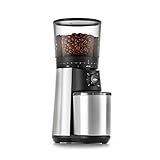
Overview: The OXO Brew Silver is a premium conical burr grinder focused on simplicity and freshness. It caters to coffee lovers who value one-touch operation, bean preservation, and consistent results across diverse brewing methods. What Makes It Stand Out: Its UV-blocking tinted bean hopper uniquely protects beans from light degradation, preserving flavor—a rarity in this category. The “Smart Grind” feature memorizes your last setting, enabling true one-touch operation without resetting dials, streamlining the daily routine. Value for Money: Positioned at a premium price point, it justifies cost through durable stainless steel burrs, the innovative UV hopper, and OXO’s renowned ergonomic design. It competes strongly with grinders $50+ higher by prioritizing essential features over excessive customization. Strengths and Weaknesses: Strengths: Exceptional grind consistency; UV hopper extends bean freshness; intuitive one-touch memory; large 12 oz. hopper capacity; quiet operation. Weaknesses: Only 15 grind settings (less precise than rivals); micro-adjustments require manual tweaking; silver finish shows fingerprints readily. Bottom Line: For those prioritizing bean freshness and effortless daily use over ultra-fine grind granularity, the OXO Brew Silver is a superb, no-fuss investment that delivers café-quality results reliably.
3. Aromaster Conical Burr Coffee Grinder with 25 Grind Settings,Adjustable 2-12 Cups Timer,Coffee Bean Grinder,3-Ear Portafilter Holder, Anti-static Design,Cleaning Brush Included,Black

Overview: The Aromaster grinder targets espresso enthusiasts and home baristas with specialized features like direct portafilter grinding and extensive customization. It balances high adjustability with practical anti-static technology. What Makes It Stand Out: The integrated 51-53mm 3-ear portafilter holder is its hallmark, allowing direct grinding into espresso baskets—saving time and reducing mess. Coupled with 25 precise grind settings and an adjustable 2-12 cup timer, it offers rare specialization for espresso-focused users. Value for Money: Offering portafilter compatibility and 25 settings at a competitive mid-tier price, it provides exceptional value for espresso brewers. The included cleaning brush and 12-month warranty further enhance its cost-effectiveness versus similarly equipped rivals. Strengths and Weaknesses: Strengths: Essential portafilter holder for espresso; wide 25-setting range; effective anti-static design; quiet DC motor; easy disassembly. Weaknesses: Portafilter holder only fits specific 51-53mm models (excludes many); timer less intuitive than cup selectors; brush storage (under lid) is inconvenient. Bottom Line: A must-consider for espresso makers needing direct portafilter grinding, the Aromaster excels in its niche with robust features and solid value, though compatibility checks are essential.
4. KIDISLE Conical Burr Coffee Grinder, Electric Coffee Bean Grinder for Precise Grinding, 35 Settings, 2–12 Cup Selector, Anti-Static Design for Home Use, Black
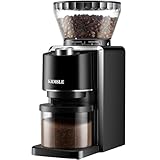
Overview: The KIDISLE grinder emphasizes extreme precision and user visibility with its 35 grind settings and transparent components. It’s built for detail-oriented brewers who demand granular control and real-time monitoring. What Makes It Stand Out: The industry-leading 35 grind settings provide unparalleled micro-adjustment for dialing in perfect extraction, especially for finicky methods like espresso or pour-over. The large transparent hopper and container let users visually track bean levels and grind consistency mid-process. Value for Money: Competitively priced despite its high setting count, it delivers pro-level adjustability typically found in costlier models. The anti-static design and removable parts enhance longevity without inflating the cost, making it a savvy buy for precision seekers. Strengths and Weaknesses: Strengths: Unmatched 35-setting precision; clear visibility of beans/grounds; consistent particle size; compact footprint; effective static reduction. Weaknesses: Transparent plastic may scratch over time; dial controls lack tactile feedback; cup selector less precise than timed grinders. Bottom Line: For coffee aficionados who obsess over grind calibration, the KIDISLE is a high-value powerhouse that offers exceptional control and clarity, justifying its place in serious home setups.
5. OXO Brew Conical Burr Grinder - Matte Black, Stainless Steel Burrs, One-Touch Automatic Smart Grind

Overview: The matte black OXO Brew is a refined variant of OXO’s acclaimed grinder, merging premium aesthetics with functional excellence. It suits users seeking a sleek, high-performance grinder that simplifies daily coffee prep. What Makes It Stand Out: Beyond the signature UV-blocking hopper and one-touch memory, the matte black finish resists smudges and integrates seamlessly into modern kitchens. The 15 grind settings with micro-adjustments offer flexibility without overwhelming complexity. Value for Money: Matching the silver model’s price, the matte black edition adds significant aesthetic appeal while retaining all core functionalities. It remains a strong value against competitors, leveraging OXO’s reliability and the UV protection rarely seen at this tier. Strengths and Weaknesses: Strengths: Stylish, fingerprint-resistant finish; preserves bean freshness via UV hopper; intuitive one-touch operation; consistent grind quality; quiet motor. Weaknesses: Limited to 15 grind settings (fewer than KIDISLE/Aromaster); micro-adjustments require manual tuning; higher price than basic burr grinders. Bottom Line: Choosing style without sacrificing smarts, the OXO Brew Matte Black is a top-tier recommendation for those wanting a dependable, fresh-preserving grinder that elevates their countertop with understated elegance.
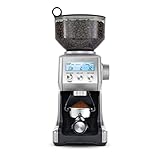
6. Breville BCG820BSS Smart Grinder Pro for Coffee and Espresso, Brushed Stainless Steel
Overview:
The Breville Smart Grinder Pro targets serious coffee enthusiasts seeking precision. This conical burr grinder offers programmable settings for espresso to French press, emphasizing dose accuracy and versatility for home baristas.
What Makes It Stand Out:
Its standout feature is Dosing IQ technology, allowing 0.2-second grind time increments for exact dosing. With 60 grind settings and pre-programmed options, it adapts seamlessly to any brew method. The ability to grind directly into portafilters, containers, or filters enhances workflow efficiency, while stainless steel burrs ensure consistent particle size.
Value for Money:
Priced premium, it justifies cost through unparalleled customization and build quality. Compared to mid-range grinders, its dose precision rivals commercial units, eliminating waste and improving extraction. Ideal for those investing in espresso craft, though overkill for casual drip coffee drinkers.
Strengths and Weaknesses:
Strengths: Unmatched 60 settings; precise Dosing IQ; versatile output options; durable stainless steel construction.
Weaknesses: High price point; complex interface may overwhelm beginners; larger footprint than compact alternatives.
Bottom Line:
A top-tier choice for espresso devotees demanding dose control and consistency. While expensive, its precision justifies the cost for serious home baristas seeking cafe-quality results.
7. OXO Brew Compact Conical Burr Coffee Grinder

Overview:
OXO’s Brew Compact Grinder delivers professional-grade grinding in a space-saving design. Engineered for small kitchens, it balances performance with minimalist aesthetics, targeting users prioritizing consistency and countertop real estate.
What Makes It Stand Out:
Its ultra-slim profile (11" tall, 4" wide) is revolutionary for conical burr grinders. Combined with 15 macro-settings and 29 micro-adjustments, it achieves exceptional uniformity. Removable burrs simplify cleaning, while stainless steel components ensure flavor preservation without excessive heat.
Value for Money:
Offers premium burr performance at a mid-tier price. Though bean capacity (50g) is modest, its space efficiency and grind quality surpass similarly priced competitors. Best for 1-2 cup drinkers; less ideal for large batches but excellent value for compact precision.
Strengths and Weaknesses:
Strengths: Remarkably compact; consistent micro-adjustments; easy maintenance; quiet operation.
Weaknesses: Limited bean capacity (max 6 cups); fewer total settings than high-end models; plastic housing feels less premium.
Bottom Line:
The go-to grinder for small spaces without sacrificing quality. Perfect for singles/couples seeking reliable, consistent grounds where counter space is scarce.
8. Aromaster Burr Coffee Grinder with 48 Gind Settings, Conical Coffee Bean Grinder for Home Use,Stainless Steel,40 Seconds Adjustable Timer,Anti-static,Easy to Clean with Brush

Overview:
Aromaster delivers a feature-rich mid-range grinder focused on accessibility and cleanliness. With 48 settings and anti-static tech, it caters to families and offices needing versatile, low-mess grinding for multiple brew styles.
What Makes It Stand Out:
Upgraded anti-static technology minimizes messy static cling—a rare inclusion at this price. The 40-second timer, large 3.9oz capacity, and UV-resistant bean hopper enhance usability. Removable burrs and included brush simplify maintenance, while stainless steel ensures flavor integrity.
Value for Money:
Strong value for budget-conscious households. At half the price of premium models, it offers ample settings and capacity for families. Voltage limitation (120V only) restricts travel use, but the 1-year warranty and low-maintenance design maximize longevity.
Strengths and Weaknesses:
Strengths: Effective anti-static system; generous capacity; easy cleaning; affordable.
Weaknesses: 120V-only operation; build quality feels utilitarian; timer less precise than digital dose control.
Bottom Line:
An excellent budget pick for families needing reliable, low-fuss grinding. Sacrifices some precision for practicality but excels in cleanliness and value.
9. Ollygrin Burr Coffee Grinder, Electric Conical Coffee Bean Grinder With 30 Adjustable Grind Settings For 2-12 Cups, Sliver & Black

Overview:
Ollygrin focuses on durability and safety for everyday use. Its 30-setting conical burr grinder combines large capacity with protective features, appealing to households wanting consistent results without complexity.
What Makes It Stand Out:
Double safety protection (friction clutch for stone resistance and overheating safeguards) sets it apart. The 40mm stainless steel burrs and gear-reduction motor minimize heat for optimal flavor. A 10oz bean hopper with auto-locking prevents spills during transfer—a thoughtful touch for busy kitchens.
Value for Money:
Competitively priced for its safety innovations and capacity. Outperforms cheaper blade grinders in consistency while undercutting premium burr models. Best for 2-12 cup households prioritizing reliability over micro-adjustments.
Strengths and Weaknesses:
Strengths: Robust safety features; large spill-proof hopper; quiet slow grinding; even extraction.
Weaknesses: Only 30 settings (less granularity than rivals); basic design; limited after-sales visibility.
Bottom Line:
A dependable, safety-first grinder for families. Ideal for those valuing durability and ease of use over espresso-level precision.
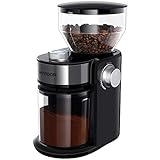
10. SHARDOR Electric Burr Coffee Grinder 2.0, Adjustable Burr Mill with 16 Precise Grind Setting for 2-14 Cup, Black
Overview:
SHARDOR’s minimalist grinder prioritizes simplicity and speed. With 16 settings and a 14-cup capacity, it’s built for quick, consistent grinding across common brew methods, targeting beginners and drip-coffee lovers.
What Makes It Stand Out:
Fully automatic operation requires zero manual intervention—just select cups and grind. Metallic flat burrs (uncommon at this price) ensure uniformity, while removable components (burr, hopper, chamber) with a cleaning brush streamline maintenance. The 2-14 cup selector optimizes portion control.
Value for Money:
Exceptional entry-level value. Flat burrs typically cost more, yet SHARDOR delivers them affordably. Lacks the finesse for espresso but excels at drip/French press. Beats similarly priced conical burr grinders in ease of use for casual drinkers.
Strengths and Weaknesses:
Strengths: True hands-free operation; flat burr consistency; spacious capacity; effortless cleaning.
Weaknesses: Only 16 settings (limited espresso suitability); plastic build feels less durable; no timer for fine-tuning.
Bottom Line:
The best budget pick for automatic, fuss-free grinding. Perfect for beginners or drip-coffee households seeking reliability without complexity.
Understanding Burr Grinders: The Foundation of Espresso Quality
Why Blade Grinders Fail for Espresso
Blade grinders operate like tiny food processors, chopping beans inconsistently with high-speed spinning blades. This creates a chaotic mix of particle sizes—fine powder clumps alongside large chunks—that’s disastrous for espresso. Water will blast through the coarse gaps (channeling) while getting stuck in the fines, leading to uneven extraction, sourness, bitterness, and wasted beans. They also generate excessive heat through friction, scorching delicate coffee oils and altering flavor profiles before brewing even begins. For espresso’s precise demands, blade grinders are simply non-starters.
The Critical Role of Burr Uniformity
Burr grinders use two rotating abrasive surfaces (burrs) to crush beans between them, producing a significantly more uniform particle size distribution. This uniformity is paramount for espresso because it ensures water flows evenly through the entire coffee puck. When particles are consistent, extraction happens simultaneously across all grounds, capturing balanced sweetness, acidity, and body. Inconsistent grinds create weak spots where water rushes through (channeling) and dense zones where extraction stalls, destroying the shot’s harmony. Precision in burr design and alignment directly translates to shot consistency.
Flat Burrs vs. Conical Burrs: Espresso Implications
Both flat and conical burr designs have distinct characteristics affecting espresso performance. Flat burrs typically produce a slightly more uniform particle size distribution ideal for high-pressure espresso, as their parallel surfaces create shearing action. Conical burrs often operate cooler and quieter, with a stepped grinding path that can be gentler on beans, potentially preserving volatile aromatics. While conicals work well for many, serious espresso enthusiasts often lean toward high-quality flat burrs for their edge in grind consistency under 9 bars of pressure. The quality of the burr set (steel grade, machining precision) matters far more than the shape alone.
Key Features That Define an Espresso-Grade Grinder
Burr Size and Material: Beyond the Basics
Burr diameter (typically 40mm to 65mm+) influences grinding speed, heat generation, and consistency. Larger burrs reduce friction per bean, lowering heat and producing more uniform particles crucial for espresso. Material is equally vital: hardened steel offers durability but can impart metallic notes if low-grade; ceramic stays cooler but may be brittle; high-end grinders use specialized alloys like S1 or M30 steel for optimal sharpness, longevity, and flavor neutrality. For espresso, prioritize burrs engineered for precision over sheer size—tight tolerances prevent “fines production” that clogs filters.
Motor Power and Cooling Efficiency
A robust motor (typically 150W+) ensures consistent grinding speed, especially critical for the fine settings required for espresso. Underpowered motors stall when beans meet the burrs, creating uneven friction and heat spikes that cook the coffee. Look for thermal protection and efficient cooling designs (like heat-dissipating housings or airflow channels). Overheating isn’t just about motor longevity; it literally roasts your grounds mid-grind, muting delicate floral or fruity notes essential in specialty espresso. Consistent, cool grinding preserves the bean’s intended flavor spectrum.
Stepless vs. Stepped Grind Adjustment: Precision Matters
Stepped grinders offer preset increments (e.g., 30-40 settings), providing repeatability but limited granularity. Stepless grinders allow infinite micro-adjustments between settings, essential for dialing in espresso where a 0.1mm change can make or break a shot. While stepless demands more user familiarity, it’s invaluable for navigating subtle bean variances (freshness, roast level, origin). High-end stepped grinders now offer ultra-fine increments (60+ steps), narrowing the gap, but true stepless control remains the gold standard for espresso perfectionists seeking absolute precision.
Dosing, Distribution, and Minimizing Waste
The Zero Retention Imperative
Retention—coffee grounds trapped inside the grinder after grinding—is the enemy of freshness and consistency. Old, oxidized grounds mix with fresh ones, skewing flavor and making dialing-in a nightmare. Espresso grinders should feature near-zero retention designs: minimal internal pathways, magnetic or brushless grounds collection, and burr carriers that don’t trap coffee. Even a few grams retained can significantly alter your next shot’s taste, especially with light roasts or sensitive single origins. Check for transparent grounds bins or easy-access burr chambers for visual confirmation.
Static Control: Why Your Grinds Stick to Everything
Static electricity causes fine espresso grounds to cling stubbornly to the grinder’s chute, bin, or even your portafilter, leading to messy dosing, inaccurate weights, and lost coffee. Humidity, bean density, and grinder materials all contribute. Effective static control includes anti-static coatings on chutes, grounded metal components, specialized plastic composites (like acetal), or even ionizing systems. Less static means every gram you grind ends up in your portafilter, ensuring precise dosing and reducing frustrating cleanup that wastes precious grounds.
Integrated Scales and Timers: Consistency Automation
Built-in precision scales (0.1g accuracy) paired with timed grinding eliminate guesswork. Program a dose (e.g., 18g), start the grinder, and it auto-stops when the target weight is reached. This bypasses inconsistent bean density and flow issues inherent in time-only grinding. For espresso, where a 0.5g variance drastically impacts extraction, this integration is transformative. Ensure the scale resets instantly and the timer reacts precisely to avoid under/over-dosing. It’s a game-changer for daily repeatability, especially with variable roast levels.
Noise, Footprint, and Practical Home Use
Managing Noise Levels in Residential Spaces
Espresso grinding is inherently loud due to the fine particle size and high burr speeds required. However, engineering choices significantly impact noise: insulated housings, vibration-dampening feet, and optimized burr geometry can reduce decibels. Look for grinders with sound-shielding enclosures or those specifically marketed as “quiet operation.” While not silent, these designs make early-morning espresso sessions less disruptive to households, proving performance and peace can coexist without sacrificing grind quality.
Space-Saving Designs for Compact Countertops
High-end grinders often have substantial footprints, but clever engineering creates powerful compact models. Consider vertical space (fitting under cabinets), width (sliding between appliances), and portafilter clearance. Some feature swiveling chutes or removable bins for flexibility. Measure your space before buying—nothing derails espresso dreams like a grinder that physically won’t fit your workflow. Prioritize essential features over size, but know that thoughtful design can deliver pro performance in surprisingly small packages.
Ease of Cleaning and Maintenance
Regular cleaning is non-negotiable for espresso grinders. Oils and fines build up rapidly, turning rancid and contaminating fresh shots. Look for grinders with tool-free disassembly: easily removable burr carriers, accessible grinds chutes, and smooth surfaces without crevices. Brush kits and specialized cleaning tablets are essential. Models requiring screws or complex reassembly deter routine maintenance, leading to degraded performance. A grinder that’s a joy to clean ensures it stays a joy to use, preserving flavor integrity shot after shot.
Navigating Price Points and Long-Term Value
The True Cost of “Cheap” Espresso Grinders
Grinders under $150 often cut critical corners: flimsy plastic burrs that dull quickly, undersized motors that overheat, and poor adjustment mechanisms causing inconsistency. While tempting, they actively hinder espresso quality and frustrate users, becoming expensive paperweights. Investing in a capable grinder ($250+) pays dividends through reliable performance, longevity, and the ability to extract the true potential from high-quality beans. Think of it as cost-per-perfect-shot—it quickly becomes negligible compared to the joy of consistent, delicious espresso.
When to Consider Higher Investment Tiers
Mid-range grinders ($300-$500) often deliver the sweet spot for home espresso, balancing performance, features, and durability. However, stepping into the $600+ range unlocks significant upgrades: commercial-grade burrs, advanced static reduction, ultra-precise stepless adjustment, and robust metal construction for decades of service. If espresso is a daily ritual and you value absolute precision and longevity, this tier offers transformative consistency and resilience. It’s less about “luxury” and more about engineering that meets the uncompromising demands of espresso extraction without fatigue.
Warranty and Manufacturer Support Reliability
A strong warranty (2+ years) signals manufacturer confidence in build quality. Pay attention to coverage specifics—does it include burr wear? Motor failure? Look for brands with responsive customer support and accessible spare parts (burrs, brushes, gears). Specialty coffee communities often highlight which companies stand behind their products. Reliable support ensures your investment remains functional for years, avoiding the “orphaned grinder” scenario where a minor failure becomes a total loss due to unavailable parts.
Frequently Asked Questions
What micron size is ideal for espresso?
Espresso requires an extremely fine grind, typically between 200-300 microns. However, the consistency of particles within this range matters far more than hitting an exact micron target. Focus on achieving a uniform texture resembling table salt or fine sand, adjusting based on shot time and taste.
How often should I replace my grinder’s burrs?
Burr lifespan varies by material and usage. Hardened steel burrs in home grinders typically last 500-1000 pounds of beans. Signs of wear include increased fines, inconsistent shots, longer grind times, or visible rounding on burr edges. Regular cleaning extends burr life significantly.
Can I use a conical burr grinder for espresso?
Yes, many high-quality conical burr grinders excel at espresso. While flat burrs are often preferred for ultimate uniformity under pressure, modern precision-engineered conicals with fine adjustment capabilities can produce outstanding espresso. Focus on the grinder’s overall consistency, not just burr shape.
Why does my espresso grinder produce so many fines?
Excessive fines usually indicate burr misalignment, worn burrs, static causing clumping, or grinding too fine for your machine’s pressure. Check for proper burr seating, clean thoroughly, adjust slightly coarser, or ensure your portafilter basket isn’t restricting flow.
How do I reduce static in my grinder?
Strategies include: using anti-static chute coatings, grinding directly into a grounded metal portafilter, lightly dampening beans (controversial), storing beans in airtight containers to control humidity, or using specialized anti-static tools like the Nuova Simonelli Aroma.
Is a doser grinder better for espresso than a doserless?
Doserless grinders are generally preferred for espresso due to significantly lower retention and direct portafilter grinding, minimizing oxidation and waste. Doser grinders introduce extra pathways where coffee can stale, though some high-end models mitigate this.
How fine should my espresso grind be?
Dial in by shot time: aim for 1:2 brew ratio (e.g., 18g in, 36g out) in 25-35 seconds. Grind finer if too fast/sour; coarser if too slow/bitter. The physical texture should feel like fine sand—coarse enough to avoid immediate dripping, fine enough for a thick, honey-like flow.
Do I need a grinder with stepless adjustment for espresso?
While not strictly mandatory, stepless adjustment is highly advantageous for espresso. The ability to make infinitesimal changes allows precise calibration to bean freshness, roast level, and environmental factors, which stepped grinders with coarse increments cannot match.
How important is grind weight accuracy for espresso?
Critical. A variance of even 0.5g in dose or yield drastically alters extraction. Always weigh both input (dose) and output (shot weight) with a 0.1g scale. Timed grinding alone is unreliable due to inconsistent bean flow and density.
Can I grind for other brew methods with an espresso-focused grinder?
Most dedicated espresso grinders can produce coarser settings suitable for pour-over or Aeropress, though they may lack the ultra-coarse range needed for French press. Check the grinder’s adjustment range—if it goes beyond 30 seconds for a single shot, it likely covers versatile brew methods.
See Also
- 10 Essential Ceramic Burr Coffee Grinders Every Enthusiast Needs in 2026
- 10 Best Coffee Grinders After 6 Months of Testing in 2026
- 10 Most Durable Stainless Steel Coffee Grinders Based on Real User Reviews
- 2026’s Top 10 Conical Burr Grinders for Ultra-Precise Grinding
- The 10 Best Coffee Grinders Every First-Time Buyer Needs This Year