Table of Contents
The secret to café-quality coffee at home isn’t just your beans or brewing technique—it’s the water running through your machine. Hard water, chlorine, and mineral buildup are silent killers of both flavor and equipment, turning your morning ritual into a disappointing, bitter experience. While premium filtration systems can cost hundreds, savvy home baristas know that effective protection for your coffee maker and taste buds exists well within a modest budget.
Finding the right water filter under $50 requires understanding what your specific coffee machine needs and what impurities lurk in your tap water. This guide walks you through everything you should consider before making a purchase, from compatibility and filtration technology to long-term maintenance costs that stay hidden until it’s too late. Whether you’re using a drip brewer, single-serve pod system, or manual espresso setup, there’s a budget-friendly solution that doesn’t compromise on performance.
Top 10 Water Filters for Coffee Machines
Detailed Product Reviews
1. 12 Pack Water Filters for Cuisinart Coffee Makers by GoodCups - Replacement Charcoal Water Filters - Fits All Cuisinart Coffee Machines
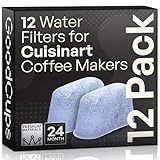
Overview: GoodCups delivers a comprehensive 12-pack solution for Cuisinart coffee maker owners seeking reliable water filtration. These universal replacement charcoal filters promise compatibility across the entire Cuisinart lineup, from classic 12-cup brewers to sophisticated Grind and Brew systems. Designed to strip away impurities that compromise coffee flavor, this bulk pack positions itself as a convenient, long-term maintenance solution.
What Makes It Stand Out: The universal compatibility claim is genuinely comprehensive, covering both newer and legacy Cuisinart models without requiring customers to verify specific part numbers. The optimal water flow design demonstrates thoughtful engineering—preventing clogs while maintaining efficient filtration. Additionally, the environmentally conscious construction using recyclable materials appeals to eco-aware consumers who want to minimize their coffee routine’s environmental footprint.
Value for Money: With 12 filters typically lasting up to a year depending on water hardness, the per-filter cost significantly undercuts OEM alternatives. Bulk packaging reduces waste and ensures you’re always stocked. For households brewing daily, this translates to pennies per pot while delivering comparable filtration performance to pricier brand-name equivalents.
Strengths and Weaknesses: Strengths:
- True universal fit across all Cuisinart models eliminates compatibility guesswork
- Strong absorption capacity effectively removes calcium, chlorine, and odors
- Recyclable materials support sustainable consumption
- Optimal flow design prevents machine performance issues
Weaknesses:
- Brand recognition lags behind Cuisinart OEM filters
- No built-in replacement reminder system
- Packaging less premium than some competitors
Bottom Line: GoodCups offers a practical, eco-friendly filtration solution that delivers reliable performance across all Cuisinart machines. The 12-pack provides excellent long-term value for daily coffee drinkers prioritizing convenience and sustainability over brand prestige.
2. 12 Pack Replacement Charcoal Water Filters for All Cuisinart Coffee Machines - Cuisinart Compatible (NOT KEURIG) Filters Fit Both Newer & Older Models Cuisinart Coffee Makers

Overview: This 12-pack of generic charcoal water filters targets budget-conscious Cuisinart owners with a straightforward, no-frills approach to water filtration. Explicitly designed for drip coffee makers (not Keurig systems), these filters provide a cost-effective alternative to manufacturer-branded replacements. The product emphasizes universal compatibility with an extensive list of specific model numbers for consumer confidence.
What Makes It Stand Out: The exhaustive compatibility list spanning dozens of specific Cuisinart model numbers removes purchase uncertainty. Measuring approximately 1-7/8" x 3/4" x 1", the filters provide precise dimensional verification. The “meets or exceeds original performance standard” claim, combined with monthly replacement guidance, establishes clear expectations for maintenance schedules and performance benchmarks.
Value for Money: This represents one of the most economical options on the market, with per-filter costs often 50-70% below OEM pricing. The 12-pack quantity provides a full year’s supply for most households, making it ideal for heavy coffee drinkers or those with hard water requiring more frequent changes. The value proposition is undeniable for price-sensitive consumers.
Strengths and Weaknesses: Strengths:
- Exceptional affordability without sacrificing basic filtration
- Comprehensive model compatibility list eliminates guesswork
- Simple installation process requires no tools
- Dimensions clearly specified for verification
Weaknesses:
- Generic branding may concern quality-focused buyers
- No third-party certifications mentioned (NSF, etc.)
- Basic packaging lacks premium feel
- Limited information on filter material sourcing
Bottom Line: An unbeatable budget option for Cuisinart drip coffee maker owners comfortable with generic alternatives. While lacking premium certifications, the extensive compatibility list and rock-bottom pricing make this an intelligent choice for practical consumers prioritizing function over branding.
3. AQUA CREST Coffee Water Filter, Replacement for KitchenAid® KESWF filter, Krups® F088 Filter, Melitta® 192830 Pro Aqua, Bosch®, Siemens®, TÜV SÜD Certified, 2 Packs
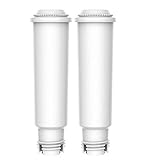
Overview: AQUA CREST targets European coffee machine owners with a premium two-pack filtration solution certified for KitchenAid, Krups, Bosch, and Siemens systems. This filter distinguishes itself through third-party validation and high-quality materials. Unlike bulk packs, this offering focuses on quality over quantity, appealing to owners of high-end espresso and automatic coffee machines who demand verified performance.
What Makes It Stand Out: TÜV SÜD certification provides independent verification of safety and performance—a rare credential in this category. The natural coconut shell activated carbon combined with ion exchange resin represents premium filtration technology. The visual time window on the filter cap is a standout feature, offering intuitive replacement tracking without relying on memory or manual calendars.
Value for Money: While the two-pack configuration yields a higher per-filter cost than bulk alternatives, the premium materials and certification justify the investment for expensive European machines. Each filter lasts up to two months, providing four months of coverage. For owners of $500+ espresso machines, this modest premium protects their significant investment.
Strengths and Weaknesses: Strengths:
- TÜV SÜD certification ensures verified performance standards
- Premium coconut shell carbon and ion exchange resin filtration
- Visual time window simplifies maintenance tracking
- Compatible with multiple premium European brands
Weaknesses:
- Only two filters per package limits long-term value
- Requires presoaking before installation
- Narrow compatibility excludes popular American brands
- Higher upfront cost than generic alternatives
Bottom Line: AQUA CREST is the premium choice for European coffee machine owners who prioritize certified quality and intelligent design. The TÜV SÜD certification and visual replacement indicator make it worth the modest premium to protect high-value equipment.
4. Water Filter Replacement for Breville Espresso Machine Barista Touch BES880, Barista Touch Impress BES881, Oracle Touch BES990, Oracle BES980, Dual Boiler BES920 Bambino ClaroSwiss Sage, Pro BES878

Overview: This four-pack delivers precision-engineered filtration specifically for Breville’s premium espresso machine lineup, including Barista Touch, Oracle, and Dual Boiler series. Designed as a direct replacement for Breville part #BES008WHT0NUC1, these filters address the unique water chemistry requirements of high-pressure espresso extraction. The package provides a full year’s supply for most home baristas.
What Makes It Stand Out: The Breville-specific formulation combines coconut-activated carbon adsorption with ion exchange technology to stabilize calcium carbonate—critical for preventing scale in thermocoil heating systems. The monthly tracker dial integrated into each filter provides visual replacement reminders. FSC-certified paper construction demonstrates environmental responsibility uncommon in espresso machine accessories.
Value for Money: Four filters lasting three months each create a complete annual maintenance kit at a fraction of OEM pricing. Given that Breville espresso machines represent $500-$2,500 investments, this modest protective expense prevents costly descaling procedures and maintains optimal brewing temperature stability. The per-filter cost savings versus official Breville replacements is substantial.
Strengths and Weaknesses: Strengths:
- Perfect compatibility with specified Breville models ensures proper fit
- Advanced formulation protects sensitive thermocoil systems
- Annual supply packaging eliminates frequent reordering
- Environmental certification (FSC) adds sustainability appeal
- Monthly tracker dial prevents overdue replacements
Weaknesses:
- Brand-specific design limits cross-compatibility
- Requires 5-10 minute soaking and squeezing before use
- Slightly more expensive than universal generic filters
- Packaging could be more compact for storage
Bottom Line: Essential maintenance for Breville espresso machine owners who want OEM-level protection without the premium price. The specialized formulation and annual supply packaging make this a smart investment for preserving coffee quality and machine longevity.
5. Cuisinart® Coffee Filter Replacement - 12 Pack Cuisinart® Coffee Maker Water Filter by Pureline - Charcoal Water Filter - for all Cusinart Coffee Machines
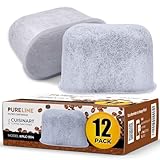
Overview: Pureline positions itself as a premium alternative to OEM Cuisinart filters with this NSF-certified 12-pack. The brand emphasizes safety and quality assurance through independent certification while maintaining universal compatibility across Cuisinart’s entire coffee maker range. Individual wrapping and box packaging signal a commitment to product integrity from factory to consumer.
What Makes It Stand Out: NSF-42 certification is the key differentiator, independently verifying material safety and chlorine taste/odor reduction claims. The meticulous packaging—individually wrapped filters shipped in a protective box rather than a bag—prevents contamination and damage during transit. Pureline bridges the gap between generic affordability and OEM quality assurance.
Value for Money: While priced slightly above generic unbranded alternatives, the NSF certification provides tangible quality validation that justifies the modest premium. The 12-pack quantity delivers a year’s supply for typical households, reducing per-filter cost significantly versus buying OEM singles or three-packs. For safety-conscious families, the certification offers peace of mind worth the small upcharge.
Strengths and Weaknesses: Strengths:
- NSF-42 certification ensures verified safety and performance
- Individually wrapped filters maintain hygiene and freshness
- Sturdy box packaging prevents shipping damage
- Universal compatibility across all Cuisinart machines
- Protects machine lifespan by preventing mineral buildup
Weaknesses:
- Higher price point than non-certified generic options
- No visual replacement indicator built into filters
- Brand recognition still developing compared to OEM
- Limited information on filter lifespan under hard water conditions
Bottom Line: Pureline is the ideal middle-ground choice for Cuisinart owners wanting certified quality without paying OEM premiums. The NSF certification and superior packaging make this the smart choice for households prioritizing water safety and product integrity.
6. De’Longhi Replacement Water Filter for Select Espresso Machines, DLSC002

Overview: The De’Longhi DLSC002 is the official water filtration solution designed specifically for De’Longhi espresso machines. As the market leader in espresso equipment, De’Longhi engineered this filter with dual-action technology to optimize water quality and protect your investment. The filter combines activated carbon with ion exchange resin, addressing both taste impurities and harmful scale buildup in one cartridge.
What Makes It Stand Out: This genuine OEM filter distinguishes itself through proprietary ion exchange technology that softens water and reduces descaling frequency by approximately 20 percent. The integrated date dial eliminates guesswork, allowing users to track replacement timing accurately. Unlike generic alternatives, it’s precision-engineered for seamless integration with De’Longhi’s coupling system, ensuring consistent performance without leaks or bypass issues.
Value for Money: While priced at a premium compared to universal filters, the DLSC002 delivers measurable returns through extended machine longevity and reduced maintenance costs. The 20% reduction in descaling translates to tangible savings on descaling solutions and service calls. Given that De’Longhi machines represent significant investments, spending slightly more on authentic filters protects that capital outlay effectively.
Strengths and Weaknesses: Strengths include official manufacturer backing, proven dual-filtration technology, descaling reduction benefits, date tracking convenience, and guaranteed compatibility. The two-month lifespan is standard for active carbon filters. Weaknesses center on higher per-unit cost and brand exclusivity—it only fits select De’Longhi models, limiting cross-brand utility. Generic options exist at lower price points but lack the ion exchange feature.
Bottom Line: For De’Longhi espresso machine owners, this official filter is a worthwhile investment that pays dividends through enhanced performance and reduced maintenance. The descaling benefits alone justify the modest price premium over third-party alternatives.
7. 12-Pack Replacement Charcoal Water Filter Discs for Mr. Coffee Brewers Coffee Machines

Overview: This bulk package delivers twelve disc-shaped charcoal water filters engineered for Mr. Coffee brewing systems. Designed as a cost-effective alternative to OEM filters, these cartridges target the common contaminants that compromise coffee flavor, including chlorine, calcium deposits, and odors. The disc format specifically accommodates the vertical filter holders found across numerous Mr. Coffee drip machine models.
What Makes It Stand Out: The exceptional value proposition of twelve filters provides a full year of supply when following the recommended thirty-day replacement cycle. This eliminates frequent reordering and ensures consistent water treatment. The specialized disc shape demonstrates thoughtful compatibility design, preventing installation errors that can occur with improperly sized generic filters. Performance claims meet or exceed original equipment specifications.
Value for Money: With per-filter cost dropping below a dollar in most retail channels, this 12-pack represents outstanding economy. The thirty-day replacement frequency, while more frequent than some alternatives, is offset by the low individual price point. For households brewing daily, the annual cost remains competitive despite monthly changes. Compared to single-filter packages, the bulk offering reduces per-unit price by 40-60%.
Strengths and Weaknesses: Strengths include unbeatable bulk pricing, precise Mr. Coffee compatibility, easy installation, and performance that matches OEM standards. The twelve-count provides uninterrupted supply. Weaknesses involve the shorter one-month lifespan requiring more frequent changes, generic branding that may concern purists, and the disc shape’s exclusivity to Mr. Coffee systems. Packaging lacks advanced features like date indicators.
Bottom Line: This 12-pack is an economical, reliable choice for Mr. Coffee owners seeking hassle-free, year-long filtration. The convenience and savings far outweigh the minor inconvenience of monthly replacements.
8. Coffee Filter Compatible with Philips AquaClean,CA6903(2 Pack) Aqua Clean Water Filter for Fully Automatic Coffee Machines Dedicated Anti-Lime Scale Water
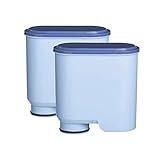
Overview: This two-pack offers third-party compatibility with Philips’ premium AquaClean filtration system, targeting owners of Saeco and Philips automatic espresso machines. The filters employ activated carbon particles combined with scale-inhibiting technology to address water hardness and taste impurities simultaneously. Engineered for high-end super-automatic machines, they aim to replicate OEM performance at reduced cost.
What Makes It Stand Out: The comprehensive compatibility list spanning multiple series—from Incanto to Xelsis models—demonstrates extensive engineering research. The three-month replacement interval exceeds standard carbon filters, reducing maintenance frequency. The anti-lime scale formulation specifically protects the complex internal tubing and thermoblock systems found in automatic machines, where scale causes catastrophic failures.
Value for Money: While containing only two filters versus bulk alternatives, the extended 90-day lifespan improves cost-per-day metrics. The pricing typically runs 30-40% below official Philips cartridges, offering meaningful savings over a machine’s lifetime. For automatic espresso machines costing $500-$2000, investing in proper filtration—even at OEM prices—pales compared to repair expenses from scale damage.
Strengths and Weaknesses: Strengths include broad model compatibility, triple-month lifespan, dual-action filtration, scale prevention focus, and significant cost savings over OEM. The two-count suits users preferring fresh filters over bulk storage. Weaknesses are the higher upfront cost per filter compared to twelve-packs, generic branding that may void warranties, and lack of Philips’ proprietary micro-purity features. Users must verify exact model fit.
Bottom Line: For Philips and Saeco automatic machine owners, this compatible two-pack balances performance, convenience, and value. The extended lifespan and scale protection make it a prudent alternative to pricier OEM filters.
9. Premium 12-Pack Replacement Charcoal Water Filters for Keurig Coffee Machine
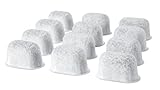
Overview: This twelve-pack delivers generic charcoal filtration for a wide spectrum of Keurig brewing systems, covering both 1.0 and 2.0 platforms. Each cartridge utilizes activated carbon to reduce chlorine, calcium, and odors that detract from coffee quality. The packaging provides a full year’s supply based on standard two-month replacement cycles, catering to the massive installed base of Keurig home brewers.
What Makes It Stand Out: Individual foil sealing for each filter preserves freshness and prevents premature saturation during storage—a thoughtful touch rarely seen in bulk packs. The broad compatibility encompassing Elite, Classic, Ultra, Special Edition, Ultimate, Platinum, and multiple K-Series models eliminates guesswork for most Keurig owners. Performance specifications directly mirror Keurig’s official filters.
Value for Money: The per-filter price typically undercuts OEM cartridges by 50-70%, delivering exceptional annual savings without sacrificing quality. With twelve units providing up to 24 months of filtration, the cost-to-convenience ratio is compelling. For households with hard water, the ability to replace more frequently without financial penalty improves machine protection and beverage taste.
Strengths and Weaknesses: Strengths include outstanding bulk value, comprehensive Keurig compatibility, individual sealing for freshness, and performance parity with OEM. The twelve-count ensures uninterrupted supply. Weaknesses involve generic status that may concern warranty-conscious buyers, lack of Keurig branding, and absence of advanced features like water hardness indicators. Some very old or new models may not be supported.
Bottom Line: This 12-pack is a no-brainer for Keurig owners seeking reliable filtration at fraction of OEM cost. The individual sealing and broad compatibility make it a practical, high-value choice.
10. 12-Pack Replacement Charcoal Water Filters for Use with Cuisinart coffee machines
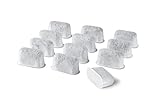
Overview: This comprehensive set provides twelve charcoal water filters compatible with numerous Cuisinart coffee maker series, including Grind & Brew, Burr Grind & Brew, Single Cup, Programmable, and PerfecTemp models. The filters target impurities like chlorine, calcium, and odors to enhance coffee flavor and protect internal components. The packaging emphasizes organization and user guidance.
What Makes It Stand Out: The inclusion of a dedicated storage box with instructions demonstrates uncommon attention to user experience. Each filter’s individual packaging ensures freshness, while the box provides organized, protected storage—particularly valuable in humid environments. The compatibility list covers Cuisinart’s most popular brewing systems, making it a versatile choice for brand loyalists.
Value for Money: Offering per-filter costs 60-70% below OEM Cuisinart cartridges, this pack delivers substantial annual savings. The two-month replacement guideline means twelve filters provide two full years of coverage, amortizing cost to mere cents per day. The added value of storage packaging and instructions enhances the proposition beyond raw filter count.
Strengths and Weaknesses: Strengths include exceptional bulk pricing, smart protective packaging, clear instructions, wide Cuisinart compatibility, and two-year supply duration. The filtration performance meets OEM standards for taste improvement. Weaknesses are generic manufacturing status, potential warranty implications, lack of Cuisinart branding, and absence of date-tracking features. Some niche Cuisinart models may require verification.
Bottom Line: For Cuisinart coffee maker owners, this thoughtfully packaged 12-pack offers unbeatable value and convenience. The storage box and two-year supply make it a supremely practical choice.
Why Water Quality Directly Impacts Your Coffee Experience
Your coffee is 98% water, which means every dissolved mineral and contaminant in your tap water ends up in your cup. Chlorine and chloramine disinfectants create medicinal off-flavors that mask delicate bean notes, while excessive hardness minerals like calcium and magnesium cause scale buildup that insulates heating elements and clogs water lines. This doesn’t just ruin extraction temperatures—it shortens your machine’s lifespan dramatically.
The Science Behind Extraction
Proper extraction relies on water chemistry acting as a solvent. Ideally balanced water with moderate mineral content helps dissolve desirable coffee compounds while leaving undesirable ones behind. Too pure (like distilled water) creates flat, lifeless coffee because it lacks the ions needed for proper extraction. Too hard, and you get under-extraction with bitter, astringent flavors dominating the cup. Budget filters strike this balance by selectively removing harmful contaminants while preserving beneficial minerals.
How Impurities Affect Flavor
Chlorine hits your palate first with swimming pool-like notes that destroy subtle floral and fruity undertones. Iron and manganese introduce metallic tastes, while organic compounds create musty or earthy flavors. Sediment particles cause gritty texture and uneven extraction. Scale buildup inside your machine creates channeling where water flows through paths of least resistance, leaving some grounds over-extracted and others under-extracted. A quality budget filter addresses these issues systematically.
Understanding Different Coffee Machine Water Filter Types
Not all coffee machine filters work the same way, and the type you need depends heavily on your specific brewer design. The three main categories each have distinct advantages for home users watching their spending.
Inline vs. Reservoir Filters
Inline filters connect directly to your water line or sit between the tank and pump, treating all water entering the machine. They’re ideal for plumbed-in espresso machines or brewers with direct water connections. Reservoir filters drop into the machine’s water tank, treating water as it sits before brewing. These are perfect for most home drip machines and single-serve brewers. Inline systems typically last longer but may require basic plumbing comfort, while reservoir filters offer tool-free convenience.
Activated Carbon Technology
The workhorse of budget filtration, activated carbon uses millions of microscopic pores to trap contaminants through adsorption. One gram of quality activated carbon has a surface area larger than a football field. This material excels at removing chlorine, chloramine, volatile organic compounds, and unpleasant odors. For coffee applications, look for carbon blocks rather than granular carbon—they provide more consistent contact time and better filtration without significantly slowing flow rates.
Ion Exchange Resins
These tiny beads swap hardness minerals (calcium and magnesium) for sodium or potassium ions, effectively softening water without removing all mineral content. Many budget filters combine carbon with ion exchange resin in a single cartridge, offering comprehensive treatment. The resin’s capacity is finite, so pay attention to grain capacity ratings—higher numbers mean longer life before the filter stops softening effectively.
Key Features to Consider in Budget Filters
Spending under $50 doesn’t mean settling for ineffective filtration. Focus on these measurable characteristics to separate genuine value from cheap disappointments.
Micron Rating and Filtration Levels
Micron ratings indicate the smallest particle size a filter captures. For coffee machines, 5-10 micron filtration prevents sediment from reaching sensitive valves and heating elements without restricting water flow. Some budget options offer 0.5-1 micron ratings that also remove cysts and some bacteria, but these may slow brewing times noticeably. Match the micron rating to your water quality—municipal water typically needs 5-10 microns, while well water might require finer filtration.
Flow Rate and Pressure Requirements
Your filter shouldn’t make you wait excessively for a full tank or reservoir. Quality budget filters maintain flow rates of 0.5-1 gallon per minute, ensuring your morning routine stays efficient. For espresso machines requiring 9+ bars of pressure, ensure the filter doesn’t create significant pressure drops. Check specifications for maximum pressure ratings—most home coffee filters handle up to 100 PSI comfortably, but verifying prevents performance issues.
Filter Lifespan and Capacity
Budget filters typically last 2-6 months or process 20-100 gallons before requiring replacement. Calculate your household’s coffee consumption—if you brew two full 12-cup pots daily, that’s roughly 1.5 gallons, meaning a 40-gallon capacity filter needs replacement monthly. Some under-$50 options offer 100+ gallon capacities, providing better long-term value despite slightly higher upfront costs. Always verify lifespan claims against independent user reviews.
Installation and Compatibility Considerations
A filter that doesn’t fit your machine or requires expensive adapters defeats the budget-friendly purpose. Understanding compatibility before purchasing saves frustration and return shipping costs.
Universal vs. Brand-Specific Designs
Universal filters with standard 1/4-inch or 3/8-inch fittings work across multiple machine types and brands, offering flexibility if you upgrade equipment later. Brand-specific filters guarantee perfect fit but lock you into one manufacturer’s ecosystem, often at premium replacement costs. For budget-conscious buyers, universal systems typically provide better long-term value, especially when replacement cartridges cost under $10 each.
Tool-Free Installation Systems
Many sub-$50 filters now feature push-to-connect fittings that require no wrenches or plumbing tape. These systems use collet rings that grip tubing securely while allowing easy removal for maintenance. Look for filters with clear installation diagrams and color-coded inlet/outlet ports. Some include mounting brackets that attach to cabinet walls or machine backs with adhesive pads, eliminating drilling and permanent modifications.
Replacement Indicator Systems
Budget filters increasingly include simple mechanical or electronic indicators that track usage time or water volume. Mechanical timers rotate a dial when you open the reservoir lid, while electronic models use conductivity sensors to measure filter saturation. Though not essential, these features prevent premature replacements (wasting money) or delayed changes (risking equipment damage). Manual tracking in a calendar app works equally well if the filter lacks built-in indicators.
Maintenance and Long-Term Cost Analysis
The true cost of a water filter extends far beyond the initial purchase price. Smart budget shoppers calculate total ownership costs over a year to find real savings.
Cleaning vs. Replacing Components
Some budget systems feature reusable housings with replaceable cartridges, while others are disposable units. Reusable systems cost more initially but reduce waste and long-term expenses—replacement cartridges often cost 60-70% less than complete filter units. Check if the housing withstands multiple cartridge changes without cracking or leaking. Dishwasher-safe components simplify maintenance and ensure thorough cleaning.
Storage and Handling Best Practices
Store replacement filters in cool, dry places away from direct sunlight. Extreme temperatures degrade activated carbon and ion exchange resins prematurely. Keep filters in sealed packaging until installation to prevent contamination and premature saturation from humidity. If storing a machine long-term, remove the filter, allow it to air dry completely, and store it separately to prevent mold growth inside the housing.
Signs Your Filter Needs Replacement
Decreased water flow during brewing indicates clogging from sediment or exhausted carbon. Return of chlorine taste or odor means the carbon is saturated. Visible scale formation on heating elements suggests the ion exchange resin is spent. Some advanced budget filters include transparent sections showing color changes as media exhausts—darkening carbon or yellowing resin signals replacement time. Don’t wait for complete failure; schedule replacements based on capacity, not just time.
Performance Metrics to Evaluate
Objective measurements separate marketing hype from genuine filtration performance. Learn which specifications matter for coffee applications.
Certification Standards to Look For
NSF International certifications provide independent verification of filter claims. NSF/ANSI 42 covers aesthetic effects like chlorine taste and odor removal. NSF/ANSI 53 addresses health-related contaminants including lead and cysts. For coffee machines, NSF/ANSI 372 certifies lead-free construction. Budget filters under $50 can achieve these certifications—absence of certification doesn’t mean poor performance, but its presence guarantees tested results.
Total Dissolved Solids (TDS) Management
TDS meters measure all dissolved substances in water, but lower isn’t always better for coffee. Ideal brewing water TDS ranges from 75-250 ppm. Budget filters should reduce TDS from very hard water (300+ ppm) to this sweet spot without stripping it to near-zero. Check product specifications for “TDS reduction percentage” rather than absolute values. Some budget filters include TDS test strips to verify performance.
pH Balance and Corrosion Prevention
Over-filtration can create acidic water (pH below 6.5) that corrodes copper boilers and aluminum components. Quality budget filters include mineral cartridges or alkaline media that stabilize pH between 6.5-8.5. This protects your machine while improving coffee extraction. If your filtered water tastes sharp or metallic, test pH levels—adding a small calcite cartridge (often under $15) can correct acidity without replacing the entire system.
Common Mistakes to Avoid
Even the best budget filter fails when installed or used improperly. Sidestep these frequent errors that waste money and damage equipment.
Oversized Filter Systems
Installing a whole-house filter or large under-sink system designed for drinking water often creates pressure drops and flow issues in coffee machines. These systems may also over-purify water, stripping beneficial minerals. Stick to filters specifically rated for appliance use or those with bypass valves that blend filtered and unfiltered water to achieve ideal mineral content.
Ignoring Pre-Filter Requirements
Very hard or sediment-heavy water can exhaust primary filters prematurely. Budget pre-filters costing under $10 can extend main filter life by 2-3 times. Sediment pre-filters catch sand and rust, while simple charcoal pre-filters handle initial chlorine loads. This two-stage approach often costs less than replacing a single premium filter more frequently.
Improper Priming Procedures
New filters contain manufacturing dust and air pockets that affect water flow and taste. Always flush new filters with 2-3 gallons of water before first coffee brew. Some budget filters include priming buttons or require soaking for 15 minutes. Skipping this step results in carbon fines in your coffee (black specks) and reduced filtration efficiency. The few minutes spent priming prevent weeks of poor performance.
DIY Solutions and Alternatives
Commercial filters aren’t the only option for budget-minded coffee lovers. Several effective alternatives exist for under $50 total investment.
Remineralizing Distilled Water
Distilled water costs about $1 per gallon and is completely pure, but it extracts coffee poorly and can damage machines. Adding third-wave water mineral packets (roughly $0.15 per gallon) creates perfect brewing water. This approach eliminates scale issues entirely while giving precise control over mineral content. The total setup—distilled water plus minerals—remains well under $50 for months of supply.
Homemade Charcoal Filtration
Food-grade activated charcoal in bulk costs under $15 for a pound, enough for multiple filter batches. Filling a reusable mesh bag with charcoal and placing it in your machine’s reservoir provides basic chlorine removal. Replace the charcoal monthly. While lacking precision, this method dramatically improves taste for extremely tight budgets. Ensure the charcoal is specifically labeled “food-grade” to avoid contaminants.
Bottled Water Selection Strategy
Not all bottled waters suit coffee machines. Look for “spring water” with mineral content listed on the label, avoiding “purified” or “distilled” varieties. Brands with TDS between 100-200 ppm and moderate hardness (50-100 mg/L calcium carbonate) work excellently. Buying in 5-gallon jugs reduces costs to under $0.30 per gallon—competitive with filter replacement costs for light coffee drinkers.
Environmental Considerations
Budget filtration shouldn’t come at an environmental premium. Eco-conscious choices save money and reduce waste simultaneously.
Recyclable and Biodegradable Options
Some budget filter cartridges use recyclable plastic housings and biodegradable carbon blocks. Check manufacturer take-back programs—several offer free shipping for used cartridges, which they recycle into new products. This eliminates landfill waste and sometimes provides discounts on future purchases. Compostable carbon blocks can be emptied into garden soil after use, improving drainage and odor control.
Carbon Footprint of Manufacturing
Locally manufactured filters reduce transportation emissions and often cost less due to lower shipping expenses. Bulk purchasing replacement cartridges (6-12 packs) cuts packaging waste by up to 70% and reduces per-unit costs significantly. Many budget retailers offer subscription services that automatically ship replacements at optimal intervals, preventing emergency rush shipping with higher carbon impacts.
Water Waste and Efficiency
Reverse osmosis systems waste 3-4 gallons for every gallon filtered—terrible for both environment and water bills. Budget carbon and ion exchange filters waste virtually no water. Some advanced budget models include backflush capabilities that clean the filter with a small amount of water, extending life without significant waste. Avoid systems requiring constant dripping or drainage unless water conservation isn’t a concern.
Troubleshooting Common Issues
Even properly installed filters occasionally cause problems. Quick diagnosis prevents unnecessary replacements and frustration.
Slow Flow or Pressure Drop
If water trickles after filter installation, check for kinked tubing or clogged pre-filters. Remove the filter and test flow—if it improves dramatically, the filter is either defective or requires priming. Some budget filters include flow restrictors to ensure adequate contact time; removing these voids warranties but can solve pressure issues in low-pressure plumbing systems. Never exceed the filter’s rated flow rate, as this bypasses filtration entirely.
Persistent Taste or Odor Problems
Chlorine taste returning before the rated lifespan indicates high chlorine levels in your water supply. Contact your municipality for water quality reports—some areas use chloramine, which requires catalytic carbon rather than standard activated carbon. A secondary small carbon filter (under $10) installed before the main filter can handle exceptional contaminant loads without replacing the entire system.
Leaks at Connection Points
Push-to-connect fittings leak when tubing isn’t cut perfectly square or isn’t fully inserted. Use a tubing cutter rather than scissors for clean cuts. Ensure tubing is pushed in until you feel two distinct clicks, then tug gently to verify engagement. If leaks persist, the O-ring may be damaged—most budget filters include spare O-rings, or you can purchase universal replacement packs for under $5.
Maximizing Your Filter’s Lifespan
Stretching filter life beyond rated capacity saves money without compromising protection. These techniques work specifically with budget systems.
Seasonal Water Quality Variations
Municipal water sources often change seasonally—algae blooms in summer increase chlorine levels, while spring runoff adds sediment. Adjust replacement schedules accordingly, changing filters more frequently during high-contaminant periods. Some budget filters include seasonal adjustment dials that modify capacity ratings based on water hardness settings you input.
Flushing Protocols for Extended Use
Running a gallon of water through the filter backward (if design permits) dislodges trapped sediment and extends life by 20-30%. Only do this with filters explicitly designed for backflushing to avoid damaging internal media. For standard filters, occasionally filling the reservoir and immediately discarding the first cup of filtered water clears surface debris from the filter’s inlet side.
Combining Filtration Methods
Using a simple pitcher filter to pre-treat water before adding it to your coffee machine’s reservoir dramatically extends the machine filter’s life. This two-stage approach costs less than upgrading to a premium filter and provides better overall purification. The pitcher handles bulk chlorine and sediment, while the machine filter polishes water and manages final mineral balance.
When to Upgrade Beyond Budget Options
Sometimes a $50 filter isn’t enough. Recognizing these situations prevents equipment damage and ongoing frustration.
Extreme Hardness Challenges
Water exceeding 400 ppm hardness exhausts ion exchange resin in weeks rather than months. In these cases, a dedicated water softener (even a portable unit under $100) becomes more economical long-term. Test your water first—if hardness exceeds 300 ppm, calculate monthly filter costs versus a softener’s 5-year lifespan. The break-even point often occurs within 8-12 months for heavy coffee drinkers.
Well Water Complications
Well water frequently contains iron, sulfur, and bacteria that budget filters aren’t designed to handle. Iron stains equipment and ruins flavor, while sulfur creates rotten egg odors. Budget filters may remove small amounts but clog rapidly. Well users should invest in dedicated whole-house pre-filtration (sediment and iron filters) before using a coffee machine filter, or switch to bottled/distilled water with remineralization.
Commercial-Scale Usage
Home filters aren’t built for office environments or large families brewing 10+ pots daily. Exceeding flow rate ratings causes channeling where water bypasses filtration media. If your household consumes over 2 gallons of coffee daily, consider a small commercial system rated for 1,000+ gallons. The initial $150-200 investment pays for itself within a year compared to replacing home filters weekly.
Frequently Asked Questions
How do I know if my coffee machine even needs a water filter?
If you notice scale buildup on heating elements, chlorine taste in brewed coffee, or your machine’s warranty requires filtered water, you need filtration. Test your water’s hardness and chlorine levels using $10 home test kits—hardness over 120 ppm or chlorine over 0.5 ppm warrants filtration.
Can I use the same filter for my coffee machine and drinking water?
Yes, if the filter uses standard NSF certifications for both aesthetic and health contaminants. However, coffee-specific filters optimize mineral content for extraction, while drinking water filters may strip too many minerals. Using a drinking water filter won’t harm your machine but might produce flat-tasting coffee.
What’s the real difference between a $15 and $50 coffee water filter?
Price differences typically reflect capacity, certification, and multi-stage filtration. A $15 filter might handle 20 gallons and basic chlorine removal, while a $50 filter could process 100 gallons, remove lead, and include scale prevention. Both work, but the $50 option usually costs less per gallon over time.
Will a budget filter void my coffee machine’s warranty?
Using any filter generally won’t void warranties, but failing to use one when required might. Some manufacturers specify approved filter models, but this is rare for home machines. Keep purchase receipts and change filters on schedule to prove proper maintenance if warranty issues arise.
How often should I really replace a budget filter if I brew occasionally?
Follow the manufacturer’s gallon capacity rating rather than time. If you brew only weekend pots, a 40-gallon filter might last 6 months. Mark your calendar when installation reduces flow or taste changes, then calculate your actual usage pattern for future replacements.
Can I clean and reuse a disposable coffee machine filter?
No—attempting to clean exhausted carbon or ion exchange resin is ineffective and risks bacterial growth. The media’s pores clog permanently with contaminants, and washing can’t restore chemical binding sites. Reusable housings are designed for cartridge replacement only.
Do budget filters remove beneficial minerals along with contaminants?
Quality budget filters are selective—they target harmful contaminants while preserving beneficial minerals. Activated carbon doesn’t remove hardness minerals, and ion exchange only replaces problematic calcium/magnesium with sodium. Your water retains the mineral content ideal for coffee extraction.
What’s the easiest way to test if my filter is still working?
Use chlorine test strips monthly—if they detect chlorine, the carbon is exhausted. For hardness, compare TDS readings before and after filtration; a working ion exchange resin will show 10-20% lower TDS. Sudden flow rate drops also indicate it’s time for replacement.
Are pitcher filters a viable alternative to machine-specific filters?
Pitcher filters work excellently for pre-treating water before adding it to your machine’s reservoir. They typically cost less than machine-specific filters and remove similar contaminants. The downside is the extra step of manual filling, but the savings often justify the minor inconvenience.
Can hard water damage my coffee machine even with a filter?
If the filter’s capacity is exhausted or it’s not rated for your water’s hardness level, scale will still form. Budget filters prevent damage when maintained properly, but they’re not magic. In extremely hard water areas, pair a budget filter with descaling every 1-2 months for complete protection.
See Also
- 10 Must-Have Ceramic Espresso Cups for Daily Use in 2026
- How to Solve Poor-Tasting Coffee with the 10 Best Water Filter Cartridges in
- 10 Premium Travel Coffee Mugs for Professionals (Worth the Investment)
- 10 Best Pod Machine Descaling Solutions for Keurig and Similar Systems in 2026
- 10 Essential Water Filters for Coffee Machines Every Café Owner Needs in 2026