Table of Contents
There’s something undeniably magical about pulling a perfect espresso shot in your own kitchen—crema glistening like liquid amber, the rich aroma filling the air, and that complex symphony of flavors unfolding on your palate. For home baristas, the dream has evolved beyond basic pod machines; it’s about replicating the precision, power, and artistry of a specialty café right at home. Today’s enthusiast isn’t just brewing coffee—they’re crafting an experience, demanding the same engineering rigor and thermal stability that defines professional environments. The line between commercial and residential espresso has blurred, with advanced features once reserved for $10,000+ machines now accessible to those serious about their daily ritual.
This shift isn’t just about prestige; it’s driven by tangible advancements in home espresso technology and a deeper understanding of what truly impacts extraction quality. Home baristas in 2026 know that consistent temperature control, robust steam pressure, and durable construction aren’t luxuries—they’re non-negotiables for dialing in nuanced single-origin beans or creating silky microfoam for lattes. Yet navigating this landscape requires more than just budget considerations; it demands insight into thermodynamics, workflow integration, and long-term usability. Forget fleeting trends—this guide cuts through the noise to outline the essential capabilities every discerning home user should prioritize when investing in a machine built to elevate their craft for years, not just months.
Top 10 Commercial-Style Espresso Machines for Home Baristas
Detailed Product Reviews
1. Breville Barista Express Impress Espresso Machine BES876BSS, Brushed Stainless Steel

Overview: The Breville Barista Express Impress is a semi-automatic home espresso machine designed to bridge the gap between manual control and user-friendly automation for aspiring home baristas. It integrates a built-in conical burr grinder and emphasizes precision in the espresso-making process. What Makes It Stand Out: Its flagship feature is the Impress puck system, which automates dose leveling and tamping consistency. The intelligent dosing technology calculates the ideal coffee dose, while the assisted tamping applies a consistent 10kg pressure with a professional ‘barista twist’. This significantly reduces variables that plague manual espresso preparation. Value for Money: Priced premium, it justifies cost by eliminating the need for separate high-end grinders and tampers. Competitors often require additional purchases for similar precision, making the all-in-one Impress system a strong long-term investment for serious home users despite the initial expense. Strengths and Weaknesses: Strengths include exceptional dose/tamp consistency, integrated grinder convenience, and professional-grade steam power. Weaknesses involve a steep learning curve for true beginners and the built-in grinder, while capable, may not match dedicated high-end models in absolute uniformity. Bottom Line: Ideal for dedicated home baristas seeking café-quality control without professional complexity. The Impress system delivers remarkable consistency, making it a top-tier choice worth the investment for those committed to mastering espresso.
2. Gevi Dual Boiler Espresso Machine with Built-in Grinder, 58mm Commercial Portafilter, Barista Steam Wand, 31 Grind Settings, Stainless Steel, for Home Barista Use, Sterling Silver
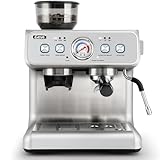
Overview: The Gevi Dual Boiler targets home users wanting commercial-like performance, featuring independent boilers for simultaneous brewing and steaming, a built-in grinder, and a 58mm portafilter in a compact stainless-steel chassis. What Makes It Stand Out: True dual boilers enable multitasking (brewing espresso while steaming milk), a rarity at this price point. The NTC/PID temperature control ensures stability, and the powerful steam wand delivers consistent microfoam. The 31 grind settings offer significant customization for bean types. Value for Money: Offers exceptional value by delivering dual-boiler functionality typically found in much more expensive machines. While build quality feels slightly less robust than premium brands like Breville, the core performance for temperature stability and steam power surpasses its cost bracket. Strengths and Weaknesses: Strengths are simultaneous brewing/steaming, precise temperature control, strong steam wand, and comprehensive included accessories. Weaknesses include potential long-term durability concerns with plastics in the grinder mechanism and a slightly noisy pump during operation. Bottom Line: A highly recommended machine for home baristas prioritizing performance and multitasking ability on a budget. It delivers near-commercial results where dual boilers matter most, making it an outstanding value proposition.
3. Commercial 2-Group Volumetric Espresso Machine for Restaurant and Café Use, Stainless Steel and Copper Construction, 220V, White

Overview: This is a heavy-duty, 2-group commercial espresso machine built exclusively for high-volume café or restaurant environments, featuring stainless steel and copper components, volumetric dosing, and requiring professional installation. What Makes It Stand Out: Its commercial-grade rotary pump, independent large-capacity boilers (5.5L steam, dual 550ml coffee), and stainless steel construction ensure relentless high-volume output and durability. Volumetric programming guarantees shot consistency crucial for busy service. Value for Money: Represents significant value only for commercial operators needing reliability and output. The price reflects true commercial build quality, but it’s irrelevant for home use due to installation complexity (220V, direct plumbing) and massive footprint. Comparing it to home machines is inappropriate. Strengths and Weaknesses: Strengths are industrial durability, high-volume throughput, consistent volumetric dosing, and robust steam pressure. Weaknesses are the absolute requirement for professional electrical/plumbing installation, substantial size/weight, high operational cost, and complete unsuitability for residential settings. Bottom Line: An excellent, purpose-built workhorse for established cafés or restaurants needing reliable, high-output espresso service. It is emphatically not for home use; buyers must consult professionals before purchase due to complex installation requirements.
4. De’Longhi La Specialista Arte Evo Espresso Machine - Compact Cold Brew Coffee Maker with Grinder, Milk Steam Wand/Frother & Tamping Tools - Home Barista Kit for Lattes, Cappuccinos, Iced Coffee

Overview: De’Longhi’s La Specialista Arte Evo is a versatile, compact all-in-one machine targeting home baristas who desire both traditional espresso and rapid cold brew capabilities in a single unit. What Makes It Stand Out: Its unique Cold Extraction Technology, developed with the SCA, produces cold brew in under 5 minutes – a major differentiator. The integrated conical burr grinder, 15-bar pump with precise pressure profiling, and commercial-style steam wand for microfoam further enhance its versatility. Value for Money: Priced competitively against premium single-function machines, its value lies in exceptional versatility. Combining high-quality espresso, latte art capability, and ultra-fast cold brew eliminates the need for separate equipment, justifying the cost for multi-drink households. Strengths and Weaknesses: Strengths include the revolutionary cold brew speed, compact footprint, excellent pressure profiling, included barista tools, and strong steam wand. Weaknesses are the relatively small 8oz water tank requiring frequent refills and the cold brew function, while fast, may lack the depth of traditional 12+ hour steeped brews. Bottom Line: Highly recommended for home users seeking a space-efficient machine excelling at both hot espresso beverages and incredibly fast cold brew. Its innovative tech and comprehensive feature set deliver outstanding value for diverse coffee preferences.
5. Electactic 20 Bar Espresso Machine with Built-in Anti-Clog Coffee Grinder, Expresso Coffee Machines with Milk Steam Wand/Frother/Tamping Tools,Espresso Maker with Grinder for Lattes-White
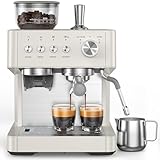
Overview: The Electactic 20 Bar machine is a budget-friendly, all-in-one espresso solution for beginners, featuring a built-in grinder, steam wand, and emphasizing ease of use and clog prevention in a compact white design. What Makes It Stand Out: Its primary innovation is the upgraded “Clog-Crushing” grind path with a wider chute and reinforced auger, specifically designed to handle oily dark roasts without jams. The 20-bar pump (marketing standard; actual brew pressure is ~9 bars) and ETL safety certification add peace of mind. Value for Money: Offers excellent entry-level value. While not matching premium build or temperature stability, it provides core functionality (grinding, brewing, steaming) reliably at a very accessible price. The anti-clog grinder is a genuine usability advantage over cheaper competitors prone to jams. Strengths and Weaknesses: Strengths are the effective anti-clog grinder, beginner-friendly operation, easy cleaning (removable tank/tray), and strong value. Weaknesses include inconsistent temperature control affecting shot quality, noticeable pump noise, and steam power less refined than higher-end models, impacting milk texturing. Bottom Line: A solid, hassle-free choice for espresso newcomers prioritizing simplicity and grinder reliability on a budget. It delivers acceptable home espresso and basic milk drinks, making it a worthwhile starter machine despite performance limitations.
6. CASABREWS CM5418 Espresso Machine 20 Bar, Compact Espresso Maker with Steam Milk Frother, Stainless Steel Coffee Machine with 34oz Removable Water Tank for Cappuccino, Gift for Women or Men, Silver

Overview: The CASABREWS CM5418 is a compact, stainless steel 20-bar espresso machine designed for home or office use. It targets beginners seeking affordable entry into espresso crafting, featuring a manual steam wand for milk frothing and a 34oz removable water tank. Key components include dual filters, a portafilter, and a tamper/spoon combo.
What Makes It Stand Out: Its standout features are the professional 20-bar pressure system with a visible pressure gauge for real-time extraction monitoring and the sleek, space-saving stainless steel design. The manual steam wand delivers capable microfoam creation for basic latte art, offering hands-on control uncommon at this price point.
Value for Money: Priced mid-range, it delivers excellent value for novice users. The robust build quality, included accessories, and genuine 20-bar pressure outperform cheaper plastic competitors. While lacking automation, it provides core espresso functionality without the steep cost of super-automatic models, making it a smart foundational investment.
Strengths and Weaknesses: Strengths: Durable stainless steel construction; intuitive pressure gauge; effective manual steam wand; compact footprint; affordable. Weaknesses: Requires manual milk frothing (steep learning curve); no built-in grinder; must cool down after steaming before brewing (overheating protection triggers); basic plastic portafilter.
Bottom Line: An ideal starter machine for budget-conscious beginners prioritizing authentic espresso pressure and hands-on experience over automation. Manage expectations regarding the learning curve for milk texturing and the cooling requirement between steaming and brewing.
7. De’Longhi La Specialista Touch Espresso Machine with Grinder & Milk Frother – Cold Brew & Iced Coffee Maker, Burr Grinder, 10 Drink Presets, Compact Bean to Cup, Award-Winning Italian Design

Overview: De’Longhi’s La Specialista Touch is a premium semi-automatic bean-to-cup machine blending automation with user control. It features an integrated conical burr grinder, 10 preset drinks (including cold brew), and an interactive touchscreen guiding the espresso-making process from bean grinding to milk frothing.
What Makes It Stand Out: The standout feature is its innovative Bean Adapt technology and interactive touchscreen, providing real-time visual guidance for grind size, dose, pre-infusion, and temperature. The automatic milk frother intelligently adjusts froth/temperature for dairy or plant-based milk, while the 15-setting burr grinder ensures peak freshness.
Value for Money: Positioned at a high price point, it justifies cost through exceptional build quality, Italian engineering, and the unique guided experience that significantly lowers the barrier to professional results. It eliminates the need for separate grinders or frothers, offering long-term value for serious home baristas seeking consistency and customization.
Strengths and Weaknesses: Strengths: Unmatched interactive guidance system; precise conical burr grinder; versatile automatic milk frothing; 10 customizable presets; compact footprint for features. Weaknesses: High initial investment; touchscreen interface may overwhelm traditionalists; automatic frothing less engaging for manual technique enthusiasts.
Bottom Line: Highly recommended for tech-savvy coffee lovers willing to invest in a future-proof machine that demystifies specialty coffee making through intelligent guidance and premium components, delivering café-quality results consistently.
8. Breville Barista Express Impress Espresso Machine BES876DBL, Damson Blue

Overview: The Breville Barista Express Impress elevates manual espresso crafting with its signature Impress Puck System. This all-in-one machine integrates a conical burr grinder, PID temperature control, and a steam wand, targeting enthusiasts who want specialty coffee control without commercial complexity.
What Makes It Stand Out: The revolutionary Impress Puck System is its key differentiator. It automates dose calculation, precision grinding, and applies consistent 10kg tamping pressure with a “barista twist,” eliminating guesswork in puck preparation – the most common hurdle in manual espresso.
Value for Money: It commands a premium price but offers exceptional value by consolidating a high-quality grinder, PID-controlled boiler, and the unique Impress system into one unit. The included free specialty coffee bags sweeten the deal. It’s significantly more affordable than separate prosumer components while delivering comparable results.
Strengths and Weaknesses: Strengths: Game-changing Impress system for perfect puck prep; integrated precision grinder; PID temperature stability; intuitive controls; included free coffee. Weaknesses: Learning curve remains for milk texturing; plastic portafilter handle; Impress system adds complexity vs. traditional tampers; premium price.
Bottom Line: An outstanding choice for dedicated home baristas seeking the most reliable path to consistent, high-quality espresso shots through innovative automation of critical manual steps, justifying its cost for serious coffee crafters.
9. De’Longhi La Specialista Opera Espresso Machine – Cold Brew & Espresso Maker with Smart Tamping, Burr Grinder, Milk Steam Wand/Frother & 19-Bar Pressure – For Lattes & Cappuccinos

Overview: Awarded “Best Espresso Machine of 2025” by CNN Underscored, the De’Longhi La Specialista Opera is a feature-rich semi-automatic machine with a built-in grinder, smart tamping, and a powerful steam wand. It targets users seeking café-quality results with simplified operation at a more accessible price than ultra-premium models.
What Makes It Stand Out: Its award-winning status stems from the unique Smart Tamping Technology – a lever-activated system ensuring perfectly even, consistent 15kg tamping pressure every time. Combined with the precise 15-setting conical burr grinder and 19-bar Italian pump with optimized pre-infusion, it guarantees balanced extraction with minimal user error.
Value for Money: Positioned as a high-value premium machine, it offers remarkable bang for buck. The inclusion of a top-tier grinder, smart tamping, commercial-style steam wand, and reliable 19-bar pump at its price point makes it a standout against competitors lacking these integrated features, delivering exceptional results for the cost.
Strengths and Weaknesses: Strengths: Revolutionary Smart Tamping; excellent grinder; powerful steam wand for microfoam; award-winning balanced extraction; 19-bar pressure with pre-infusion. Weaknesses: Smart Tamping lever mechanism may feel less “hands-on”; no automatic milk frothing; slightly larger footprint.
Bottom Line: Highly recommended as the best overall value for achieving professional-quality espresso and milk drinks at home. Its smart tamping and integrated grinder remove critical barriers, making it ideal for both beginners and experienced users seeking consistency.
10. EUHOMY Espresso Machine with Grinder, 20 Bar Professional Espresso Coffee Maker for Home,with Milk Frother for Latte, Cappuccino & Barista-Style

Overview: The EUHOMY Espresso Machine is a fully integrated 20-bar home machine featuring a built-in conical burr grinder, PID temperature control, and a high-pressure steam wand. It targets users frustrated by grinder clogs who desire consistent, café-quality espresso and milk drinks without constant maintenance.
What Makes It Stand Out: Its defining feature is the patented Anti-Clog Grinder with 30 precision settings and a polished ejection path, specifically designed to handle oily beans without jams – a common pain point. The commercial-grade 58mm portafilter paired with PID control (±1°C stability) ensures optimal extraction temperature for rich crema.
Value for Money: Offering a compelling mid-to-high price point, it delivers outstanding value through its unique anti-clog grinder solution and professional PID/58mm portafilter setup. It provides features typically found in more expensive machines, making it a cost-effective solution for those prioritizing grind consistency and temperature stability.
Strengths and Weaknesses: Strengths: Exceptional anti-clog grinder performance; precise PID temp control; strong 20-bar pump for thick crema; powerful steam wand for microfoam; 58mm commercial portafilter. Weaknesses: Build quality may not match ultra-premium brands; PID interface potentially less intuitive; no preset drink options.
Bottom Line: A top recommendation for home baristas plagued by grinder jams who prioritize reliable crema and temperature stability. Its innovative grinder and PID system deliver professional results at a justifiable price, especially for espresso-focused users.
Core Performance Features Every Machine Must Deliver
Understanding Thermodynamic Stability
Thermal consistency is the bedrock of exceptional espresso. Machines leveraging dual-boiler systems or advanced heat exchangers with PID (Proportional-Integral-Derivative) controllers ensure water hits the group head at precisely the target temperature, shot after shot. Fluctuations as minor as 2°F can drastically alter extraction, highlighting why passive temperature management simply won’t suffice for nuanced beans.
The Critical Role of Pressure Profiling
Gone are the days of fixed 9-bar pressure. Modern machines allow baristas to manipulate pressure during extraction—starting lower for delicate pre-infusion, then ramping up for optimal yield. This isn’t just a “pro feature”; it unlocks clarity in light roasts and prevents bitterness in denser beans, making it indispensable for true flavor exploration.
Group Head Engineering and Material Science
Your group head is where science meets artistry. Commercial-style machines utilize brass or copper group heads for superior heat retention over aluminum. Look for designs with minimal thermal lag between shots and sufficient thermal mass to handle back-to-back brewing without cooldowns compromising your next pull.
Steam Power and Recovery Time Metrics
A weak steam wand ruins the latte art dream. Prioritize machines with dedicated steam boilers (not just dual-purpose systems) delivering sustained 1.2+ bar pressure. Crucially, assess recovery time—the ability to generate dry, powerful steam immediately after pulling a shot. If it takes minutes to rebuild pressure, your workflow suffers.
Water Filtration Compatibility Essentials
Hard water is a machine’s silent killer. Built-in filtration systems or compatibility with third-party under-sink units aren’t optional extras—they’re vital for preventing scale buildup in boilers and group heads. This directly impacts longevity and reduces maintenance headaches significantly.
Design and Usability Considerations
Footprint and Kitchen Integration Realities
Commercial power doesn’t have to mean industrial intrusion. Measure your space rigorously—many “compact” dual-boiler models still require 15+ inches of depth. Consider workflow: Will the portafilter clearance, steam wand swing arc, and drip tray access fit your counter layout without forcing awkward contortions?
Voltage Requirements Decoded
Don’t assume standard outlets suffice. High-performance dual-boiler machines often demand 208-240V circuits, requiring professional electrical installation. Verify your home’s capacity early—discovering a wiring mismatch post-purchase leads to costly delays and frustration.
Control Interface Philosophy
From minimalist mechanical dials to full-color touchscreens, interface design affects usability profoundly. Ask yourself: Do you prefer tactile feedback for adjustments, or digital precision for logging shot parameters? Avoid overly complex menus that disrupt the ritual; your machine should enhance focus, not distract from it.
Build Quality and Material Integrity
Stainless steel exteriors aren’t just for looks—they resist dents and heat damage far better than painted finishes. Internally, scrutinize boiler construction (thick-walled copper preferred) and component sourcing. Machines built with serviceable parts, not glued assemblies, ensure decades of use versus disposable design.
Noise Level Expectations
Commercial-grade pumps and boilers operate louder than pod machines. Understand typical decibel ranges (55-70dB is common during brewing). If noise disrupts your household, prioritize models with vibration-dampening mounts or insulated boilers—especially crucial for early-morning routines.
Maintenance and Long-Term Viability
Daily Cleaning Workflow Integration
A great machine must be cleanable in under 5 minutes daily. Evaluate group head gasket access, backflush ease, and steam wand disassembly. If maintenance feels like a chore, consistency suffers. Machines with auto-purge functions or quick-release group heads encourage better habits.
Serviceability and Parts Availability
Research spare part costs and local technician support before buying. Machines using standardized components (e.g., common pressurestats, universal pump types) avoid vendor lock-in. Avoid proprietary designs where a $5 part requires a $200 service call.
Warranty Depth Beyond the Hype
Scrutinize coverage details: Does it include boiler scaling from hard water? What about labor costs after the first year? A true commercial-grade warranty often spans 2-3 years on parts and labor, signaling manufacturer confidence in durability.
Grinder Synergy Requirements
Your machine is only as good as your grind. Commercial-style espresso demands a dedicated, high-bur grinder with precise micro-adjustments. Budget for this pairing—it’s non-negotiable. Inconsistent particle size destroys even the most stable machine’s potential.
Learning Curve and Skill Development Tools
Built-in shot timers, pressure/temperature gauges, and pre-infusion programmability aren’t just specs—they’re training wheels. Machines displaying real-time extraction data accelerate skill development, transforming guesswork into repeatable science for the dedicated home barista.
Frequently Asked Questions
How much counter space should I realistically allocate?
Most dual-boiler machines require 14-18 inches deep by 12-15 inches wide, plus clearance for portafilter swing and steam wand operation. Always add 2 extra inches per side for ventilation to prevent overheating.
Do I need a dedicated electrical circuit?
Yes, if the machine specifies 208-240V. Standard 120V outlets can’t safely power dual-boiler systems. Consult an electrician—upgrading circuits is common but non-negotiable for safety and performance.
Why is a dual boiler superior to a heat exchanger?
Dual boilers independently control brew and steam temperatures, eliminating cooldown between espresso and milk steaming. Heat exchangers are cheaper but force compromises in temperature stability during high-volume use.
Is pressure profiling necessary for beginners?
While not essential day one, it’s invaluable for growth. Start with fixed profiles, then leverage programmability to experiment as your palate develops—key for mastering diverse bean profiles beyond basic recipes.
What group head material offers the best balance?
Brass provides optimal thermal stability for consistent extraction but requires diligent cleaning. Stainless steel is lower-maintenance but cools faster between shots. Prioritize brass if you pull multiple daily; stainless for occasional use.
How much steam power is truly sufficient for home use?
Aim for 1.2-1.5 bar of dry steam pressure with sub-30 second recovery. This creates microfoam for latte art without lengthy waits between milk texturing and pulling shots—a critical workflow rhythm.
What’s the realistic learning curve for commercial-style machines?
Expect 2-3 months of consistent practice to master temperature/pressure adjustments. Built-in gauges and timers shorten this, but treat it like learning an instrument: patience and deliberate practice yield results.
How often should I descale with proper water filtration?
Even with filtration, quarterly descaling is typical. Hard water areas may need monthly maintenance. Always use manufacturer-approved descaling solutions to avoid damaging internal components.
Can I pair any grinder with these machines?
No—blade grinders or low-budget burr grinders introduce inconsistency that undermines machine performance. Invest in a stepless-adjustment burr grinder ($300+) designed for espresso to achieve true puck uniformity.
What’s the minimum budget for a genuinely durable machine?
While entry points exist near $1,500, expect $2,000-$3,500 for robust dual-boiler construction with PID, pressure profiling, and serviceable parts. This reflects true commercial-grade engineering adapted for home longevity.
See Also
- 10 Essential Espresso Machine Cleaning Accessories for Quick Daily Wipe-Downs
- 10 Best Portable Espresso Machines for Outdoor Adventures in 2026
- How to Solve Weak Coffee with the 10 Best Espresso Machines with Pod Function
- 10 Essential Superautomatic Espresso Machines with Grinder Every Home Needs
- The 10 Best Espresso Machine Descalers for Consistent Performance in 2026